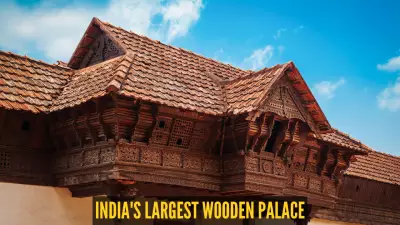
The recently concluded second edition of Royal Enfield Social Mission's Journeying Across The Himalayas (JATH) festival transformed the Travancore Palace into a vibrant hub celebrating the region's rich legacy. The multidisciplinary event, themed 'Ours to Tell', was dedicated to celebrating and safeguarding the cultural and natural heritage of the Himalayas.
Artistic Installations Bring Himalayan Themes to Life
Greeting visitors atop the palace's snow-peak-like facade was Ri Gyancha, a striking snow leopard installation. This piece, part of the Royal Enfield Social Mission's Keystone Species Programme, paid homage to Ladakh's revered "jewel of the mountain." Inside, the main hall was transformed by Bridging Spaces; Living Roots!, an interactive installation by artist Sumant Jayakrishnan that evoked the beauty of Meghalaya's living root bridges using recycled fabrics.
Another notable artwork was The Crown, the centrepiece of the Helmets for India installation. Created by artist Dhruvi Acharya from dismantled motorcycle parts, this initiative aimed to promote road safety awareness through creative expression.

Voices from the Mountains Take Center Stage
The festival served as a powerful platform for diverse Himalayan voices and musical traditions. The inaugural day resonated with the folk melodies of the Tetseo Sisters from Nagaland, their performance accompanied by the sounds of the tati instrument. This set the tone for a gathering that, as Bidisha Dey, Executive Director of Eicher Group Foundation, stated, brought together "voices from across the region through rich creative expression."
A significant highlight was the launch of the book The Great Himalayan Exploration – The Intangible Cultural Heritage of the Eastern Himalayas. The launch was graced by Tim Curtis, Bidisha Dey, folk artist Kuvelu Tetseo, Kunzang Wangmo of Ladakh, and rider-researcher Maral Yazarloo.
Urgent Call for Collective Safeguarding Action
Tim Curtis, Director of UNESCO Regional Office for South Asia, delivered a compelling message on the importance of heritage preservation. He emphasized that while documentation is essential, true safeguarding lies in the intergenerational transmission of knowledge. "The region is culturally immensely rich, but fragile," Curtis noted. "And this makes safeguarding not only important, but urgent. And something that cannot be done by one actor, one institution, or one group alone. It requires partnership, collaboration and collective action."
He further honored the wisdom embedded in the living heritage of the Himalayas, stating it offers "important pathways for balance, coexistence and renewal" in the face of unprecedented environmental challenges.
The festival also featured spaces like The Himalayan Bazaar, curated by Puneeta Chadha Khanna, which showcased regional craft and creativity. Attendees encountered diverse narratives, from the sacred sand mandala art of a monk from Dharamshala's Namgyal Monastery to a gallery showcasing the attire of Arunachal Pradesh's Monpa tribe, featuring the imaginary character Pano by artist Sanskriti Sharma.
Ultimately, JATH succeeded in creating a melting pot for community members, artists, and audiences, ensuring the values of care for the land, solidarity, and harmony with nature were celebrated and passed forward.