Japanese Artists Immerse in Holi Festivities in Bihar Village
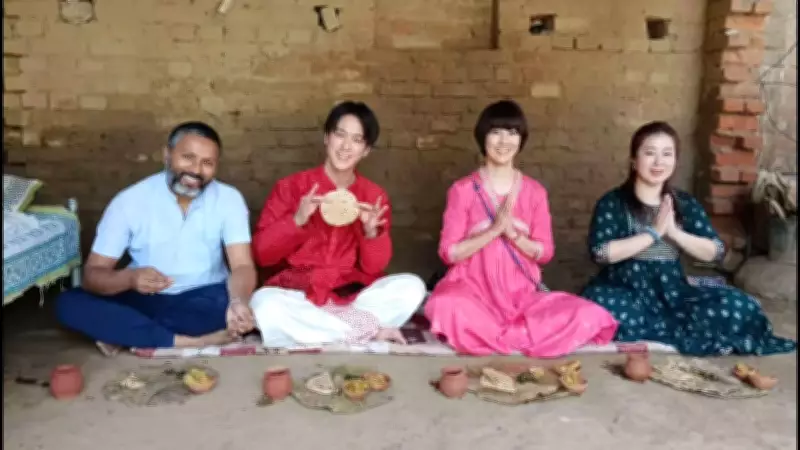
In the serene hamlet of Pirauta, located within the Akbarpur block of Nawada district in Bihar, the universal language of music and celebration bridged continents. As the vibrant hues of Holi painted the air and the resonant beats of drums echoed across lush fields, a remarkable cultural exchange unfolded. A trio of artists from Japan—actor Kayo Vakatabe, singer Takeru, and chef Asami—embraced the unfiltered village style of Holi, setting aside urban comforts to bask in the earthen warmth of rural India.
Spontaneous Joy and Rhythmic Fusion
The pre-Holi gathering on Saturday was not a staged spectacle but an organic celebration of shared humanity. Titles and professions dissolved as rhythm took center stage. Clad in traditional dhoti and attire, the Japanese guests danced with abandon to local folk tunes, their steps seamlessly matching those of the villagers. The pulsating beat of the dholak swept everyone into a spontaneous mode of joy, with laughter, clapping, and swaying movements creating an atmosphere of pure festivity.
For chef Asami, this visit offered a delightful departure from his culinary craft. Instead of preparing dishes, he relished rustic delicacies cooked slowly on earthen ovens fueled by wood. The food, infused with the aromatic essence of soil and smoke, was savored while squatting comfortably on mud floors. Served on leaf plates and in earthen pots, the spread featured ingredients like jaggery, fibre-rich raw flour, and mustard oil, leaving a profound impression on the visitors, as noted by the organizers.

Promoting Rural Tourism as a Sustainable Initiative
This heartwarming exchange was part of a broader initiative aimed at promoting rural tourism in the region. Ranjan Kumar, a Delhi-based lawyer hailing from Nawada, has developed a model to showcase village life as an immersive cultural experience, with encouragement from the district administration. Rural tourism, as a concept, involves visitor activities in non-urban areas, focusing on authentic, nature-based experiences, agricultural lifestyles, and local culture to generate sustainable income for rural communities.
Observations indicate that many international travelers are increasingly seeking meaningful engagement with unfiltered traditions and natural environments. Diversification of tourism is the need of the hour, remarked a Bodh Gaya-based tour operator, highlighting that rural tourism, being cost-effective, has the potential to retain visitors for longer durations. Syed Masihuddin, a political activist from Nawada district, added, We have a very rich cultural heritage but unfortunately feel shy of its marketing in today’s world where people prefer offbeat things.
This initiative not only celebrates cultural exchange but also underscores the importance of preserving and promoting rural heritage in an era dominated by urban preferences. The visit by the Japanese artists serves as a testament to the universal appeal of authentic experiences and the potential of rural tourism to foster global connections while supporting local economies.