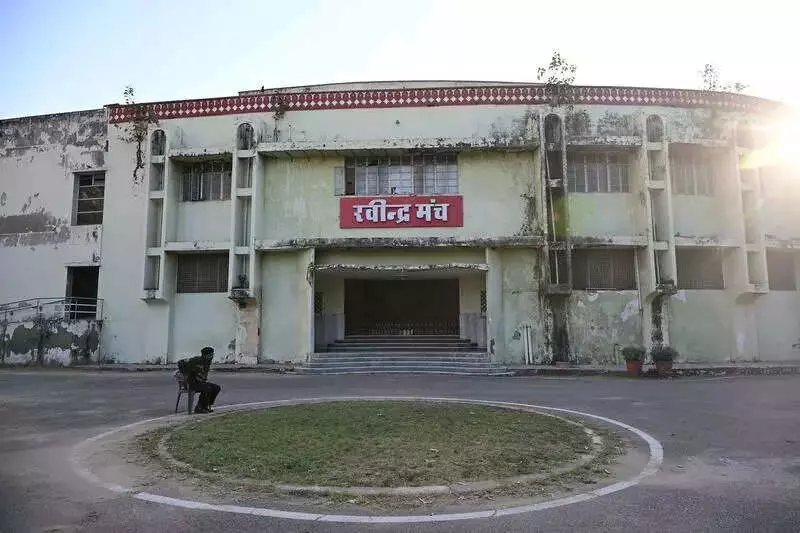
In the heart of Jaipur, a piece of India's post-independence cultural vision is crumbling. The historic Ravindra Manch, a theatre born from Prime Minister Jawaharlal Nehru's dream for the arts, is now battling for its very survival, its glorious past a stark contrast to its dilapidated present.
From Cultural Beacon to Fading Shadow
Established under the Tagore Theatre Scheme and opened to the public on August 15, 1963, Ravindra Manch was the 17th such venue in the country. Located within the verdant Ram Niwas Bagh, it quickly became the pulsating core of Rajasthan's cultural life for decades. Today, that heartbeat is faint. The venue, which once hosted musical titans including Begum Akhtar, Jagjit Singh, the Wadali Brothers, Ghulam Ali, Runa Laila, Talat Mahmood, Bhupinder, and Mitali, is now a distant shadow of itself, marked by cracked walls and crumbling infrastructure.
Beyond concerts, the theatre provided a revolutionary safe space. At a time when theatre was often viewed with suspicion, it offered an encouraging platform for college students and women to express themselves. That legacy of nurturing talent now stands largely forgotten, a victim of shifting priorities and governmental neglect.

A Lost Hub: Voices of Artists and Specialists
Cultural specialist Tripti Pandey starkly outlines the decline. She recalls Ravindra Manch as the undeniable cultural backbone of Jaipur. "Ram Niwas Bagh used to be Jaipur's cultural hub. The summer camps that now take place at Jawahar Kala Kendra once happened there," Pandey said. She emphasized that when Jaipur had no other major art centres, Ravindra Manch gave artists their identity. The arrival of new academies, however, diverted official attention. "The cultural beauty of Ram Niwas Bagh was slowly destroyed. Today, even if a play is staged here, audiences hesitate to come," she lamented.
For theatre practitioners, the loss is deeply personal. Artist Madhav Singh describes the stage as the very foundation of his career. "This stage made us who we are. Ravindra Manch carries the history of Rajasthan," Singh stated, revealing the extent of their concern by noting, "We even approached the central government to save it."
Architectural Grandeur and Historic Performances
The physical scale of Ravindra Manch hints at its former importance. The complex boasts:
- A main auditorium
- An open-air theatre with a capacity for 3000 people
- Multiple galleries and dedicated performance spaces
This was the hallowed ground where iconic plays like Shaturmurg, Aashaadh Ka Ek Din, Sakharam Binder, and Bahanehbaaz came to life. Its stage served as a crucial launchpad for legendary figures. Members of Sunil Dutt's Ajanta Arts troupe, along with cinema greats such as Om Shivpuri, Gyan Shivpuri, Kader Khan, A.K. Hangal, Arun Mukerjee, Raman Kumar, Ramesh Talwar, Sulbha Arya, and even the late Irrfan, honed their craft and built their acting careers here.
The story of Ravindra Manch is a microcosm of a larger challenge facing India's cultural infrastructure. It stands as a poignant reminder of a visionary project now in dire need of a vision for restoration, lest the echoes of Begum Akhtar's voice be drowned out by the sound of falling plaster.