The survival of Jainism through the centuries owes as much to its lineage of teachers and scholars as to its founding Tirthankaras. This was the central message at a significant gathering of the faith's clergy in Karnataka, which also sounded an alarm about the declining state of the priesthood itself.
Conference Highlights Jainism's Living Legacy
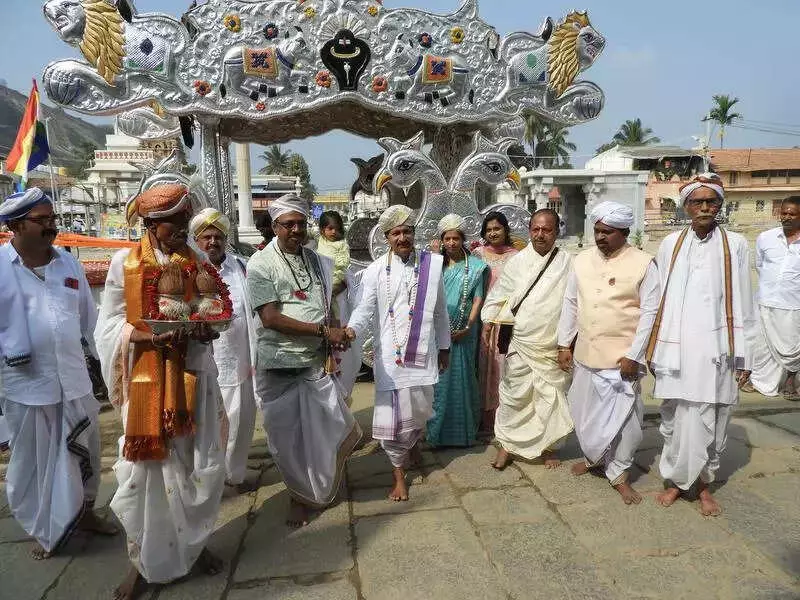
Padoor Sudarshan Indra, the president of the 5th South Indian Priests Conference, addressed the assembly on Tuesday. The event, the 5th South Indian Digambara Jain Priests Conference, was held at the sacred site of Shravanabelagola in Hassan district.
Indra expressed profound gratitude for the core tenets of Jainism—non-violence, non-possession, and multiplicity of viewpoints—propounded by the Tirthankaras. He emphasized that the religion stands firm on eternal values like restraint, faith, and scriptural adherence. However, he credited the Acharyas and Shastris for preserving, codifying, and making these teachings practical for everyday life.

He highlighted the pivotal role of priests, scholars, and teachers in keeping the practical form of Jainism alive in society. Indra pointed to history, noting that many ancient Kannada poets belonged to the Jain priestly class. These scholars performed a vital service by translating complex Sanskrit and Prakrit scriptures into Kannada, making them accessible to common people and preserving priceless manuscripts in temples.
A Priesthood in Peril: Financial Strain and Neglect
The conference took a sobering turn as Indra detailed the severe challenges facing the priestly community today. He defined a true priest as "a person who desires the welfare of society" but lamented that this vocation is facing neglect everywhere.
The primary issue is financial sustainability. With insufficient income to secure a livelihood, a growing number of Jain priests are being forced to abandon their traditional profession. They are opting for secular education and seeking employment in government and private sectors.
This exodus has dire consequences for Jain temples. Indra warned that if the priestly class dwindles further, temples could fall into a worse state of neglect. A crisis is already unfolding where a single priest is often responsible for performing worship in multiple temples. In some cases, daily rituals are left unattended due to a lack of devotees or their disinterest.
Indra acknowledged positive developments, such as the renovation of many temples in Karnataka with government assistance, the completion of grand Panchakalyana festivals, and the construction of new pilgrimage sites. Yet, he stressed that society and systems are failing the priests.
Systemic Hurdles and a Call for Support
A significant bureaucratic gap was highlighted. Although the Karnataka government has implemented a maintenance allowance for priests, many are deprived of this benefit due to the improper registration of temple management boards.
Indra expressed concern that society does not seem to be seriously considering plans for the welfare of its priests. The event was graced by prominent spiritual leaders, including Swasti Shri Charukeerthi Bhattaraka Pattacharyavarya Swamy, the head of the Shravanabelagola Digambara Jain Mutt, and Swasti Shri Devendrakeerthi Bhattaraka Pattacharyavarya Swamy of the Hombuja Jain Mutt in Shivamogga district.
MLA CN Balakrishna, also present, praised the Shravanabelagola pilgrimage site for guiding millions on the right path. The conference ultimately served as both a celebration of Jainism's resilient intellectual tradition and an urgent plea to safeguard the future of those entrusted with its daily practice.