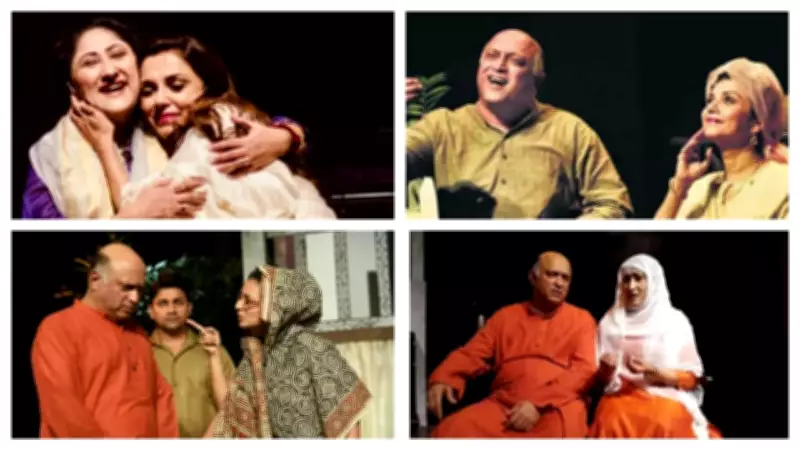
Lillete Dubey's Primetime Theatre Company Concludes 35-Year Journey with Salaam Noni Appa
In a radiant and emotionally resonant tribute to a life dedicated to theatre, Lillete Dubey's Primetime Theatre Company marked the culmination of its remarkable 35-year journey with a heart-warming staging of Salaam Noni Appa at the iconic Royal Opera House in Mumbai. This final performance served as both a celebration of artistic legacy and a poignant farewell to an institution that has shaped Indian theatre for over three decades.
A Festival of Story and Stagecraft
For theatre enthusiasts across Mumbai, the past months have been a vibrant celebration of narrative artistry and theatrical craftsmanship. The Primetime Theatre Company's festival showcased an impressive array of landmark productions that have defined the company's artistic vision. From powerful solo works like 9 Parts of Desire starring Ira Dubey to enduring classics such as Dance Like a Man, each production represented a significant chapter in the company's ongoing legacy, all staged in Mumbai as part of this commemorative festival.
However, it was Salaam Noni Appa that emerged as the undisputed highlight, capturing both critics' acclaim and audiences' hearts as the festival's grand finale. This production perfectly encapsulated the company's artistic ethos while providing a fitting conclusion to its storied journey.

A Story of Second Chances and Quiet Joy
Adapted from the short story Salaam Noni Appa by Twinkle Khanna and skillfully brought to the stage by Adhir Bhat, this play explores themes of age, love, and freedom later in life, striking a rare and irresistible chord with contemporary audiences. Originally published as part of The Legend of Lakshmi Prasad, the tale's transition from page to stage remains remarkably faithful to its literary source, retaining its distinctive humour, warmth, and subtle poignancy.
Set during the twilight years of its protagonist's life, the play follows Noni Appa, a widow navigating the unexpected world of companionship, passion, and self-discovery. What could have been a gentle comedy transforms into something profoundly meaningful under Lillete Dubey's direction, evolving into a meditation on freedom, friendship, and the courage required to rewrite life's second chapter.
A Cast That Elevates Every Moment
At the heart of this memorable production was Lillete Dubey herself, who portrayed Noni Appa with striking elegance and emotional depth. Her performance seamlessly wove together humour, fragility, and quiet resilience, reflecting her extensive experience and artistic maturity. Well-known actress Jayati Bhatia brought lively comedic flair to the role of Binnie, Noni's sister, while Yateen Karyekar offered a nuanced and heartfelt portrayal of Anandji, the character who gently encourages Noni to step beyond her comfort zone.
Rounding out the exceptional cast, Rishi Khurana and Gillian Pinto contributed thoughtful, well-measured performances that enriched the narrative while maintaining its emotional focus. Audiences and critics alike praised how the adaptation captured the spirit of Twinkle Khanna's original prose, particularly its celebration of life's unpredictability and the joyous assertion that love doesn't retire.
A Fitting End to Three and a Half Decades on Stage
As Lillete Dubey and her cast took their final bows beneath the historic chandeliers of the Royal Opera House, there was a palpable sense of both closure and continuing possibility. Over the last thirty-five years, Lillete's theatre company has staged an impressively diverse body of work in Mumbai and across international venues, spanning modern Indian storytelling to reimagined world classics, all marked by exceptional sensitivity and artistic polish.
For those who have followed her artistic journey from formative years at Barry John's Theatre Action Group to the present day, the company's evolution unfolds like a living chronicle, with each production and performer representing a meaningful chapter in Indian theatre history. With Salaam Noni Appa, this celebration became more than a tribute to the past; it reaffirmed that meaningful theatre doesn't dwell solely on what has been, but continually urges audiences to look ahead with greater empathy and renewed curiosity.

The Primetime Theatre Company's legacy will endure as a testament to Lillete Dubey's vision and dedication, having enriched Mumbai's cultural landscape and inspired generations of theatre artists and audiences alike.