Rahul Gandhi Launches Scathing Attack on PM Modi Over Strategic Autonomy
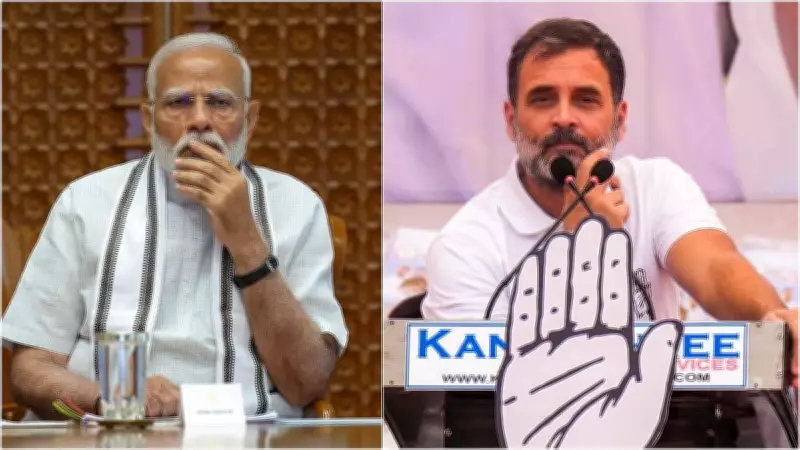
Congress leader Rahul Gandhi has launched a fierce political assault on Prime Minister Narendra Modi, accusing him of compromising India's strategic autonomy in the wake of escalating tensions in West Asia that have now begun to impact the Indian Ocean region. In a strongly worded statement, Gandhi claimed that the Prime Minister has effectively surrendered the nation's independent foreign policy stance, leaving India vulnerable to external pressures and conflicts.
Conflict Spillover into Indian Ocean Waters
The criticism comes as the ongoing conflict in West Asia has reportedly started affecting maritime security and trade routes in the Indian Ocean, a development that Gandhi directly attributes to what he describes as the Modi government's flawed foreign policy approach. According to political observers, this represents a significant escalation in the opposition's critique of the government's handling of international relations, particularly concerning India's strategic interests in critical maritime zones.
Gandhi emphasized that India's traditional position of strategic autonomy has been dangerously compromised under the current administration, suggesting that the country's ability to make independent decisions in its national interest has been substantially weakened. This allegation strikes at the heart of India's long-standing foreign policy doctrine that has historically emphasized non-alignment and independent decision-making in global affairs.

Political Implications and Government Response
The Congress leader's remarks have ignited a fresh political controversy, with analysts noting that this represents one of the most direct challenges to the government's foreign policy record in recent months. While the government has yet to issue an official response to Gandhi's specific allegations, sources indicate that administration officials are preparing a robust defense of India's foreign policy achievements under Prime Minister Modi's leadership.
Political experts suggest that Gandhi's criticism reflects growing concern within opposition circles about India's positioning in an increasingly volatile global landscape, particularly as conflicts in sensitive regions like West Asia create ripple effects that reach Indian shores. The reference to the Indian Ocean is particularly significant given its crucial importance to India's energy security, trade routes, and overall strategic positioning in the Indo-Pacific region.
Historical Context and Current Challenges
India has historically prided itself on maintaining strategic autonomy, carefully balancing relationships with various global powers while protecting its core national interests. Gandhi's accusation suggests that this delicate balance has been upset, potentially exposing India to greater geopolitical risks. The timing of these remarks coincides with increased international attention on maritime security in the Indian Ocean, where multiple global powers maintain significant naval presence and strategic interests.
The Congress leader did not provide specific policy prescriptions but implied that a different approach to foreign relations would better protect India's autonomy and security interests. This criticism comes amid broader political debates about India's role in global affairs and how best to navigate complex international relationships while safeguarding national sovereignty.
As the political discourse intensifies, observers will be watching closely to see how this foreign policy critique evolves and whether it gains traction among other political stakeholders and the broader public. The connection drawn between West Asian conflicts and Indian Ocean security represents a novel angle in India's domestic political debates about foreign policy, potentially signaling a more substantive discussion about the nation's strategic positioning in coming months.