Jagannath Temple's Treasure to Remain Priceless
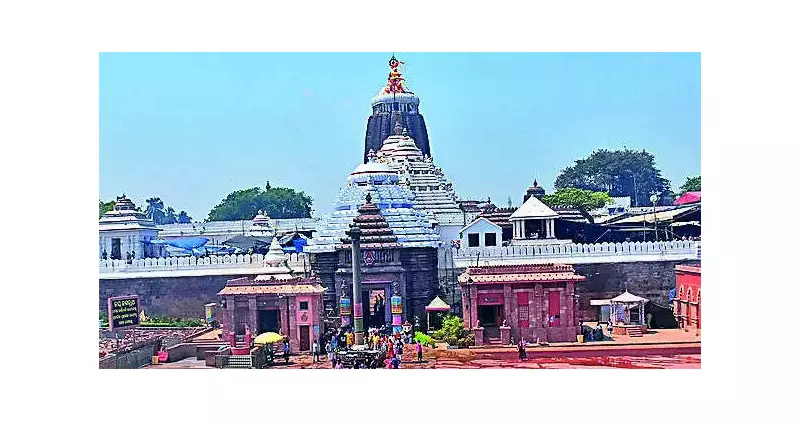
The sacred jewelry housed within the legendary Ratna Bhandar of Puri's Jagannath Temple will continue to maintain its mysterious market value as temple authorities have decided against conducting any monetary valuation during the upcoming inventory process.
According to the Shree Jagannath Temple Administration (SJTA), the complexity of assessing medieval-era ornaments and precious metals makes accurate valuation nearly impossible. Instead, the focus will remain on creating a comprehensive digital catalog of the treasures.
Why Valuation Remains Elusive
Temple officials explained that unlike modern bullion, the ancient ornaments present unique identification and evaluation challenges. The religious artifacts, some dating back centuries, possess immense spiritual significance that transcends any monetary value.

"Even with the initial proposal to engage goldsmiths, valuers, and gemmologists from other states, the practical implementation appears unlikely," revealed a temple official. "These medieval ornaments are fundamentally different from contemporary jewelry in both craftsmanship and composition."
Local jewelry experts support this decision, noting that determining exact weight, purity, and gem quality without compromising the sanctity of these religious artifacts would be extremely difficult, even with advanced scientific techniques.
The New Inventory Approach
The revised strategy involves preparing a detailed inventory by systematically naming, weighing, and counting all articles stored in both the outer and inner chambers of the Ratna Bhandar. This audited list will then be cross-verified against the last inventory report prepared in 1978.
To ensure professional execution, the government has already enlisted two experts from the Reserve Bank of India. The process will include creating a digital catalog through detailed photography and videography, recording names, types, and weights of all valuables.
The temple managing committee is scheduled to meet this Saturday to finalize the blueprint for the inventory exercise and potentially announce the commencement date.
Historical Context: The 1978 Inventory
The last comprehensive inventory of the Ratna Bhandar occurred between May 13 and July 23, 1978, spanning 70 days of meticulous documentation. That historical exercise revealed staggering numbers:
Gold Items: 454 pieces weighing 12,838 bharis (approximately 128 to 142 kg)
Silver Items: 293 pieces weighing 22,242 bharis (approximately 221 to 244 kg)
The inner chamber alone contained 367 gold ornaments, including precious necklaces, chains, and crowns, totaling 4,364 bharis, alongside 231 silver items weighing 14,878 bharis. The outer chamber housed 87 gold items weighing 8,474 bharis and 62 silver items weighing 7,364 bharis.
With one bhari equaling approximately 11 grams, the sheer volume of precious metals underscores why the Ratna Bhandar remains one of India's most significant temple treasuries, whose true value may forever remain beyond monetary calculation.