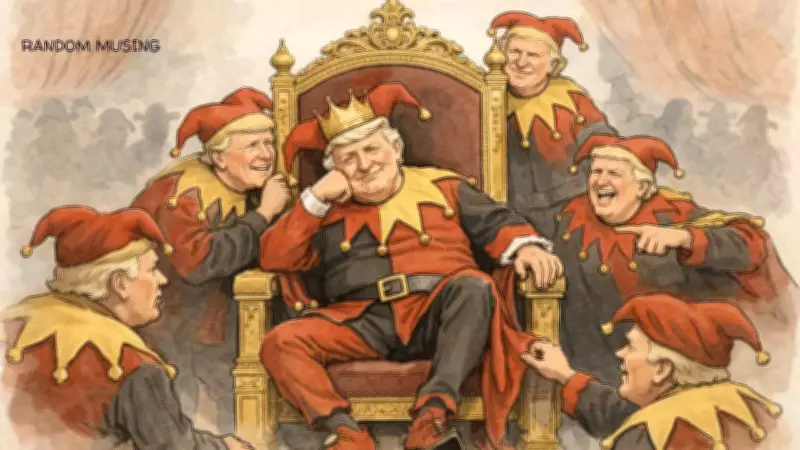
The Unique Dual Laureates: Shaw and Dylan's Nobel-Oscar Harmony
In the annals of literary and cinematic history, only two individuals have achieved the rare distinction of winning both the Nobel Prize and an Oscar: Irish playwright George Bernard Shaw and American songwriter Bob Dylan. This remarkable feat underscores a blend of high art and popular culture that resonates across generations.
George Bernard Shaw's Reluctant Acclaim
George Bernard Shaw secured his Nobel Prize for Literature in 1925, primarily for his screenplay Pygmalion. This work was later adapted into a film, credited with transforming Hollywood from a realm of perceived illiteracy to one of literary sophistication. Despite Shaw's professed disdain for the award, he prominently displayed it on his mantlepiece, a testament to its enduring significance. Pygmalion would eventually be reimagined as the iconic musical My Fair Lady, becoming a cultural milestone that explores themes of transformation and social mobility.
The Higgins-Macaulay Complex: A Colonial Legacy
My Fair Lady centers on Professor Henry Higgins, a phonetics expert who undertakes the task of teaching proper English to Eliza Doolittle, a flower girl, so she can navigate high society. Higgins' motivational speech, where he extols the "majesty and grandeur of the English language," epitomizes what is now termed the Higgins-Macaulay Complex. This colonial mindset asserts that proficiency in English equates to inherent superiority, often overshadowing tangible skills.

This complex draws from Higgins' ideals and Thomas Babington Macaulay's infamous belief that European literature surpasses all native Indian and Arabian works. In post-colonial societies, English remains a marker of civility, perpetuating this legacy of linguistic elitism.
Trumpery: From Historical Deceit to Modern Political Chaos
The term trumpery, originating from Middle French tromper (to deceive), historically meant deceit or worthless nonsense. In a 2016 article for the National Review, MD Aeschliman applied this word to Donald Trump, describing his worldview as rooted in Social Darwinism—a philosophy emphasizing survival of the fittest and reflecting deeper cultural decay. Aeschliman argued that Trump's approach, characterized by moral fallacies and demagoguery, represents a broader Western civilizational trend that prioritizes power over principle.
The Unfolding Era of Global Trumpery
Fast forward to today, and Trump's influence has escalated, with his actions reverberating globally. The recent conflict with Iran serves as a prime example of trumpery in action. The motivations behind the US and Israel's strikes remain unclear, with shifting justifications ranging from regime change to oil interests and pre-emptive defense. This ambiguity has plunged the world into a state of chaos, akin to a "Schrödinger's war"—ongoing yet seemingly predetermined in Trump's favor.
Nominative Determinism and the Fate of Trumpery
This leads to a philosophical inquiry: is Donald Trump living up to the word trumpery, or did his name predestine his actions? Concepts like nomen omen (a name as an omen) and nominative determinism suggest that names can influence destinies. First coined in a 1994 New Scientist article, nominative determinism posits that people gravitate toward roles that fit their names, possibly due to implicit egotism—an unconscious self-preference.
Regardless of causality, we are entrenched in an era of trumpery, where a leader with vast military power espouses erratic rhetoric, blurring truth and fiction. The stakes are monumental, as the US nuclear arsenal now dwarfs the destructive force of past conflicts, raising existential questions about global survival.
Cultural Echoes: From Shaw to Dylan's Prophetic Warnings
Returning to the arts, Bob Dylan—Shaw's fellow Nobel-Oscar laureate—offered a haunting vision in his song A Hard Rain's A-Gonna Fall. While often interpreted as a nuclear allegory during the Cuban Missile Crisis, Dylan framed it as a broader commentary on human despair and societal breakdown. In contrast, Higgins' lesson in My Fair Lady—"the rain in Spain is mostly in the plains"—symbolized the civilizing power of language.

Today, as trumpery threatens global stability, the metaphorical rain looms not as a tool of enlightenment but as a potential deluge of destruction. The Higgins-Macaulay Complex reminds us of language's power to shape perceptions, while trumpery exposes how that power can be wielded for chaos. In this precarious moment, the world watches, wondering if we will speak at all when the next storm arrives.