In a striking juxtaposition, two villages in Haryana recently hosted celebrations for newborn children that reflect the complex and contrasting attitudes towards gender in the region. While one family broke with tradition to honor the birth of a daughter, another celebrated the arrival of a long-awaited son after ten daughters.
A Feast for a Daughter: Breaking Tradition in Pauli Village
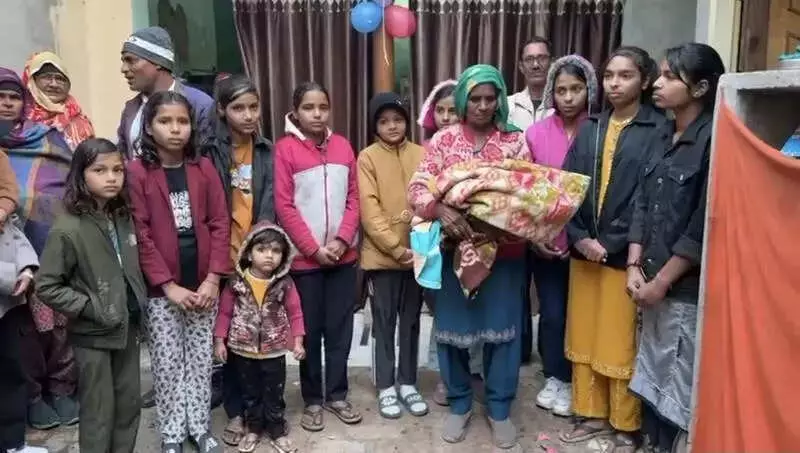
The air in Pauli village, Julana, resonated with music and drumbeats as the community gathered for a celebratory feast. The occasion was the birth of a baby girl to parents Sanjay and his wife. In a significant departure from custom, Sanjay organized a 'Kua Pujan' ceremony, a ritual traditionally reserved for the birth of male children.
"We performed this to symbolise respect and equality," Sanjay explained. He noted that his sister, born 39 years ago, was the last girl born into their family. The mother highlighted the evolving role of women, stating that girls today excel in sports, education, and the armed forces, proving they are not inferior. The village sarpanch confirmed the entire community shared the family's joy.

A Son After Ten Daughters: Celebration and Concern in Fatehabad
Approximately 115 kilometers away in Dhani Bhojraj village, Fatehabad, a different narrative unfolded. Sanjay, a labourer, and his wife welcomed their eleventh child—a son—after ten daughters and 19 years of marriage. "After 19 years, my mother's wish is fulfilled," the father said. His eldest daughter is in Class XII, and he reported that all family members and villagers were happy.
The delivery took place at a hospital in Uchana Kalan, Jind. Dr. Sanjay Santosh, who attended the case, revealed it was a high-risk delivery for both mother and child. "Her haemoglobin level was only 5 grams, and the baby was suffering from a shortage of amniotic fluid. Despite the complications, she delivered a healthy baby boy through a normal delivery. Both are stable and healthy," the doctor stated.
Medical Warnings and Societal Reflections
However, Dr. Santosh issued a stern warning against such practices. "Repeated pregnancies pose serious health risks to both the mother and the child. I strongly advise families not to opt for a third child, let alone 11," she cautioned. This medical perspective casts a shadow on the celebratory mood, highlighting the physical toll of relentless childbirth.
In a revealing moment, the father from Fatehabad, while jubilant about his son, admitted to sometimes forgetting the names of all his daughters when speaking to the media. He expressed a desire to make his son an officer but had no such concrete plans for his daughters.
These two events in Haryana present a microcosm of India's ongoing struggle with gender norms. One family actively challenges tradition to celebrate a girl, while another's pursuit of a male heir underscores deep-seated biases, even at potential risk to maternal health.