Gulf Nations Implement Major Change for Eid ul Fitr 2026 Prayers
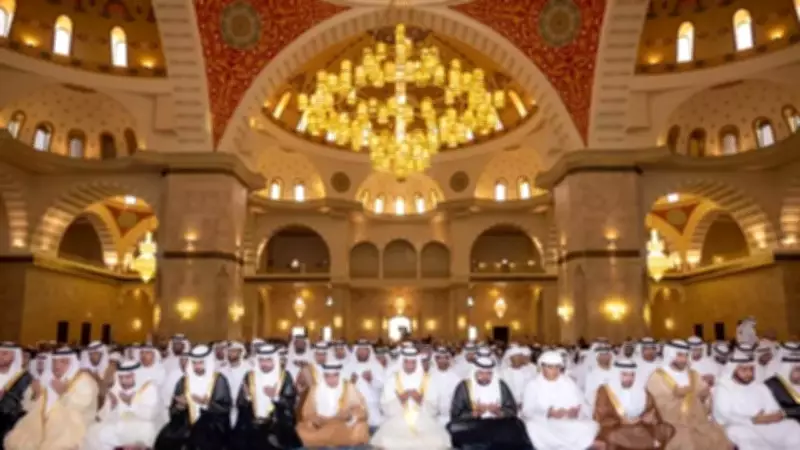
As the United Arab Emirates prepares to welcome Eid ul Fitr in 2026, authorities have introduced a significant alteration to one of the most visible and spiritually unifying rituals of the Islamic calendar. The General Authority of Islamic Affairs, Endowments and Zakat has announced that Eid prayers will be held exclusively inside mosques this year, with outdoor prayer grounds suspended nationwide.
End of Traditional Open-Air Congregations
Traditionally, Eid ul Fitr prayers in the UAE are marked by mass congregations in open-air musallas (prayer grounds), where thousands gather in the early hours of the morning to celebrate the end of Ramadan. For 2026, that familiar sight will be absent. Authorities have confirmed several key points:
- All Eid prayers will take place inside mosques only
- Outdoor prayer areas and Eid grounds will not be utilized
- The decision applies uniformly across all seven emirates
The move is primarily aimed at ensuring public safety and smoother organization of large congregations, particularly during a period of regional uncertainty. While appearing logistical at first glance, this change carries deep cultural and social implications. Eid prayers represent not just a religious obligation but also a profound community experience.

Regional Pattern of Controlled Worship Environments
This decision does not exist in isolation. Across the Middle East, Eid 2026 is unfolding against a backdrop of ongoing geopolitical tensions, heightened security alerts, and increased monitoring of public gatherings. The UAE is not alone in rethinking Eid prayer logistics, as neighboring countries are adopting similar measures.
Kuwait has announced that Eid ul Fitr 2026 prayers will be conducted only inside mosques, with no use of courtyards or open spaces. The Ministry of Awqaf and Islamic Affairs has implemented this directive, effectively ruling out traditional large-scale outdoor congregations. Authorities have even fixed a precise prayer timing of approximately 6:08 AM, reinforcing a tightly coordinated nationwide plan.
Qatar has also issued clear instructions through its Ministry of Endowments and Islamic Affairs. Eid ul Fitr prayers for 1447H will be held exclusively inside approved mosques across the country, with no provision for open grounds or temporary prayer areas. The ministry has standardized venues to mosques that regularly host Friday congregations, ensuring uniformity and tighter supervision.
Timing and Moon Sighting Remain Traditional
Despite the venue change, the timing of Eid prayers remains unchanged in the UAE. Eid prayers are typically held shortly after sunrise, usually between 5:45 AM and 6:30 AM depending on location, immediately followed by sermons and traditional greetings.
The exact day of Eid ul Fitr 2026 still hinges on the sighting of the Shawwal crescent moon. Officials confirmed that the moon-sighting committee will convene on the 29th of Ramadan. If the crescent is spotted, Eid will fall on Thursday, March 19. If not, Ramadan will complete 30 days, placing Eid on Friday, March 20. Astronomical predictions currently suggest the latter scenario is more likely.
Practical Guidance for Worshippers
With the shift to mosque-only prayers, authorities across the three Gulf nations are emphasizing several important points for worshippers:
- Arrive early to secure adequate space within mosque interiors
- Follow official instructions and crowd management protocols precisely
- Avoid gathering outside mosques in large numbers before or after prayers
- Stay updated through official announcements only from relevant authorities
The goal remains to ensure that Eid maintains its spiritual fulfillment without compromising safety. While the physical setting may change, the essence of Eid ul Fitr remains untouched—a day of gratitude after a month of fasting, charity through Zakat al Fitr, family time, community bonding, and prayer.

Broader Implications and Historical Context
The UAE has long positioned itself as a country that balances religious observance with structured governance. This latest directive reflects that established approach, where worship is fully facilitated but within regulated frameworks. Public safety is prioritized alongside religious freedom, with coordination between emirates ensuring uniformity.
This is not the first time such measures have been implemented in the region. Past events, including national prayer calls and unified Friday prayer timings, have demonstrated how religious practices can be adapted without altering their core essence. The current shift represents a broader Gulf trend where governments are consciously moving toward indoor, controlled religious gatherings in response to evolving regional dynamics.
Officials have reassured residents that mosques across all three countries are fully prepared to handle the expected turnout, with coordination across various departments to ensure smooth execution. The decision to hold Eid ul Fitr prayers inside mosques only serves as a clear reflection of contemporary regional realities—prioritizing safety in a volatile climate, ensuring better organization of large congregations, and aligning with the broader Gulf-wide trend toward managed public gatherings.