The Enduring Legacy of Johann Wolfgang von Goethe: A Titan of European Culture
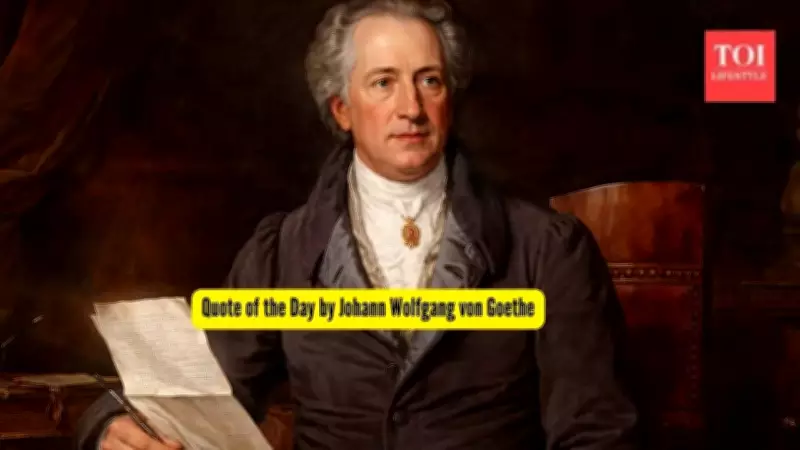
Johann Wolfgang von Goethe stands as one of history's most remarkable figures, a towering intellect whose influence extended far beyond literature to fundamentally reshape European perspectives on art, science, and the human spirit. Born on August 28, 1749, in Frankfurt, Germany, Goethe emerged during a period of profound societal transformation, destined to become a defining voice of his era.
Privileged Beginnings and Early Genius
Goethe was born into an affluent family that provided the perfect environment for intellectual development. His father, Johann Caspar von Goethe, was a strict lawyer and imperial councillor who had risen from humble farming origins in Thuringia through education and determination. His mother, Catharina Elisabeth Textor, came from Frankfurt's elite; her father served as mayor, ensuring young Goethe grew up surrounded by luxury, extensive libraries, scientific instruments, and cultural refinement.
From an early age, Goethe displayed extraordinary intellectual capabilities. Educated primarily through private tutors, he mastered Latin, Greek, French, Italian, and English as a teenager. His father instilled rigorous discipline while his mother nurtured his imagination through storytelling, creating a balanced foundation that would serve him throughout his multifaceted career.

Academic Pursuits and Literary Awakening
At just sixteen, Goethe enrolled at Leipzig University to study law in 1765, though his true passion lay in poetry and art. The vibrant theatrical scene of Leipzig ignited his creative spirit, leading to his first dramatic works composed in the city's bustling coffeehouses. A serious illness forced his return home in 1768, triggering a spiritual crisis that deepened his introspection and blended Lutheran piety with emerging Enlightenment ideals.
By 1770, Goethe continued his legal studies in Strasbourg while immersing himself in the Sturm und Drang literary movement. This revolutionary approach rejected cold rationalism in favor of raw emotion and individual genius. His mentorship under Johann Gottfried Herder further shaped his appreciation for folk culture and Shakespearean energy, setting the stage for his literary breakthrough.
Weimar Transformation and Personal Relationships
After returning to Frankfurt as a licensed lawyer in 1771, Goethe's growing literary fame attracted the attention of Duke Karl August of Weimar. In 1775, the 26-year-old poet accepted an invitation to the ducal court, expecting a brief visit but ultimately remaining for the rest of his life. This relocation marked a profound transformation from restless artist to respected statesman, with Goethe elevating Weimar from a quiet duchy to a major cultural center.
His personal life proved equally complex. In 1776, he began a profound twelve-year platonic relationship with married noblewoman Charlotte von Stein, which deepened his emotional sensitivity. Later, at age 39, Goethe embarked on a secret two-year journey to Italy, seeking classical ideals in Rome and Naples that would mature his artistic vision toward the harmony of Weimar Classicism.
Later Life and Scientific Contributions
Upon returning to Weimar in 1788, Goethe formed a relationship with Christiane Vulpius, an actress from modest circumstances. Their unconventional union produced five children, though only one survived to adulthood. They married in 1806 after Napoleon spared their home during the Battle of Jena, with Christiane providing domestic stability until her death in 1816.
Goethe's intellectual curiosity extended far beyond literature. He made significant contributions to botany with his theory of leaf metamorphosis, developed a color theory challenging Newton's principles, and conducted research in anatomy and meteorology. Despite personal tragedies including the death of his son August just weeks before his own passing, Goethe maintained his scientific pursuits until the end.

Literary Evolution and Lasting Impact
Goethe's writing style evolved dramatically throughout his career. His early works embodied the fiery intensity of Sturm und Drang with jagged, emotional prose that defied eighteenth-century conventions. Following his Italian journey, his writing matured into the balanced harmony of Weimar Classicism, blending passion with refined form across poetry, drama, and prose.
He died on March 22, 1832, in Weimar at age 82, reportedly uttering "Mehr Licht!" ("More light!") as his final words—a fitting epitaph for a lifelong seeker of enlightenment. Through his work as poet, novelist, playwright, scientist, and statesman, Goethe elevated German culture to European prominence, leaving a legacy that continues to inspire across disciplines and generations.
The Goethean Philosophy of Daily Enrichment
Goethe famously advocated for daily engagement with beauty through art, music, and poetry as essential nourishment for the human spirit. His perspective anticipated modern wellness concepts by two centuries, recognizing that regular exposure to aesthetic experiences builds resilience against life's mundane pressures. Contemporary research now validates his insights, linking artistic engagement to reduced stress, enhanced cognitive function, and improved emotional wellbeing.
This holistic approach to human development—balancing intellectual rigor with aesthetic appreciation—remains one of Goethe's most enduring contributions to how we understand personal fulfillment and cultural advancement.