The Sudden Leap from Two Hands to Ten: A Symbolic Transformation
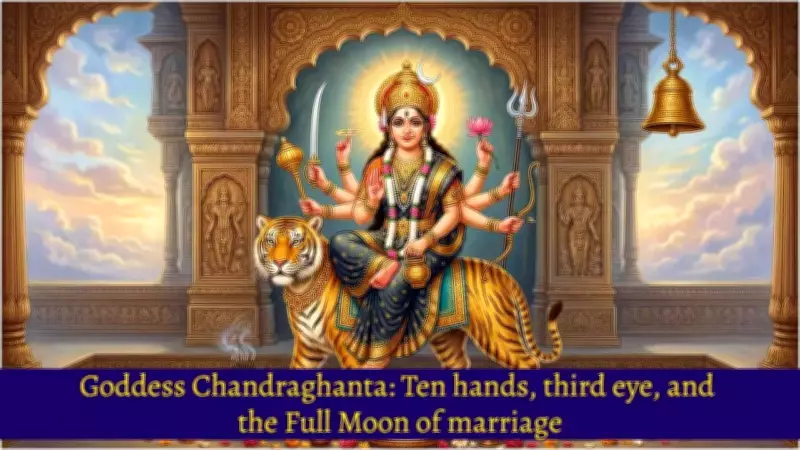
In Hindu mythology, Goddess Shailputri and Goddess Brahmacharini are traditionally depicted with two hands, symbolizing simplicity and containment. However, Goddess Chandraghanta is portrayed with ten hands, a dramatic change that goes beyond mere decoration. This transformation carries profound symbolism related to the life of a householder, reflecting the complexities and expanded duties that come with such a role.
Ten Hands and the Weight of Daily Life
In Indian culture, it is often said that a woman has ten hands due to the immense workload she manages, including caring for children, maintaining relationships, organizing the household, and handling professional responsibilities. This saying acknowledges her capacity rather than just offering praise. Goddess Chandraghanta makes this concept visible through her iconography.
In eight of her hands, she holds various objects: a trident, lotus, mace, kamandal (water vessel), sword, bow, arrow, and a rosary. Each item represents a different aspect of handling responsibilities:

- Direct and forceful tools: The trident, mace, and sword symbolize strength and action.
- Softer yet firm elements: The lotus represents purity and resilience.
- Steadiness and continuity: The kamandal and rosary signify patience and spiritual practice.
- Aim and direction: The bow and arrow imply focus and purpose in responsibilities.
Of her remaining two hands, one is in the Abhay mudra, offering protection and blessings, while the other is in the Gyan mudra, representing knowledge. This signifies that fulfilling heavy duties requires not only power but also deep wisdom. Protection without knowledge can become blind force, and knowledge without protection may remain fragile. In Goddess Chandraghanta, both qualities are harmoniously united.
The Third Eye, the Sixth Sense, and the Lion Within
Goddess Chandraghanta possesses two natural eyes and a third eye, which symbolizes extrasensory ability, intuition, or the sixth sense. This represents the sudden insight needed in household life when decisions must be made quickly without prolonged deliberation. Her mount also changes; she confidently rides a fierce lion or tiger, indicating supreme confidence and control. This imagery teaches that when life becomes challenging, one should respond with clarity and command rather than chaos.
The Crescent Moon Secret of Marriage and Harmony
A beautiful secret in her form is the crescent moon she wears on her head, which mirrors the crescent moon worn by her husband, Lord Shiva. When combined, these crescents form a full moon, symbolizing the philosophy of marriage: "You are half, I am also half. When we unite, we become complete." This emphasizes devotion and union, not perfection from one side. To incorporate this into daily life, remember the Abhay mudra for protection, the Gyan mudra for wise choices, and the two crescents to counter ego.
About the Author: AstroDevam is a premium organization providing ancient knowledge in Astrology, Vastu, and Numerology with a contemporary perspective, led by Achary Anita Baranwal and Achary Kalki Krishnan, who have over three decades of teaching experience.