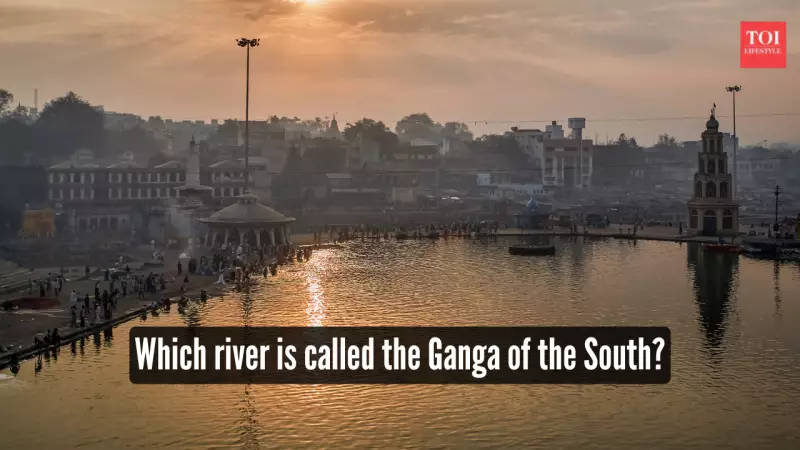
Often hailed as the Dakshin Ganga or the Ganga of the South, the Godavari River is far more than a mere watercourse. It is a colossal lifeline, weaving through the heart of peninsular India, nurturing civilizations, powering agriculture, and anchoring spiritual faith for millennia. Born in the Western Ghats of Maharashtra, this majestic river journeys over 1,465 kilometers to meet the Bay of Bengal, earning its title as the longest river in Peninsular India and the nation's second longest.
The Sacred Journey of the Dakshin Ganga
The Godavari's story begins near Trimbakeshwar in Nashik, Maharashtra. From its high-altitude origin, it charts a vast eastward course across the Deccan Plateau, flowing through the states of Maharashtra, Telangana, and Andhra Pradesh. Its extensive basin also touches parts of Odisha, Madhya Pradesh, and Chhattisgarh. The river culminates in a spectacular, fertile delta before its sacred waters merge with the Bay of Bengal. This delta, historically a cradle for ancient dynasties, is famously known as the 'Rice Bowl of the region' due to its incredibly fertile alluvial soil.
Its cultural and spiritual stature is immense. Revered as a mother goddess, the Godavari is deeply embedded in Hindu mythology, with mentions in the epic Ramayana. It is one of only four sites in India where the grand Kumbh Mela pilgrimage is held, with Nashik being a pivotal host. The river's other ancient name, Vriddha Ganga (Old Ganga), further underscores its historical and religious significance, drawing a direct parallel to the northern Ganges.

10 Lesser-Known Facts About the Godavari River
Beyond its known grandeur, the Godavari holds many fascinating secrets that highlight its unique character.
1. A Triple River System: Below Rajahmundry, the Godavari splits into two major distributaries, the Gautami and the Vashishta. This bifurcation creates one of India's largest and most agriculturally rich deltaic regions.
2. A Pilgrimage of Millions: The banks of the Godavari in Nashik transform into one of the world's largest human gatherings during the Kumbh Mela, a testament to the river's deep spiritual pull.
3. The Rice Bowl Delta: The Godavari Delta's fertile plains are a powerhouse of paddy cultivation, rightly earning the moniker 'Rice Bowl of India' and supporting the livelihoods of millions.
4. Ancient Mythological Roots: Legend holds that Lord Rama, Goddess Sita, and Lakshmana spent part of their exile in the serene environs of the Godavari, a connection immortalized in the Ramayana.
5. A Waterfall at Its Source: Near its origin in Nashik, the river forms the picturesque Someshwar Waterfalls, also known as Dudhsagar, a site considered highly pious and a natural marvel.
6. A Subject of Interstate Coordination: Given its flow across multiple states, the Godavari Water Disputes Tribunal oversees the equitable distribution of its waters, ensuring balanced usage for irrigation and other needs.
7. The Seven Holy Mouths: Tradition speaks of the 'Sapta Godavari'—the seven holy mouths through which the river meets the sea, each named after seven revered sages.
8. A Biodiversity Haven: The Godavari delta hosts the Coringa Wildlife Sanctuary, the country's third-largest mangrove forest. This critical ecosystem is a hotspot for marine life and a sanctuary for numerous bird species.
9. Monsoon-Dependent Lifeline: The river's flow is highly seasonal, with a staggering 84% of its rainfall occurring during the Southwest Monsoon (June-September). This makes it the crucial, pulsating artery for regional agriculture.
10. Built on Volcanic Rock: A unique geological feature is that most of the Godavari basin rests on the ancient, hard volcanic formations of the Deccan Traps. This foundation significantly influences its runoff patterns and groundwater storage capacity.

More Than Just a River
The Godavari River is an inseparable part of India's ecological, cultural, and economic fabric. With over a dozen major dams harnessing its power for irrigation and electricity, it is a driver of development. Its waters have quenched the thirst of empires, its banks have witnessed timeless rituals, and its delta continues to feed the nation. From its mythological echoes to its modern-day disputes and conservation challenges, the Godavari truly stands as the majestic, vital, and ever-flowing Dakshin Ganga of India.