Goa's Golden Epoch: When Goldsmiths Outshone Europe
Long before its beaches and churches defined its image, Goa was celebrated globally for an entirely different craft: goldsmithing. Renaissance-era travellers, in their accounts, lavished praise on Goan goldsmiths, declaring them unmatched in skill and even superior to their European counterparts. This acclaim, fueled by imported gold from sources like the Kolar fields, transformed local artisans into internationally sought-after talents, cementing Goa's reputation as a hub of exquisite craftsmanship.
The Rise of 'Golden Goa' and Its Master Artisans
The term 'Golden Goa' emerged during the Renaissance, not from local gold deposits, but from the travel of precious objects through its strategic port. As Tennessee-based art historian Kelli Wood explains, gold arrived via traders alongside gems, creating a flourishing trade that attracted global attention. This reputation is personified in Raulu Chatim, the only named Goan goldsmith consistently cited in 16th-century art histories. Recognized for extraordinary skill after the Portuguese conquest, Chatim was taken to Lisbon to work for King Manoel I for four years before returning to Goa, where he received a pension and the rare privilege of owning a horse.
His work, along with that of other Goan goldsmiths, met international demand for jewellery, Goa stones, bezoar-like composites in elaborate mounts, and luxury artefacts exported east and west. Yet, while figures like Chatim entered European records by name, countless artisans remained anonymous. "There is a tendency to remember stories of kings and empires, but seldom the makers whose labour created these artefacts," notes Leandre D’Souza, creative director at Sunaparanta Goa Centre for the Arts.

Reconstructing the History of Unnamed Makers
In collaboration with Goan artists and researchers, the 'Makers & Materials' initiative aims to reconstruct this obscured history. It highlights how techniques from unnamed craft communities survive in local practice, despite their creators being lost to time. The project delves into the materials, ecology, and craft that shaped Goa's artistic landscape over centuries.
Wood, an expert in Italian Renaissance and Baroque art, became engrossed in Goa's artistry during a visit to the Pilar Seminary Museum. Its rare collection—including bangles, temple jewellery, bells, and architectural fragments—alongside items at the Museum of Christian Art, allowed her team to envision Goa as a major centre of artistic production. They explored how builders, metalsmiths, carpenters, painters, gilders, and sculptors collaborated across religions, communities, and political regimes.
Key findings include:
- Traced innovations back to pre-Portuguese eras under the Kadamba, Vijayanagara, Bahamani, and Adilshahi sultanates.
- Highlighted the deep reliance on natural resources, creating an ecosystem where materials like oyster shells were used for window panes and shell lime plaster, defining Goan architecture.
- Mapped historic routes for transporting stone, showing Goa balanced local material use with imports of specialised stones and metals.
Belief, Exchange, and a Hybrid Artistic Language
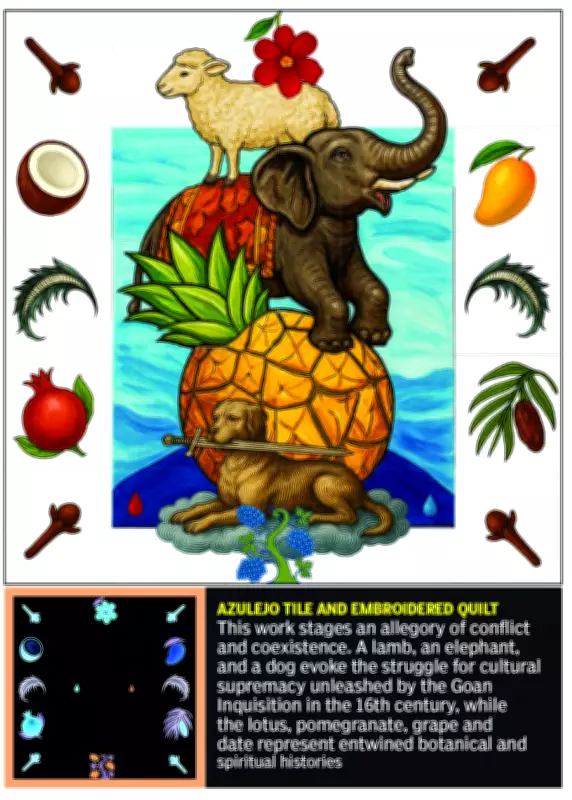
Goan folklore, such as the belief that Lord Hanuman brought the mango tree, ties ecological resources to craft production, a connection that persisted even after Christian conversion. In the 16th century, decorated wooden caskets and cabinets became popular with European merchants, blending imagery from Mughal inlay to naga-like figures. Similar iconography appeared in church pulpits, with gilt wooden naga-like angels adorning altars, and account books recording payments to Hindu sculptors despite prohibitions.
Wood argues that these objects are not mere adaptations for European purposes. "Craft communities understood how materials and styles conveyed complex local meanings, intertwining everyday and sacred experiences with their environment," she says. Despite scarce surviving artefacts from pre-Portuguese times, techniques endured through oral transmission and community practice.

Conventional labels like "Indo-Portuguese" fail to capture Goa's creative complexity. Over time, it absorbed influences from Islamic metalworkers, Hindu temple builders, European visitors, traders, enslaved artisans, and migrants, resulting in a layered, hybrid artistic language rooted in place. This rich heritage underscores Goa's role as a crossroads of craftsmanship, where artistry flourished through collaboration and resilience.