If you instantly understood phrases like 'mid aura', 'breadcrumbing', or 'caught in 4K' this year, you were fully immersed in the digital lingo of 2025. For everyone else, a whole new vocabulary, born on social media and perfected in group chats, became the dominant mode of online expression, often leaving people feeling out of the loop.
The New Lexicon of Digital Survival
This wasn't just about a few catchy words. The slang used by Generation Z fundamentally changed how emotions like humour, frustration, and exhaustion were communicated on the internet. These terms acted as essential tools for a generation navigating life within algorithms. Language evolution accelerated dramatically, with a phrase born in an Instagram comment at dawn trending globally by dusk, heavily propelled by influencers and content creators.
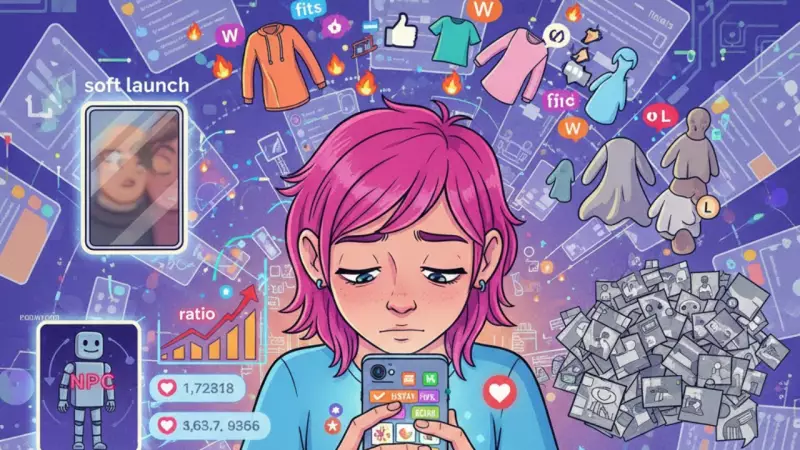
Efficiency was the core principle. Why write a paragraph when 'mid' (average) suffices? Why argue when you can declare 'ratio' (to be outnumbered in replies)? Words became powerful shorthand. 'Slay,' 'ate,' 'W,' and 'fire' served as instant stamps of approval, while 'L,' 'cringe,' and 'sus' were quick dismissals.

The emotional vocabulary was particularly nuanced. 'Delulu' allowed for hopeful self-delusion. 'Ick' named that sudden, irreversible turn-off. 'Situationship' perfectly captured the ambiguity of modern dating, and 'ghosting' explained its silent endings. Compliments evolved too; possessing 'rizz' (charisma) trumped old-school charm, and aspiring to be the 'main character' was a goal, unlike being an 'NPC' (Non-Playable Character), a mindless follower.
Oxford & Merriam-Webster's Words of the Year Tell the Story
The most telling signs of this linguistic shift came from the dictionary giants. Oxford's Word of the Year for 2025 was 'rage bait', defined as online content deliberately crafted to provoke anger and drive engagement. Identifying something as 'rage bait' became a popular defence mechanism, a way to signal awareness of manipulative content and opt out of the outrage cycle.
Meanwhile, Merriam-Webster crowned 'slop' as its Word of the Year. It describes the flood of low-quality, mass-produced digital content, often AI-generated. Those addictive, empty AI cat videos promising a 'Part 2'? That was pure slop. This term captured the growing fatigue with algorithm-fed, low-effort material clogging our feeds.
The Pushback: Touch Grass and JOMO
As digital fatigue set in, the slang itself began to advocate for a break. 'Doomscrolling' remained a common habit, but the counter-movement gained strength. 'Touch grass', once an insult, became genuine advice to reconnect with the offline world. This phrase saw a significant surge in September following a public appeal by Utah Governor Spencer Cox after a tragic event.
Similarly, JOMO (Joy of Missing Out) began to replace FOMO. Choosing to stay in, log off, and enjoy personal time without guilt became the new 'flex'. This reflected a conscious shift towards prioritising mental well-being over constant online presence.
A 2025 study published in the PubMedia Journal of Communication Science, titled 'The widespread use of slang and abbreviations among youth on social media', confirmed this trend. It found slang is the preferred communication mode for young people online, valuing speed and uniqueness. However, it also raised concerns, noting that 62% of youth use slang in formal settings, and 68% worry it's damaging language skills.
Ultimately, the slang of 2025 didn't fix the internet's problems. But it provided a shared, efficient, and often humorous language to survive it. In a world that often feels overwhelming, having the right words—even if it's just to say 'Lowkey exhausted. No cap. Time to touch grass'—matters more than ever.