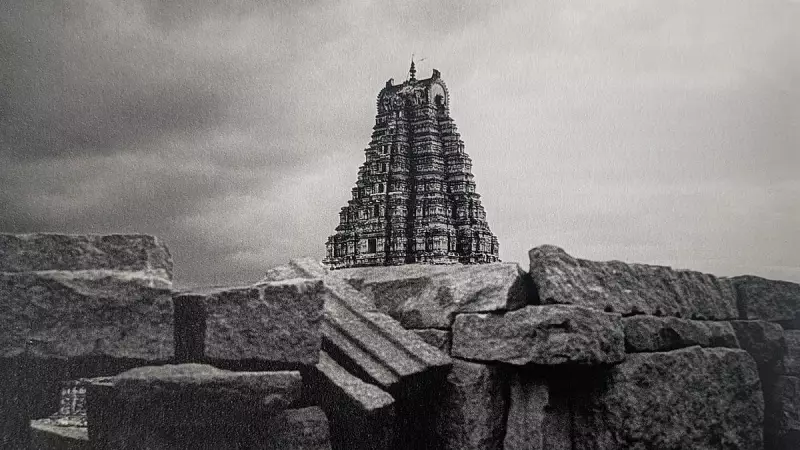
In the mid-19th century, the magnificent ruins of Hampi, the erstwhile capital of the Vijayanagara Empire, were captured through a lens for the very first time. This pioneering visual documentation was not the work of an Indian scholar but of a British military officer, whose photographs remain a vital historical resource today.
The Pioneer Behind the Lens: Colonel Alexander John Greenlaw
The man responsible for this historic feat was Colonel Alexander John Greenlaw (1818-1870), an officer serving with the British East India Company. In the year 1856, Greenlaw embarked on a significant project to systematically photograph the sprawling ruins of Hampi. His work resulted in the first comprehensive photographic record of the site, predating many other archaeological surveys.
Greenlaw's collection provided an unprecedented visual baseline of the monuments' condition in the 19th century. At a time when written descriptions and sketches were the primary means of documentation, his photographs offered a new level of detail and accuracy, freezing moments in the complex history of the ruins.
A Lasting Legacy of Stone and Shadow
The importance of Colonel Greenlaw's 1856 expedition cannot be overstated. His photographs serve as an invaluable benchmark for historians, archaeologists, and conservationists. They allow experts to study the state of preservation of various structures over 170 years ago, offering clues to the ravages of time, nature, and human intervention that occurred both before and after his visit.
These images are more than just historical records; they are poignant artistic statements. They capture the "sombre reflections" of a once-great empire, framing the dramatic landscape of boulders and ruins with an eye for composition and scale. The photographs stand as a silent testimony to the grandeur of Vijayanagara architecture, even in its decay.
Why Greenlaw's Work Remains Relevant
Today, as Hampi is a UNESCO World Heritage Site and a major tourist destination, Greenlaw's early photographic survey gains further significance. It helps in:
- Conservation Efforts: By comparing current conditions with the 1856 images, authorities can gauge the rate of deterioration and plan restoration.
- Historical Research: The photos provide context for understanding the site's layout and the identification of structures that may have been altered or lost.
- Cultural Heritage: They form a crucial chapter in the visual history of Indian archaeology and the role of early documentarians.
The story of Colonel Greenlaw's work reminds us that the documentation of heritage is a continuous process. His pioneering effort in 1856 laid the groundwork for the countless studies and photographic projects that followed, ensuring that the majesty of Hampi's ruins is preserved not just in stone, but also in memory and imagery for future generations.