Chandigarh Manuscript Heritage: Over 9,000 Items Catalogued
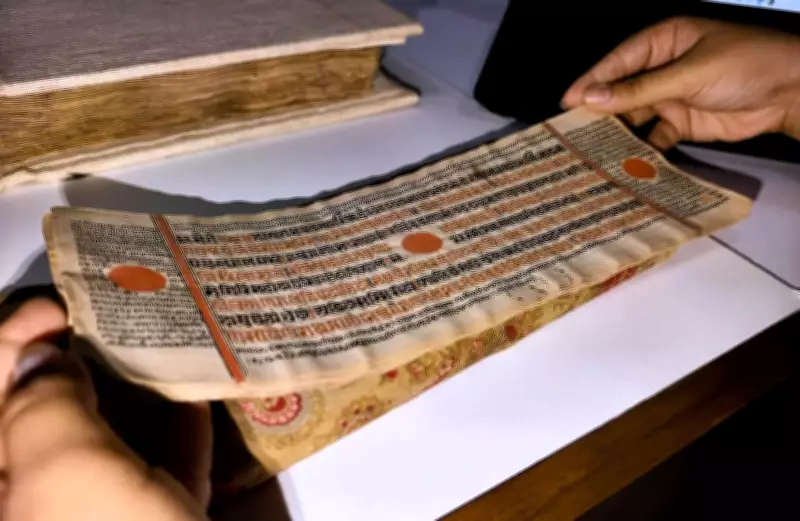
The Union Territory Department of Culture has successfully catalogued 9,009 manuscripts across seven higher research and educational institutions and libraries in Chandigarh. This comprehensive effort aims to identify, document, conserve, digitise, preserve, and promote the manuscript heritage of the city.
Phase Two: Community Engagement
In the second phase of the project, the department has hired and trained 100 volunteers who have begun visiting households to ask residents about any manuscripts in their possession. The goal is to collect and preserve these valuable cultural assets for future generations.
Gyan Bharatam Initiative
This initiative follows a memorandum of understanding (MoU) signed between the Chandigarh administration’s Department of Culture and the Ministry of Culture under the Gyan Bharatam programme. The five-year flagship mission of the Government of India seeks to provide a national platform to disseminate the cultural and intellectual wealth embedded in Indic manuscripts across diverse scripts, dialects, languages, and traditions. It also highlights their scientific and contemporary relevance.

Sources within the administration revealed that the ministry has decided to establish a dedicated digital platform called the National Digital Repository (NDR) to share India’s manuscript heritage globally. Manuscripts written by hand on paper, bark, cloth, metal, or palm leaf — typically over 75 years old — will be included. Lithographs and printed volumes are not considered manuscripts under this programme.
Community Outreach and Camps
The department has also engaged resident welfare associations (RWAs) to spread awareness through their networks and WhatsApp groups. Additionally, five camps have been set up in prominent markets — sectors 17, 22, 10, 9, and 8 — with more planned in other markets and universities.
Manuscripts Identified in Chandigarh
- Panjab University’s AC Joshi Library: 1,492 manuscripts (Arabic/Persian/Urdu/Punjabi)
- DAV College’s Lal Chand Research Library: 7,300 manuscripts (Sanskrit/Hindi)
- TS Central Library: 6 manuscripts (Sanskrit)
- Lajpat Rai Bhawan’s Dwarka Das Library: 75 manuscripts (Sanskrit/Urdu)
- Govt Museum and Art Gallery: 86 manuscripts (Pahari/Punjabi/Urdu)
- Punjab Digital Library: 49 manuscripts (Punjabi/Urdu/Persian)
- Sandeep Nischal: 1 manuscript (Sanskrit)
Total: 9,009 manuscripts
High-Level Committee for Monitoring
A high-level committee has been formed to monitor the programme. Members include the Secretary of Culture (Chairman), Deputy Commissioner, Joint Commissioner of MC, Director of Higher Education, Director of Technical Education, Director of Public Relations, Registrar of Panjab University, and Director of Govt Museum and Art Gallery (Member Secretary).
Key Terms of MoU (Ministry’s Role)
The ministry will provide framework, guidance, monitoring, and support. Funding, equipment, and allocations will be considered case-by-case. The programme has five verticals:

- Survey and Cataloguing
- Conservation and Capacity Building
- Technology and Digitisation
- Linguistics and Translation
- Research, Publication and Outreach