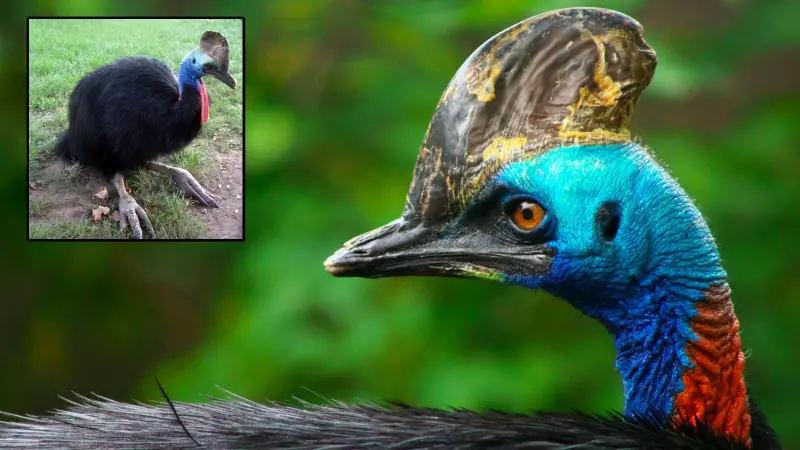
If you imagine all birds as harmless creatures, you need to think again. Cassowaries stand as one of the most dangerous birds on Earth. These large, flightless birds inhabit the rainforests of northern Australia and New Guinea. They command attention with their impressive size and strength.
A Formidable Presence in the Rainforest
Cassowaries are truly massive birds. They rank as the third tallest and second heaviest birds globally, only behind ostriches. An adult cassowary can tower up to 6 feet tall, which is about 1.8 meters. They often weigh as much as 60 kilograms. Their powerful legs and sharp claws make them formidable forest dwellers.
Despite their fearsome reputation, cassowaries are generally shy by nature. They typically attack only when they feel threatened or cornered. However, their sheer size and strength mean any encounter can turn dangerous quickly.

Anatomy Built for Defense and Dominance
Cassowaries possess a unique anatomy that makes them exceptionally lethal. Their muscular legs can deliver kicks strong enough to break bones. Each foot features a three-inch dagger-like claw on the inner toe. This natural weapon can slice through flesh and cause fatal injuries to humans and animals.
These birds also sport a helmet-like casque on their heads. Scientists believe this casque helps them move through dense rainforest vegetation. It may also play a role in communication and asserting dominance. Combined with their agility and surprising stealth, these features create a living tank of the forest floor.
Diet and Behavior: More Than Just Danger
Cassowaries are omnivores with a primarily frugivorous diet. They mainly eat fallen fruits, which makes them crucial seed dispersers in rainforest ecosystems. Their feeding habits help maintain forest diversity and health. They also consume fungi, insects, and small animals occasionally.
These birds are generally solitary creatures. They defend territories that can span several square kilometers. During breeding season, an interesting role reversal occurs. Male cassowaries take sole responsibility for incubating eggs and raising chicks. This demonstrates unusual parental care for a bird of such size and power.
Human Encounters and Conservation Concerns
In regions where human settlements border cassowary habitats, incidents sometimes occur. People may unintentionally startle or corner these birds. Cassowaries can reach speeds up to 50 km/h even through dense forest. Their agility makes escape difficult once they feel threatened.
Attacks remain rare but can be serious or even fatal. This danger earns cassowaries their title as "the world's most dangerous bird." Despite this reputation, they face significant conservation challenges. Habitat loss poses a major threat to their survival. Road accidents and predation of chicks further endanger populations.
Preserving rainforest habitats is crucial for cassowary conservation. Protecting these striking birds also helps maintain the delicate balance of their ecosystems. From their dagger-like claws to their astonishing strength, cassowaries prove that nature's most deadly creatures don't always fly. Sometimes they run, kick, and dominate the rainforest floor with unmatched power.