Gujarat's Bhil Tribe Takes Bold Steps to Reform Marriage Practices
In a significant move to modernize social customs, the Bhil Samaj Panch (BSP) in Dahod, eastern Gujarat, has implemented stringent regulations to discourage polygamy and curb extravagant wedding spending among the Bhil tribal community. Traditionally, polygamy has been prevalent in these tribal areas, but the new rules aim to foster change and financial prudence.
Hefty Penalties and Strict Conditions for Second Marriages
The BSP has announced a substantial fine of Rs 11 lakh for men who marry twice without proper authorization. According to BSP president S L Makhodiya, second marriages will now be permitted only under exceptional circumstances, such as the inability to have children or the death of the first wife. Prior approval from community panchas and, if applicable, the consent of the first wife are mandatory requirements.
In cases of violation, the fine will be used to reimburse the wedding expenses borne by the first wife's family, with the remaining amount directed toward community welfare initiatives. This measure is part of a broader effort to align tribal practices with contemporary values and reduce economic strain.

Capping Wedding Expenses to Alleviate Financial Burdens
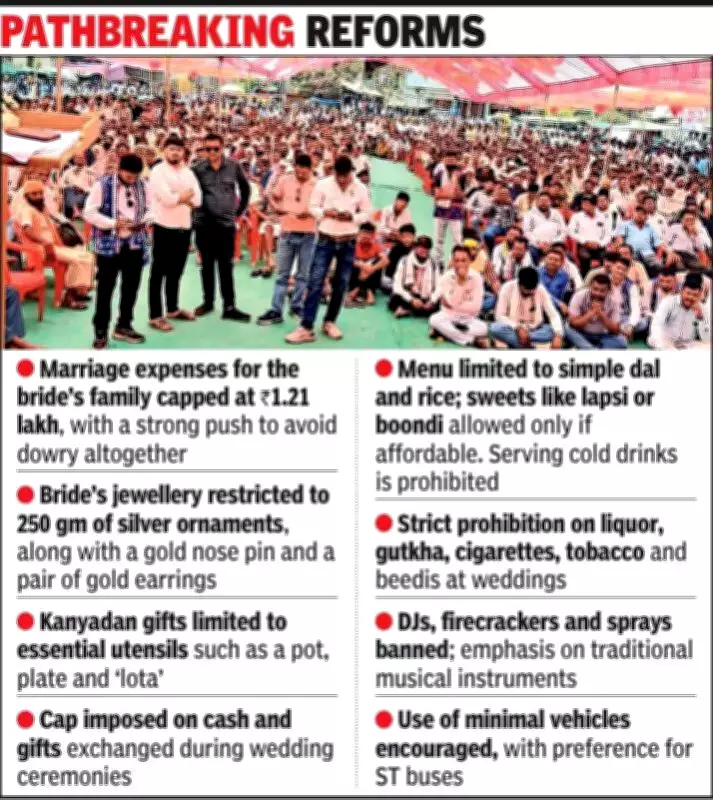
Alongside the polygamy regulations, the BSP has introduced measures to limit wedding costs, which have skyrocketed in recent years. Makhodiya highlighted that traditional dowry payments, originally intended to cover wedding expenses, have escalated to amounts as high as Rs 5 lakh, based on factors like the bride's education. Overall, average wedding expenses now range from Rs 8 lakh to Rs 10 lakh, leading many families to take loans and impose heavy financial demands on relatives.
To combat this, the community has prepared a model marriage constitution, encouraging members to adopt it. Since Holi, over 150 marriages have reportedly followed this constitution, promoting simpler ceremonies. Former MLA Chandrika Bariya, supporting the movement, noted that ostentatious spending on elements like DJs and car convoys has become a troubling trend, with DJs charging Rs 20,000 to Rs 25,000 per day for multiple days.
Challenges in Implementation and Cultural Influences
Tribal researcher and author Kanji Patel pointed out that tribal communities often emulate the spending habits they observe in broader society, influenced by movies and television. He expressed skepticism about the code's full adoption, suggesting that those who can afford it might flout the restrictions, as such spending can become compulsive. Patel also mentioned that similar decisions in other parts of Gujarat may have inspired this initiative.
The BSP, which includes elected representatives, community leaders, and former government officials, has held meetings in Garbada and Zalod to promote the new constitution. By addressing both polygamy and financial extravagance, the Bhil tribe aims to foster social progress and economic stability within their community.