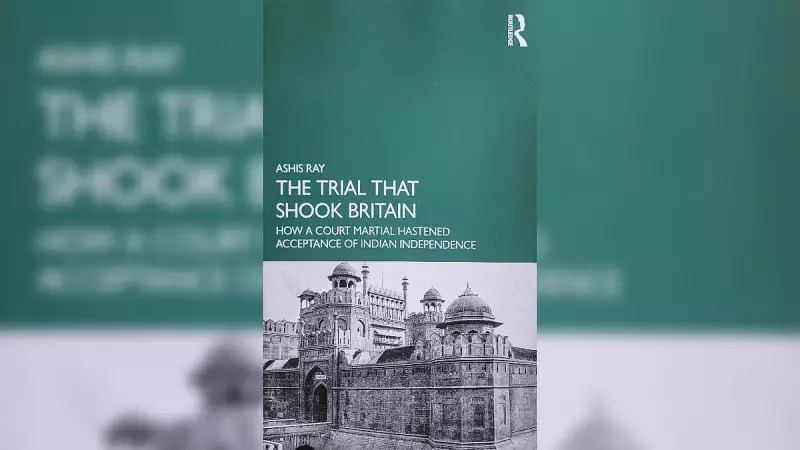
A thought-provoking book discussion held in Bengaluru recently cast a spotlight on a critical, yet often understated, catalyst for India's independence: the public trials of the Indian National Army (INA) soldiers in 1945. The event delved into how these proceedings acted as a powerful spark, re-energizing a national movement that had largely stalled during the Second World War.
The Lull in the Freedom Struggle
As highlighted by the speaker, noted as Ray, the period from 1939 to 1945 saw the Indian freedom movement reach a virtual standstill. The political landscape was fragmented, and mass mobilization had significantly waned. The focus of the British Empire was squarely on the global conflict, and internal dissent was managed with a firm hand. This created a period of uneasy quiet, but beneath the surface, sentiments were brewing.
The Spark of the Red Fort Trials
The end of World War II in 1945 set the stage for a dramatic shift. The British authorities decided to put captured soldiers of the Indian National Army, which was formed under the leadership of Netaji Subhas Chandra Bose to ally with Axis powers and fight the British, on public trial for treason. These trials, most famously held at the Red Fort in Delhi, proved to be a monumental miscalculation by the colonial rulers.

As details of the INA's efforts and the subsequent court-martials of its officers—Prem Sahgal, Gurubaksh Singh Dhillon, and Shah Nawaz Khan—reached the public, a wave of intense anger and nationalist fervor swept across the country. The discussion in Bengaluru emphasized that the trials transformed the INA soldiers from perceived enemy collaborators into national heroes in the eyes of the Indian populace.
Reigniting a Nation's Passion
The panel argued that the widespread public sympathy and outrage over the INA trials served as a crucial unifying force. It cut across religious and regional lines, presenting a direct challenge to British authority and its narrative. The collective anger translated into renewed momentum for the independence movement, which culminated in India gaining freedom just two years later, in 1947.
The Bengaluru event served as a reminder that while the non-violent movement led by Mahatma Gandhi formed the bedrock of the struggle, the emotional charge provided by the INA saga was an indispensable accelerant in the final chapter. It forced the British to confront the undeniable reality of a nation united in its demand for sovereignty, making the continuation of colonial rule an increasingly untenable proposition.