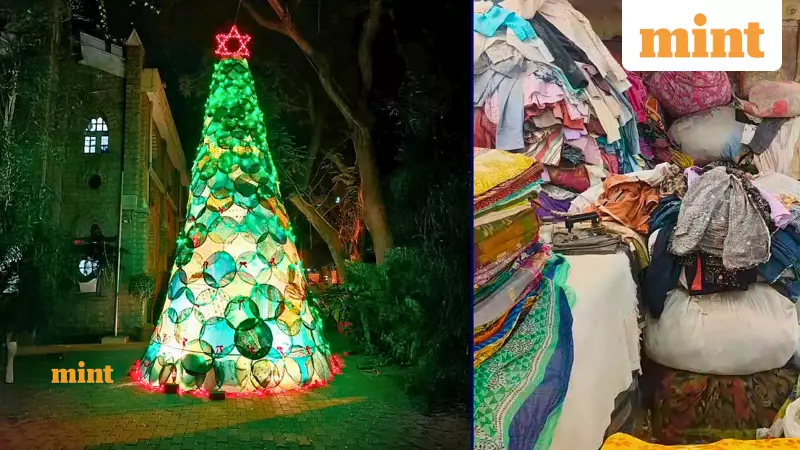
For the 17th consecutive year, a church in Bengaluru has captured the city's festive spirit with a stunning and sustainable Christmas creation. The Primrose Mar Thoma Church, located in India's tech capital, has become famous for its annual tradition of crafting magnificent Christmas trees entirely from recycled and eco-friendly materials.
A 25-Foot Tribute in Green Sarees
This year, for Christmas 2025, the church unveiled a spectacular 25-foot tall Christmas tree. The unique feature? The entire tree was constructed using old sarees donated by its congregation members. Volunteers dyed the sarees in various shades of green and meticulously arranged them on a sturdy metal frame to create the iconic tree shape.
The sarees were attached to metal wire frames of different sizes, building up the conical form. This project, often spearheaded by church member Daniel Thomas, aims to send a powerful message. It demonstrates that beautiful and meaningful festive decorations can be made from eco-friendly materials already present in our homes, reducing waste and promoting sustainability.

Inside the Church: Wreaths from Factory Scraps
The commitment to upcycling extended inside the church as well. Decorators created festive wreaths using leftover cloth pieces collected from local garment factories. A dedicated team of 15 to 20 volunteers invested nearly a month to complete all the decorations, showcasing community effort and creative recycling.
17 Years of Transforming Trash into Treasure
This green initiative began humbly in 2008 as a small experiment. It has since blossomed into a beloved annual tradition that the city eagerly anticipates. Over nearly two decades, the church has creatively repurposed a vast array of discarded materials.
The history of materials tells a story of innovation:
- 2008: Plastic bottles and tyres.
- 2009: Video tapes and plastic bags.
- 2010: Dry vegetables and grasses.
- 2011: Jacquard loom cards.
- 2012: Newspapers.
- 2013: Plastic covers.
- 2014: Soft drink bottles.
- 2015: Cloth scraps.
The creativity continued in subsequent years with materials like coconut shells and straw (2017), shredded paper (2019), industrial waste like edge-banding tape (2020), aluminium foil and cartons (2021), and bamboo strips (2022). The church has also utilized wire sleeves, packaging straps, cardboard boxes, and vegetable sacks in its past creations.
Sometimes, local industries have contributed by donating their waste materials for the cause. The church consistently opens its doors to the public, inviting everyone to witness how creativity and sustainability can beautifully converge during festivals. This Bengaluru tradition stands as a shining example of environmental consciousness and festive joy going hand in hand.