The Bayeux Tapestry: A Medieval Marvel's Enduring Legacy
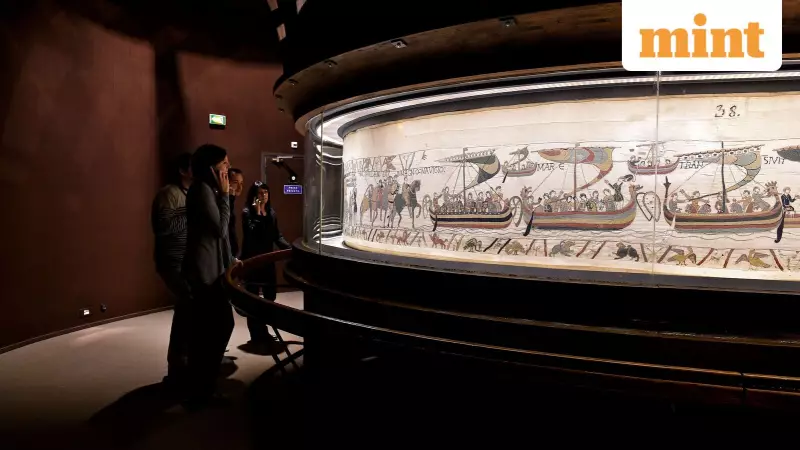
My first encounter with the Bayeux Tapestry occurred at the Musée de la Tapisserie de Bayeux in Normandy, France, within a gallery so softly illuminated that even the light bulbs appeared to whisper in reverence. This extraordinary embroidery stretches around the museum walls in what feels like a single, continuous narrative thread. The Bayeux Tapestry does not surrender its secrets with a casual glance; it demands patient observation and contemplation.
A Technical Masterpiece of Storytelling
Despite its common name, the Bayeux Tapestry is not technically a tapestry at all. This magnificent fabric measures nearly 70 meters in length and half a meter in height, consisting of linen meticulously embroidered with colorful wool threads. Photography is strictly prohibited within its presence, as the intense flash of cameras could potentially damage the ancient fibers that have survived for nearly a millennium.
The embroidery vividly recounts the events leading to that fateful Saturday in October 1066, which marked the decisive Norman conquest of England. Through 58 detailed scenes featuring 626 distinct characters, the fabric illustrates William the Conqueror's successful campaign to claim the English throne from Harold Godwinson, thereby establishing himself as the first Norman king of England.

The Artistry Behind the Historical Narrative
What renders the Bayeux Tapestry truly captivating extends beyond its historical account to the sheer delight evident in its storytelling. The horses depicted appear perpetually startled, as though history continues to unfold around them without warning. The fabric comes alive with intricate images of armor, celebratory feasts, shipbuilding activities, and battlefield strategies—all unfolding with the narrative clarity of a contemporary graphic novel.
Historical consensus suggests that Bishop Odo, William the Conqueror's half-brother, commissioned this remarkable piece. He appears repeatedly throughout the imagery, portrayed with an aura of heroic utility and piety. Ironically, despite celebrating Norman victory, the embroidery was almost certainly designed in England and stitched by Anglo-Saxon hands—the defeated population memorializing their own subjugation through needle and thread.
A Perilous Journey Through History
For centuries, the embroidery remained securely housed within Bayeux Cathedral, brought out only once annually during religious festivals before being carefully rolled and stored away again. It narrowly survived the tumultuous years of the French Revolution, at one point nearly being repurposed as a simple wagon cover.
During World War II, the Nazis took particular interest in the Bayeux Tapestry, examining, interpreting, and frequently misinterpreting its imagery. To protect it from Allied bombings, the precious artifact was repeatedly relocated. At one critical juncture, it was stored in the Louvre under orders from Heinrich Himmler, head of the Nazi SS, who allegedly intended to transport it to Berlin before Allied forces could liberate Paris.
Contemporary Home and Controversial Journey
Today, the Bayeux Tapestry finds its permanent residence within the carefully controlled environment of the Musée de la Tapisserie de Bayeux in Normandy, just a short distance from where William originally embarked across the English Channel to challenge Harold. The museum attracts approximately 400,000 visitors annually, with audio guides narrating the story of all 58 scenes in approximately 20-25 minutes.
In a historic development scheduled for autumn 2026, after nearly nine centuries, the Bayeux Tapestry will return to England on a temporary loan spanning several months. It will be prominently displayed at the British Museum's Sainsbury Exhibitions Gallery (Room 30) from September 2026 through June or July 2027, coinciding with renovation work at its Normandy museum home. This planned relocation has already sparked considerable controversy and debate within cultural circles.

Conservation Concerns and Artistic Criticism
Renowned artist David Hockney, who currently resides in Normandy, has vehemently criticized this proposed move, labeling it "madness" and expressing serious concerns about potential damage during transit. In a recent interview with the BBC, British Museum director Nicholas Cullinan addressed these apprehensions directly: "While we understand these concerns, the museum has a world-leading conservation and collections team who are experts at handling and caring for this type of material."
The fundamental question remains: why undertake such a risky relocation? The answer lies in the tapestry's unparalleled ability to illuminate medieval life and pivotal historical events that shaped England's destiny in ways that textual accounts simply cannot match. The embroidery serves as a remarkable precursor to modern graphic novels, its visual narrative power enduring through conquests, revolutions, and regime changes.
Transformation at the Normandy Museum
The Bayeux Tapestry's current home in the quaint town of Bayeux closed its doors in September 2025 for a comprehensive redesign that will fundamentally transform how visitors experience this embroidered narrative in future years. The renovation project, led by the British architectural studio Rogers Stirk Harbour + Partners, specifically addresses critical conservation concerns regarding the fragile cloth while improving visitor circulation throughout the exhibition space.
In the innovative new layout, the embroidery will no longer hang vertically within a narrow linear gallery. Instead, it will rest upon a gently sloping surface designed to reduce physical strain on the ancient fabric while allowing viewers to engage with individual scenes more comfortably. This inclined presentation promises a more contemplative journey through the Norman conquest story, encouraging the same deliberate pace that makes the current audio-narrated experience so profoundly effective. The museum is scheduled to reopen in October 2027, shortly after the tapestry's return from its landmark exhibition at the British Museum.
Diplomatic Dimensions and Cultural Negotiations
The Bayeux Tapestry recently found itself at the center of a diplomatic controversy surrounding its temporary move to England. During loan discussions, French officials proposed that French visitors might receive complimentary admission to the British Museum—a gesture framed within language emphasizing renewed cooperation and goodwill between nations. This suggestion was received, carefully considered, and ultimately declined with characteristic British restraint.
The tapestry's impending arrival has also been leveraged within broader cultural negotiations, with France reportedly seeking a reciprocal loan arrangement, ideally involving something equally significant yet more portable—specifically, the Rosetta Stone. For a strip of medieval embroidery originally commissioned to present one perspective of a historical conflict, it remains remarkably capable of unsettling contemporary international relations. Nearly a thousand years after its creation, echoes of the Norman conquest still resonate subtly in the background, with British pride remaining sensitive to even the slightest provocation.
Rishad Saam Mehta is a Mumbai-based author and travel writer whose insights into cultural heritage continue to enlighten readers worldwide.