Barnala's Naat Mela: A 48-Year Legacy of Defiant Theatre in Punjab's Heartland
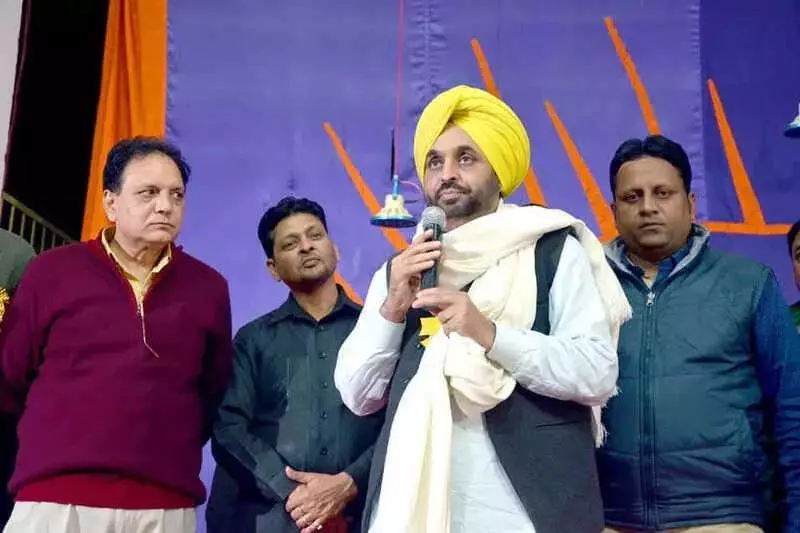
In the vibrant Malwa region of Punjab, a small-town stage that has steadfastly resisted terrorism, monsoon floods, and political turmoil is preparing to unveil nearly five decades of dramatic history. The 48th annual Naat Mela theatre festival makes its triumphant return to Barnala next week, scheduled to run from January 30 to February 1. What originated in 1977 as a grassroots initiative to bring cultural enrichment to a recreation-starved region has blossomed into one of North India's most enduring cultural institutions. This festival stands as Punjab's unwavering cultural pillar, a beacon that refused to dim even during the state's most turbulent decades. Among the illustrious personalities who launched their careers under its spotlights is none other than Punjab's current Chief Minister, Bhagwant Mann.
A Legacy Forged in Defiance and Determination
The remarkable survival and growth of the Naat Mela festival serve as powerful testimony to the resilience and grit of Barnala's local community. Emerging shortly after the lifting of India's national Emergency in 1977, the Naat Mela quickly established itself as a cultural fixture in the Malwa hinterland. Even during the peak of Punjab's terrorism period in the late 1980s and early 1990s, the lights at the Maha Shakti Kala Mandir venue never dimmed, maintaining their glow against all odds.
Organizers vividly recall a pivotal moment in 1992 when the local administration, citing the height of civil unrest and security concerns, admitted it could not provide adequate security and advised against holding the event. The performers from Punjab and Haryana told us they were willing to take the stage even without security, organizers revealed. That extraordinary courage emboldened us tremendously. When the administration witnessed that unwavering enthusiasm and commitment, they relented and allowed the plays to proceed as planned.

From Humble Community Roots to Political Heights
The Naat Mela has served as a primary incubator for artistic talent that now leads and shapes the state. Punjab Chief Minister Bhagwant Mann was once a regular fixture on this very stage, performing as a comedian and singer long before his remarkable political ascent. Other notable alumni who honed their craft at Barnala's festival include popular comedian Rana Ranbir and prominent arts personality Nirmal Jaura, demonstrating the event's significant impact on Punjab's cultural landscape.
In its formative years, the festival represented a raw, communal effort characterized by remarkable improvisation, endurance, and dedication. When the inaugural team cancelled at the last minute in 1977, founders urgently traveled 30 kilometers to Rampura Phul to recruit a replacement troupe mere hours before showtime. Before the auditorium received proper covering a decade ago, artists and audiences alike braved the bitter February cold by bringing their own quilts and sleeping bags. In the early 1990s, after torrential rains flooded the open-air Ramlila stage, performers spent an entire day manually draining the venue using buckets, ensuring the show could proceed that very night.
'A Mirror to Society': Reflecting Punjab's Historical Journey
Barnala had writers, but it lacked a proper voice for stage art, explained Anil Dutt Sharma, a senior member of the Maha Shakti Kala Mandir, recalling how local SD College lecturers Jai Parkash Garg and N D Sharma, accountant Kaur Sain Garg, Sham Sundar, Sat Bhushan Goyal, and others collaborated in 1977 to organize the theatre festival. Their repertoire emerged directly from the region's historical scars and experiences. Anil elaborated: The echoes of the 1947 partition, the rise of Naxalism, and the emergency period provided the essential fodder for our plays. It wasn't merely entertainment; it represented a vital way for people to process and understand what they had lived through.

The Modern Festival: Evolution and Expansion
Initially conceived as an invitational event, the Naat Mela transitioned into a competitive format during the 1980s, further elevating its artistic standards. Today, it attracts talented theatre troupes from distant regions including Rajasthan, Jammu and Kashmir, Jharkhand, and Madhya Pradesh. The upcoming three-day edition will feature an engaging mix of formal stage plays and dynamic 'nukkad nataks' (street plays) performed throughout Barnala town. This continuing journey has transformed what began as a small-town gathering into a national beacon for the performing arts, celebrating creativity, resilience, and community spirit against all historical challenges.