The Whispering Soul of India's Silicon Valley
Bangalore reveals itself not through loud declarations but through layered silences and subtle whispers. The city's essence permeates through traffic that halts without reason, flyovers leading to incomplete dreams, and the constant hum of data servers blending with the hiss of boiling filter coffee. This isn't a metropolis of bold statements but one where disappearance has become a daily art form - trees, ponds, and public memories vanish with bureaucratic precision, yet the city's spirit persists.
Quiet Protests and Cultural Sanctuaries
In Bangalore, protest rarely goes viral but manifests in countless quiet acts of reclamation. It lives in the retired librarian collecting plastic wrappers in Lalbagh every morning, the tech professional teaching Kannada to construction workers' children on Sundays, and the actor performing Brecht to audiences expecting comedy. The city nurtures these subtle rebellions through spaces where reflection becomes a civic gesture.
Cultural hubs like Blossoms, Bookworm, Sapna, and Champaca serve as repositories of memory and dialogue. At Atta Galatta, literature festivals build community, while the Bangalore International Centre hosts discussions on dissent and diplomacy. Chitrakala Parishath showcases artistic narratives beyond political constraints, and Ranga Shankara provides a platform for multilingual dramas from across India.

The city's spiritual spaces, including St Mary's Basilica, St Mark's Cathedral, and Holy Trinity Church, offer architectural markers of old Bangalore where quiet conversations unfold beneath vaulted arches and stained glass windows that capture morning light like prayers held gently in open palms.
Concrete and Green: The City's Breathing Paradox
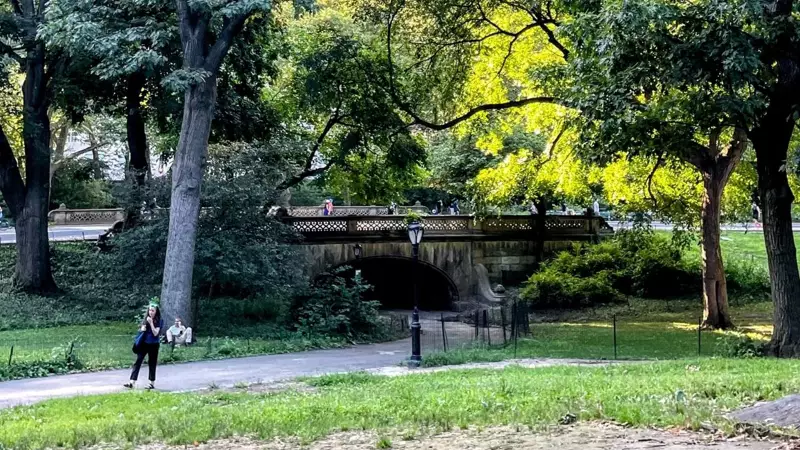
Bangalore represents a delicate negotiation between steel and soil, where concrete coexists with unexpected bursts of nature. Peepal trees outlive political parties, while in Cubbon Park, beneath trees older than Indian Independence, students read Octavia Butler alongside uncles chanting the Vishnu Sahasranamam.
The city's environmental challenges tell a story of resilience and loss. Once known as the "City of Lakes," Bangalore had approximately 285 lakes in the 1960s, but fewer than 80 remain today with even fewer containing clean water. Yet citizen-led rejuvenation efforts at Puttenahalli and resistance against Bellandur's pollution demonstrate nature's refusal to surrender quietly.
Lalbagh remains a sanctuary of botanical wisdom where joggers trace paths around ancient rocks, while Cubbon Park functions as a leafy parliament hosting couples, chess players, dogs, poets, musicians, and protestors under its constitutional shade. Even in rapidly developing areas like Whitefield, a lone frangipani tree at a bus stop serves as a reminder that the land remembers its essence.
The Revolution of Remembrance
The true transformation happening in Bangalore might not be about disruption but about preservation. The city challenges its inhabitants to reconsider progress, suggesting that the real revolution lies in slowing down, saying no, and staying soft.
This philosophy manifests in Sunday mornings in Indiranagar with flute music echoing across rooftops, auto-rickshaws featuring Shankar Nag's or Dr Rajkumar's photos playing Ilaiyaraaja while overtaking Teslas, and the pre-dawn aroma of fresh filter coffee mingling with the buttery crispness of masala dosa at Vidyarthi Bhavan.
What makes Bangalore uniquely Indian is its role as a melting pot where Kempe Gowda's statue watches over an airport while the city's pulse belongs equally to cab drivers from Maharashtra, cloud engineers from Madhubani, barista-poets from Hubli, and migrant tailors from Assam. People arrive from every corner of India - from Himachal's hills to Bengal's deltas, from Rajasthan's deserts to Tamil Nadu's coastlines - finding shared skies above MG Road and common ambitions within startup cubicles and hospital corridors.

In an age dominated by glowing screens and endless data, Bangalore reminds us that knowing someone requires the risk of being fully present. The city that once welcomed newcomers with portraits of Jnanpith awardees on BMTC buses and writers in humble tea stalls continues to make room for poets in public spaces, preserving the unexpected grace of literature on the move.