Advanced scientific methods are now providing archaeologists with a far richer understanding of India's ancient past than traditional techniques alone could offer. This revelation came from a senior official of the Archaeological Survey of India (ASI) at a major international conference in Gujarat.
Science: A New Lens on Ancient Heritage
Speaking at the five-day international conference and workshop on Indian metals and metallurgy at IIT Gandhinagar, which commenced on Monday, Prof Alok Tripathi, additional director general (ADG) of the ASI, emphasized the transformative role of modern analysis. He stated that India's exceptionally rich cultural heritage can now be explored beyond mere physical examination.
"Scientific analysis enables researchers to understand the composition, provenance, trade networks, and technological advancements associated with ancient objects," Prof Tripathi explained. He affirmed that these approaches allow for a deeper and more accurate understanding of India's history, uncovering stories that artifacts silently hold.

A National Showcase of Ancient Metalwork
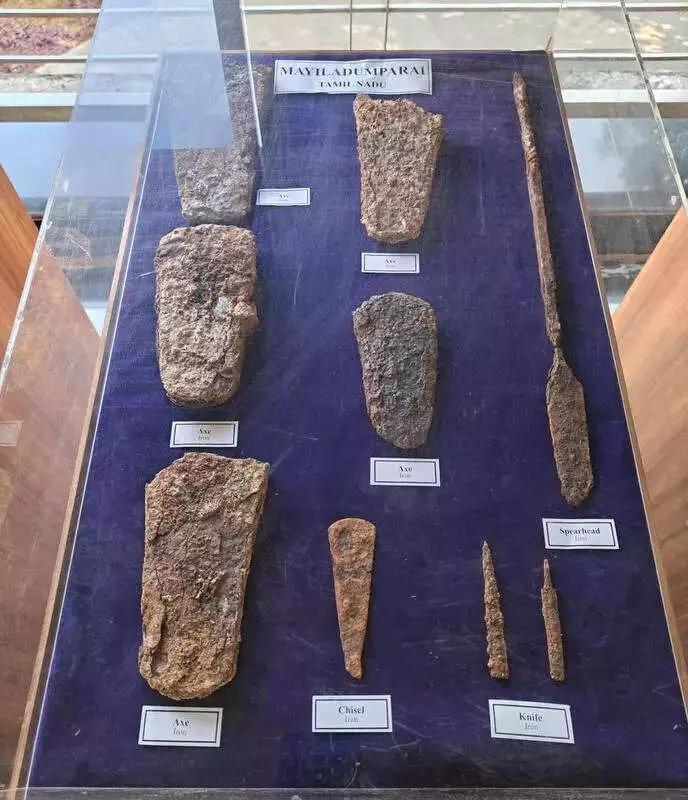
The conference, a significant gathering for experts, featured a unique exhibition. Dr Alok Kumar Kanungo, the conference convenor from IIT Gandhinagar, revealed that for the first time, metal artefacts from 11 excavation sites across the country were displayed. These sites spanned from Tamil Nadu and Uttar Pradesh to Gujarat.
The event also included special live demonstrations. Attendees witnessed an ancient smelting technique from Madhya Pradesh and observed the traditional brass working methods of the Desia Kondh community from Odisha. Dr Kanungo highlighted the broader significance, noting, "Metallurgy played a major part in the urbanization of ancient settlements, and its advancement was crucial to the overall science and technology of those eras."
A Living Tradition Spanning Millennia
Experts at the conference underscored the depth and continuity of India's metallurgical knowledge. Dr V Selvakumar, head of the department of maritime history and marine archaeology at Tamil University, pointed out that India possesses a very old and complex metallurgical tradition dating back more than 5,000 years.
"This tradition forms an important part of the Indian knowledge system," Dr Selvakumar said. He stressed that this advanced technical wisdom was not lost to time but has been nurtured by local communities over countless generations and continues to survive in practices seen today, connecting the modern era directly to a sophisticated ancient past.