ASI Officially Recognizes Babu Jagat Singh as Sarnath's Original Excavator
In a significant historical correction, the Archaeological Survey of India (ASI) in New Delhi has formally acknowledged that the Sarnath archaeological site in Varanasi was first brought to light through excavations conducted by Babu Jagat Singh in the late 18th century. This recognition follows an extensive study of authentic documents and primary historical evidence, culminating in the installation of a revised inscription plaque at the Sarnath ASI site, as authorized by a letter dated February 10.
Long-Suppressed Historical Fact Receives Official Validation
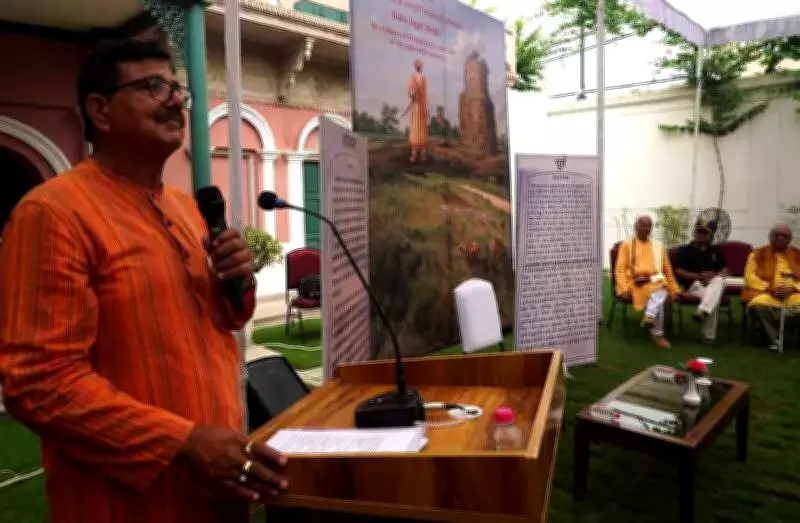
Speaking to reporters on Monday, Pradeep Narayan Singh, a sixth-generation descendant of Babu Jagat Singh and patron of the Babu Jagat Singh Royal Family Project Research Committee, highlighted that this crucial contribution had remained suppressed in the pages of history for a long time. He emphasized that through diligent efforts by the research committee and based on verified sources, this oversight has now been officially rectified.
Pradeep Narayan Singh stated, "For decades, the true origins of Sarnath's discovery were obscured, but recent research has brought Babu Jagat Singh's pioneering work to the forefront. This official recognition by the ASI marks a pivotal moment in correcting historical narratives."

Correcting Colonial-Era Misconceptions Through Collaborative Research
The research committee presented authenticated documents to the Archaeological Survey of India, New Delhi, which led to the correction of a long-standing misconception that had persisted since the colonial period. This is not the first such revision; last year, the Dharmarajika plaque within the Sarnath complex was also updated and replaced with a new one to reflect accurate historical facts.
The process of revising these inscription plaques involved valuable contributions from a diverse group of scholars and institutions. Pradeep Narayan Singh elaborated, "We received immense support from scholars in Varanasi, as well as from universities and colleges including Jawaharlal Nehru University, University of Kolkata, University of Lucknow, and Patna University. Both present and retired faculty members played a crucial role in this endeavor."
Ongoing Research Promises Further Revelations
The research work is continuing, with the committee committed to uncovering and sharing new facts with the nation. Pradeep Narayan Singh added that ongoing investigations are likely to reveal additional insights into Sarnath's history and Babu Jagat Singh's contributions, which will be disseminated to the public in due course.
This development underscores the importance of revisiting historical records with rigorous scholarship to ensure accuracy and honor the legacies of individuals like Babu Jagat Singh, whose early excavations laid the groundwork for one of India's most significant archaeological sites.