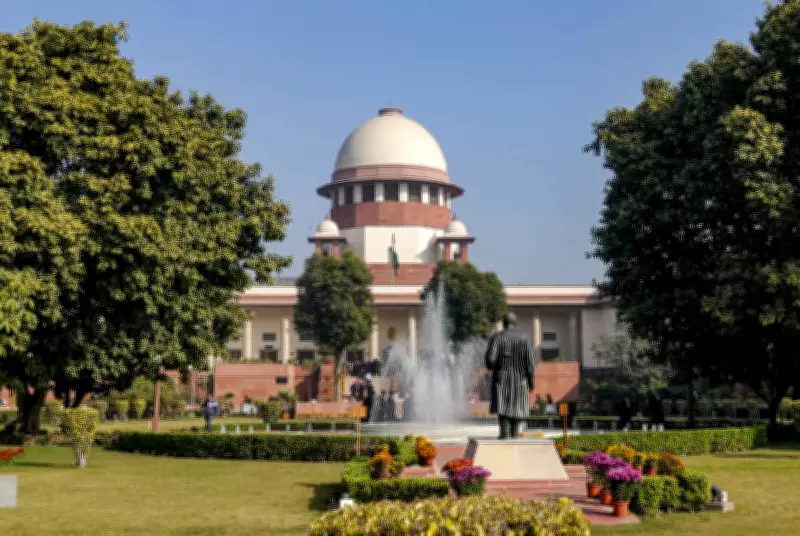
The Supreme Court on Tuesday came to the rescue of 12 life convicts who had served 12 years in jail, acquitting all of them in a 2008 murder case in Assam, holding that the police investigation was not proper.
Court criticizes investigation
Pointing out faults in the probe, which could have been due to 'ignorance, inefficiency or malicious motivation', the Supreme Court began its verdict by stating, 'An inept investigation or a scripted enquiry, both are fatal to criminal prosecution but the latter has lethal consequences when there is a possibility of totally innocent persons being crucified.'
A bench of Justices Sanjay Kumar and K Vinod Chandran accepted advocate Talha Abdul Rahman's petition, which highlighted various loopholes in the prosecution's case. The court said there was insufficient proof to establish the culpability of the accused and set aside the conviction and sentence orders of the trial court and the Gauhati High Court.

Directions to Assam government
The court directed the Assam government to take steps to provide proper training to its police force. 'It is unfortunate that the police officer who reached the spot immediately after the incident failed to follow due procedure to set the criminal investigation in motion as per the CrPC,' the bench observed.
'Be it ignorance, inefficiency or malicious motivation, the crime is left unresolved, and considerable time and money has been spent in prosecuting 16 persons, some of whom died during trial and others suffered incarceration for long periods,' it said.
The state and its home department 'would do well to better equip their officers in investigating crimes and educating them of due procedure,' the bench added.
Specific failures in investigation
The Supreme Court noted that despite police reaching the spot immediately after the assault, in which one person was allegedly killed and two others grievously injured, no attempt was made to collect the blood spilled at the spot to match it with that of the deceased and the injured. The bench said weapons seized were neither sent for forensic analysis nor were the accused confronted with eyewitnesses or the doctor who conducted the postmortem.