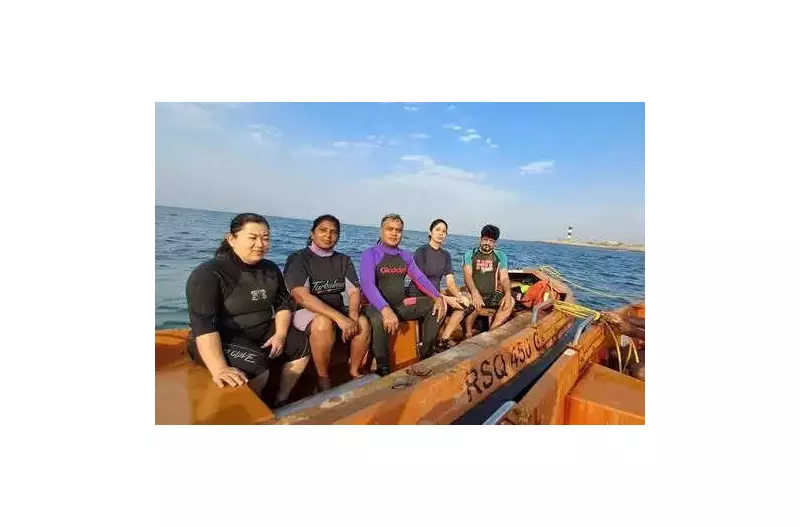
The Archaeological Survey of India (ASI) has announced plans for a significant new phase of archaeological exploration in Dwarka, Gujarat. This ancient coastal town, deeply entwined with the legends of Lord Krishna, will be the focus of renewed and extensive excavations both on land and beneath the waves of the Arabian Sea.
Modern Technology for Ancient Mysteries
Senior ASI officials revealed that the upcoming work will be far more systematic and detailed than previous efforts. It aims to leverage modern technology to investigate previously unexamined areas, seeking a richer understanding of the region's historical and cultural layers. The last major underwater excavations at Dwarka were conducted between 2005 and 2007, with limited studies resuming in 2025.
Professor Alok Tripathi, Additional Director General of the ASI, stated that the scope will be expanded significantly. The ASI's Underwater Archaeology Wing (UAW) will target new zones at Beyt Dwarka and other unexplored underwater sites. "Dwarka has been under study for nearly 40 years, but the work so far has been limited in scope and objectives," Prof. Tripathi explained. "This time, the excavations will be more detailed as we plan to explore areas that have not been studied in much detail."

Diving Deeper: On Land and Sea
The underwater mission will employ advanced tools to enable larger and deeper excavations in the Arabian Sea. Prof. Tripathi, who was part of a UAW team that conducted exploratory dives in February 2023, highlighted a specific new focus area: "We are now examining the other side of the mouth of the Gomti river." The site gained national prominence in February 2024 when Prime Minister Narendra Modi dived offshore to view submerged remains.
On land, archaeologists will shift their attention to relatively undisturbed sections of Beyt Dwarka, moving beyond earlier cliff-area concentrations. "We are now going deeper inside the forest area, where we have observed signs of a significant settlement," Prof. Tripathi said. He anticipates that excavations at lower levels could unveil crucial details about settlement planning, economic activities, arts and crafts, and the daily life of the ancient inhabitants.
Gujarat's Rich Archaeological Tapestry
The fascination with Dwarka stems largely from the enduring legend of the sunken city founded by Lord Krishna. Past explorations have already yielded a trove of antiquities, including terracotta objects, beads, bangle fragments, copper rings, iron ingots, and pottery. The new excavations aim to build on this legacy.
This initiative is part of a broader wave of archaeological activity in Gujarat. Concurrently, the ASI has also begun work at:
- Valabhipur: The ancient capital in Bhavnagar district.
- Lothal: The Harappan-era port city, where work is intensifying ahead of the upcoming National Maritime Heritage Complex.
Prof. Tripathi emphasized that modern archaeology involves more than just digging. "Our task is also to place findings in perspective and fill gaps in historical understanding," he noted, affirming that India's use of technology and interdisciplinary approaches matches global standards. This activity follows major finds at other Gujarat sites like Vadnagar and the UNESCO World Heritage Site of Dholavira, underscoring the state's profound archaeological significance.