In the heart of modern Bengaluru, where technology and innovation thrive, lies a historical treasure trove that few have explored with such depth and passion. Architect and researcher Yashaswini Sharma has dedicated her work to uncovering the ancient stories embedded within the city's oldest neighborhoods, revealing how Bengaluru's streets preserve centuries of history.
The Architectural Detective
Unlike many urban historians who focus on colonial architecture, Yashaswini Sharma has chosen to delve specifically into the history of Bengaluru's walled core, tracing its origins back to the era of Kempe Gowda. Her unique approach examines how even the names of surviving neighborhoods and street layouts serve as living artifacts of the past.
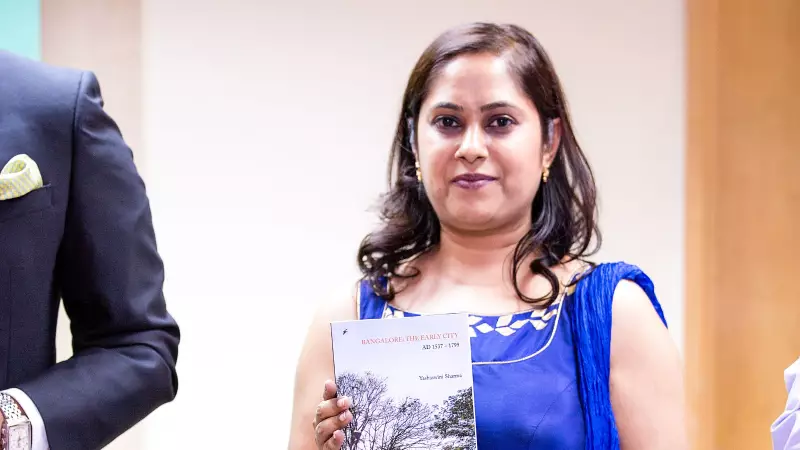
In her 2016 book Bangalore: The Early City, Sharma meticulously documents the evolution of the walled pete area and its development under various rulers. Her professional background through Esthetique Architects, which specializes in traditional architecture and restoration, provided the perfect foundation for this historical exploration.

"When I started my architectural studies, I invariably took a route through the pete," Sharma recalls about her early inspiration. "I could see a change in the architecture and social fabric. Even the way people gathered was different, the lifestyle, the size of the roads—trying to understand that was the beginning of the journey."
Traces of Kempe Gowda's Legacy
Remarkably, many elements from Kempe Gowda's original city planning remain visible today, though their forms have transformed over centuries. Sharma notes that while the character has changed, the fundamental structures persist in fascinating ways.
"The roads, the boundaries—they all changed their character but remained," she explains. "The old fortifications have turned into roads. We know that it was very much like the first 18th-century map from 1791 during the Third Anglo-Mysore War."
Among the surviving elements are historic temples and the north entrance of the oval fort, though the palaces have been lost to time. What was constructed in stone has endured, providing tangible connections to Bengaluru's earliest urban planning.
Ancient Trading Hub Revealed
Sharma's research uncovers a crucial distinction in Bengaluru's historical identity. While the British era established the city as a military cantonment, Kempe Gowda's original vision created a thriving trading town. The defensive hill fortress protecting Kempe Gowda's domains was strategically located at Savanadurga.
The evidence of Bengaluru's ancient trade significance comes from surprising archaeological finds. "We have found Roman coins in two places in Bangalore, dated from the 1st century AD," Sharma reveals. "This means that we had a trade route passing through. The Chola southern highway also passed through these parts."
The neighborhood names within the pete area further confirm this commercial heritage. Each sub-pete was organized around specific commodities, with communities associating themselves with particular trades and areas. Thigalarpet, for instance, derives from the Thigala community, who organized themselves around the Dharmaraya (Yudhistira) temple.
Rediscovering Indian Town Planning Principles
One of Sharma's most significant contributions lies in her exploration of indigenous Indian town planning systems, which she found documented in ancient Shilpa Shastras. These canonical treatises, surprisingly absent from modern architectural curricula, contain sophisticated principles of urban design that shaped cities like Bengaluru.
"I had to go back and refer to these canonical treatises—in India these are quite regional with their variations," Sharma notes about her research methodology. "I had to find the principles behind the layouts, and I found them in the Shilpa Shastras."
The architectural influences visible in the pete area span multiple historical periods, from Ganga and Chola times to the Vijayanagara era of Kempe Gowda. The later Vijayanagara imprint remains particularly strong in the urban fabric of the old city.

Some of Sharma's earliest historical sources date back to the Third Anglo-Mysore War, including detailed drawings of the city created during military assaults on the fort and walled town. These documents provide invaluable insights into Bengaluru's urban landscape at a critical historical juncture.
Through her groundbreaking work, Yashaswini Sharma has not only preserved Bengaluru's historical memory but has also demonstrated how ancient Indian urban planning principles continue to influence the city's character centuries later.