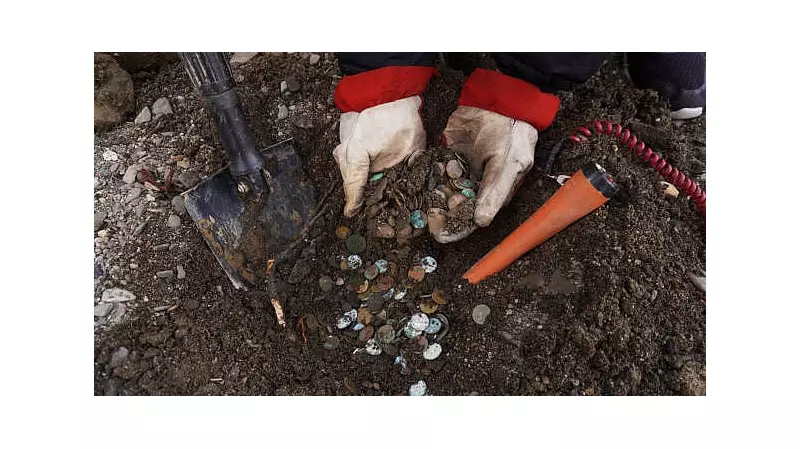
In a significant archaeological breakthrough, a team from Pakistan has unearthed a collection of rare coins and intricately carved decorative stones at a historic site recognised by UNESCO. The discovery was made near the ancient city of Taxila, a region famed for its rich cultural heritage.
Details of the Archaeological Discovery
The excavation team, led by Aasim Dogar, who serves as the Deputy Director of the Punjab Department of Archaeology, confirmed the findings. According to Dogar, a preliminary analysis of the artefacts has been completed, verifying their historical value. The items were recovered from a location that falls under the umbrella of the UNESCO World Heritage Site surrounding Taxila, an area that was a major centre of learning and culture in the ancient world.
Significance of the Taxila Region
The discovery adds another layer to the historical narrative of Taxila, which was a crucial junction on the Silk Road and a hub for Buddhist, Hindu, and Greek influences. Finding such artefacts, including rare coins which can help date settlements and trace trade routes, and decorative stones indicating skilled craftsmanship, provides invaluable insights into the socio-economic and artistic life of the era. The team's work underscores the ongoing potential for new discoveries even at well-studied UNESCO sites.

Next Steps and Implications
With the preliminary analysis complete, the next phase will involve more detailed examination, conservation, and documentation of the coins and stones. This process aims to determine their precise age, origin, and historical context. Such discoveries are pivotal for historians and archaeologists, helping to piece together the complex tapestry of South Asia's past. They also highlight the importance of continued investment and effort in preserving Pakistan's archaeological treasures for future generations.
The news was reported by Reuters, with the official update being issued on 02 January 2026.