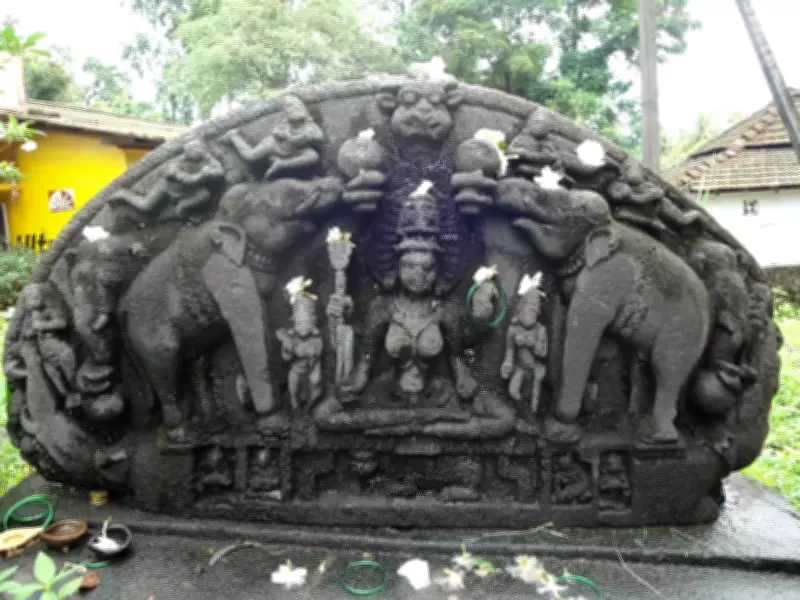
Ancient Goa Sculptures Reveal Evidence of Unique War Goddess Gajagauri
A researcher has identified compelling evidence of the worship of a unique war goddess named Gajagauri in ancient sculptures excavated in Goa. This deity appears to be exclusive to the state, with no historical records of her worship discovered anywhere else in the country.
Researcher's Journey to Discovery
Rohit R Phalgaonkar of Sant Sohirobanath Ambiye Government College in Pernem developed a fascination with this goddess after hearing her name invoked during the traditional Musell khel performance, which is still staged in Chandor, Goa's former capital. His investigative journey led him to a significant sculpture of Gajagauri that was originally discovered by the noted historian Fr Heras during an exploration in Goa back in 1931. This important artifact is currently preserved at the Heras Museum in Mumbai.
Distinguishing Gajagauri from Gajalaxmi
Presenting his findings at an international conference on Indian tradition, history, culture and society at JNU in New Delhi earlier this month, Phalgaonkar explained that sculptures of Gajagauri at the Heras Museum and another at Shiroda have frequently been misidentified as depictions of Gajalaxmi. "Fr Heras also mentions Gajagauri in his books, but the distinction was never clarified regarding why she represents a different deity," Phalgaonkar noted.

The researcher detailed the distinctive characteristics that set Gajagauri apart:
- The goddess is depicted sitting on a lion
- She holds weapons such as a sword or trishul in her hands
- She is flanked by elephants on either side, shown in aggressive poses
- Unlike Gajalaxmi, there is no lotus present in the imagery
"These martial elements transform her into Gauri, the warrior form," Phalgaonkar emphasized.
Historical Significance and Regional Context
The presence of Gajagauri worship suggests historical skirmishes or warfare in these regions of Goa. "In the verse where she is invoked during the Musell khel performance, she is called the leader of 700 legions of the army," Phalgaonkar explained. "While Chandor served as the earlier capital of Goa, there are references to mud fortifications in Shiroda, both indicating possible conflicts in the region for control."
The researcher highlighted the symbolic difference between the two goddesses: "While Gajalaxmi represents general prosperity, Gajagauri specifically embodies the wealth and prosperity that comes from victory in warfare. This goddess's worship has not been found anywhere else in the Konkan region or throughout the country."
Additional Discoveries and Scholarly Insights
A third instance of Gajagauri worship was identified in Dharbandora, another border area of Goa, where the sculpture reflects a syncretic form combining features of both Gajagauri and Gajalaxmi. This discovery adds another layer to understanding the regional variations in deity worship.
Phalgaonkar made a particularly intriguing observation about the historical records: "Interestingly, there are no references to Gajagauri in ancient texts. She appears to be a deity specifically modified to meet the needs of local conditions at the time, similar to how regional deities like Sateri evolved."
This research sheds new light on Goa's rich cultural and religious history, revealing how local communities developed unique spiritual practices that reflected their specific historical circumstances and regional identity.