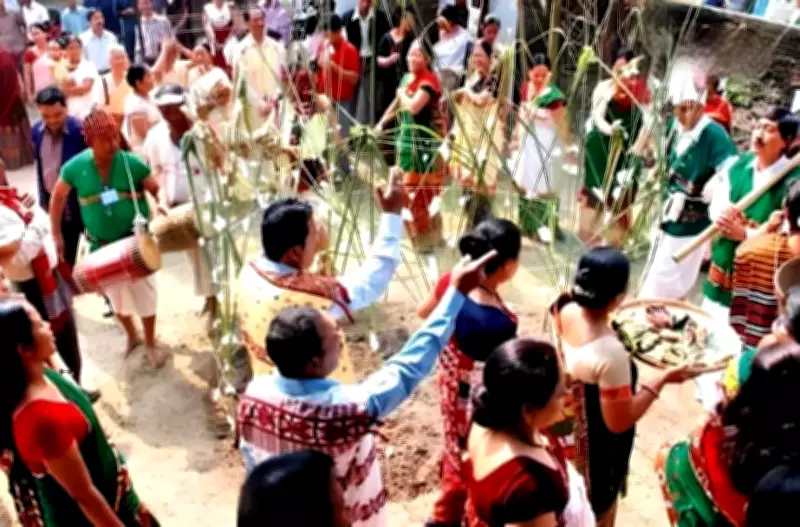
Mising Community Celebrates Ali-Aye-Ligang Festival in Dibrugarh with Cultural Splendor
The Murong Okum grounds in Dibrugarh's Milan Nagar were transformed into a vibrant hub of cultural celebration on Wednesday as the Mising community gathered to observe Ali-Aye-Ligang, the traditional festival that heralds the beginning of the spring sowing season. This significant event was jointly organized by the Dibrugarh Town Mising Kebang and the Dibrugarh Mising Mahila Samiti, drawing participants of all ages who came together to honor their rich heritage and agricultural roots.
Traditional Performances and Cultural Display
Young performers, adorned in exquisite traditional attire featuring intricate designs, took center stage to present the ceremonial Gumraag Soman dance. Moving with grace and precision to the rhythmic beats of folk songs and the melodious tunes of Oinitom, the dancers captivated the audience, creating a powerful connection between the community's ancestral traditions and its modern identity. The venue buzzed with energy as various cultural performances unfolded throughout the day, showcasing the pride and participation of the youth in preserving their heritage.
Significance of Ali-Aye-Ligang in Mising Culture
Ali-Aye-Ligang holds profound importance in the Mising calendar, coinciding with the commencement of Ahu paddy cultivation. The festival's name literally translates to the beginning of sowing seeds, reflecting the deep symbiotic relationship between the community's cultural practices and agricultural traditions. As one of the prominent tribal groups in Assam and other northeastern states, the Mising people have preserved this agricultural festival through generations, maintaining its relevance despite changing times.

Community Leaders Highlight Festival's Broader Meaning
Speaking at the event, Dibrugarh Town Mising Kebang president Mahendra Pegu emphasized the festival's significance beyond mere celebration. "This celebration goes beyond mere festivity. It represents our collective identity and our enduring relationship with the land. Through these rituals, we acknowledge nature's role in sustaining us and renew our commitment to environmental harmony," Pegu stated, underscoring the ecological consciousness embedded in the festival.
Jyotsna Pegu, a member of the Dibrugarh Mising Mahila Samiti, elaborated on the ancestral wisdom preserved through Ali-Aye-Ligang. "Every element of Ali-Aye-Ligang carries ancestral wisdom. Our dance movements mirror agricultural practices and our songs contain instructions passed down through generations about sustainable farming. This festival ensures our young people understand not just the steps of a dance, but the philosophy of living respectfully with nature that our forefathers cherished," she explained, highlighting how cultural transmission serves as a vehicle for environmental education.
Preservation of Heritage and Community Engagement
The festival served as a dynamic platform for community engagement, with participants actively involved in various aspects of the celebration. The event witnessed enthusiastic participation from community members, particularly the youth, who demonstrated their cultural pride through diverse performances. This collective effort not only reinforced social bonds but also ensured the continuity of traditional knowledge and practices in contemporary society.
Through Ali-Aye-Ligang, the Mising community in Dibrugarh successfully showcased how cultural festivals can bridge generations, preserve agricultural heritage, and promote sustainable living principles. The celebration stands as a testament to the community's resilience in maintaining their unique identity while adapting to modern contexts, offering valuable insights into the intersection of culture, agriculture, and environmental stewardship.