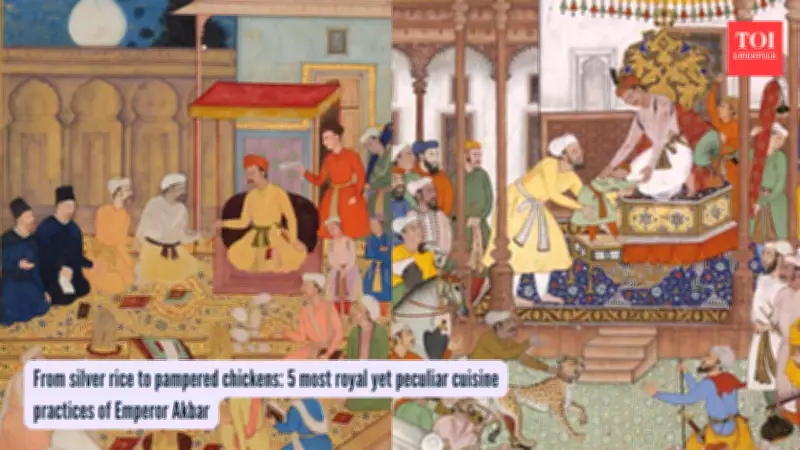
The Grand Theatre of Mughal Dining: Akbar's Table as Empire in Miniature
In the annals of Indian history, food has always transcended mere sustenance, serving as a profound lens into culture, power dynamics, and personal identity. This was especially true in Mughal India, where imperial meals transformed into elaborate spectacles blending medicine with majesty. Among these rulers, Emperor Akbar distinguished himself by elevating dining into a sophisticated art of survival and statecraft.
Akbar's dining table represented far more than opulent excess; it symbolized the delicate equilibrium of an empire navigating diverse traditions and innovations. Today, when we relish biryani or savor samosas, we partake in culinary echoes that resonate from those royal kitchens, connecting our contemporary feasts to a grand historical legacy.
Physician-Designed Menus: Where Health Met Royalty
Akbar's daily meals were meticulously orchestrated by royal physicians, known as hakims, who selected ingredients based on their medicinal properties. According to food historian Salma Hussain, the service followed a strict hierarchical protocol. Eunuchs typically served the food through an elaborate chain of command.

The hakim planned each menu to incorporate health-beneficial components. For instance, every grain of rice in the royal biryani was coated with silver oil, believed to aid digestion and function as an aphrodisiac. This practice illustrates how culinary and medical knowledge intertwined at the highest levels of Mughal society.
Pampered Poultry and Logistical Marvels
The palace chickens enjoyed extraordinary treatment to ensure optimal flavor and purity. Historical accounts reveal they were hand-fed pellets flavored with saffron and rosewater, and received daily massages with musk oil and sandalwood.
Akbar's kitchen operated as a bustling hub of culinary activity, employing over 400 cooks from India and Persia, alongside tasters, clerks, and storekeepers. Ice transported from the Himalayas through relay couriers cooled beverages, which were served in gold and silver vessels wrapped in cloth. This combination of luxury and sophisticated logistics defined the Mughal culinary apparatus.
Vegetarian Observances and Garden Rituals
Akbar maintained specific religious practices, observing vegetarianism three days each week and consuming only water from the Ganges. He personally tended to his kitchen garden, occasionally watering vegetables with rosewater to enhance their aromatic qualities when cooked.
Popular dishes featured at his table included sanbusas (early samosas), saag prepared with ghee and spices, harisa (meat with cracked wheat), halim (a vegetarian pulse version), yakhni stew, and whole roasted lambs. In a notable display of religious sensitivity, Akbar banned beef consumption to respect his Hindu and Jain subjects.
Elaborate Poison Prevention Protocols
The constant threat of poisoning, particularly after Babur's traumatic vomiting episode described in historical texts, necessitated rigorous safety measures. Akbar implemented a comprehensive tasting system involving cooks, bakawals, and the Mir-Bakawal, who sampled every dish before it reached the emperor.
Each prepared dish received the overseer's seal, with clerks maintaining detailed records and staff escorting food to the table. Meals were served on carpeted floors under cloth covers, with even bread and pickles remaining sealed until consumption. The Mir-Bakawal performed a final tasting before Akbar began his meal, which typically commenced with curds, followed by a portion set aside for mendicants.
Enduring Culinary Legacy
Akbar's dining traditions continue to shape Mughlai cuisine and broader Indian culinary practices. From biryani and samosas to rich stews, many beloved dishes trace their origins to royal kitchens like his. Guided by physicians, shaped by religious observance, and enriched by Persian and Indian influences, Akbar's meals established a legacy that still defines indulgent Indian dining experiences today.