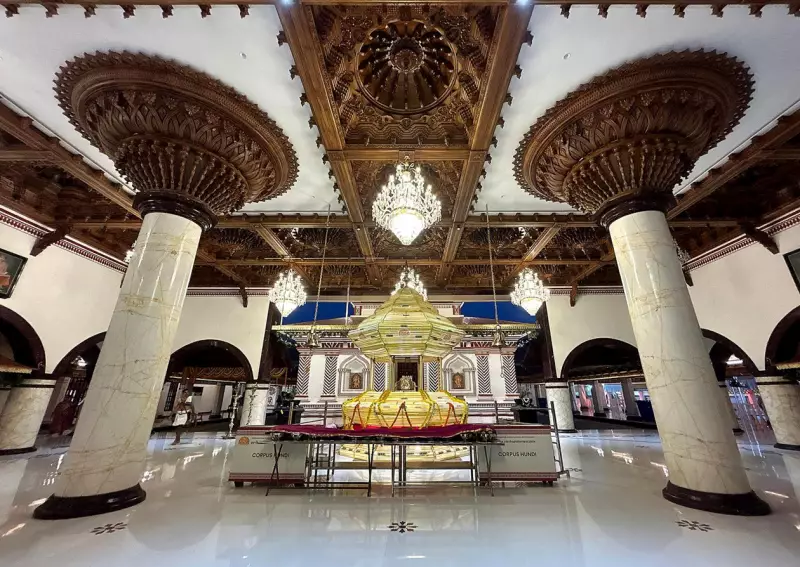
In the serene town of Partagal, Canacona, a historic celebration is unfolding. The Shree Samsthan Gokarn Partagali Jeevottam Mutt is marking its 550th anniversary, a monumental milestone for the spiritual institution. As devotees gather, the focus turns to the remarkable journey that shaped the mutt's distinctive triple-barrelled name—a title woven from threads of faith, migration, and divine intervention.
The Founding and the First Seat in Bhatkal
The saga commenced in 1475 AD. A revered seer, Shreemad Narayan Teerth Swami, after receiving sanyasa initiation at the sacred Badrikashram in the Himalayas, established the first mutt for the Goud Saraswat Brahmin community. This foundational seat was set up at Bhatkal in Karnataka on the auspicious day of Chaitra Shukla Dwitiya.
The local ruler, deeply impressed by the Swami's spiritual authority and wisdom, bestowed upon him the honorific title 'Vader'. This term signified supreme authority in religious and community affairs. To this day, the original mutt in Bhatkal is remembered and referred to as the Vader mutt, cementing the legacy of its founder.

The Transformative Era of Jeevottam Teerth Swami
The institution's identity was forever transformed under its third leader, Shreemad Jeevottam Teerth Swami. A renowned ascetic and scholar, he assumed leadership just before his guru's samadhi in 1518 AD. His life of extensive pilgrimage across the Indian subcontinent led to a series of miraculous events that would redefine the mutt's geography.
During a holy bath in Nepal's Shila river, Jeevottam Swami made an extraordinary discovery. He found three exquisitely sculpted idols lying in the riverbed: Bhoovijaya Vittal, Digvijaya Vittal, and Veer Vittal. This divine find set in motion a new chapter.
- The discovery of the first idol, Bhoovijaya Vittal, inspired the seer to establish a new mutt at Gokarn, a site often hailed as the 'Kashi of the south'.
- The second idol, Digvijaya Vittal, was taken to his birthplace, Basrur.
- The third, Veer Vittal, became his personal deity and has been worshipped by every successive head of the mutt since.
Senior disciples of the mutt recount how Jeevottam Swami became a symbol of spiritual enlightenment, guiding countless followers through his profound knowledge and unwavering dedication to dharma. Historical records also highlight his significant friendship with Vadiraj Teerth Swami of Udupi, which strengthened spiritual bonds across communities.
The Final Move to Partagal and the Complete Name
The last piece of the mutt's naming puzzle fell into place during the leadership of the sixth muttadhipati, Shreemad Ramchandra Teerth Swami. Acting on divine revelation, he unearthed a set of idols—Sita, Ramchandra, Laxman, and Maruti—in the backyard of the Gokarn mutt.
Following another celestial directive, he installed the idols of Sita, Ramchandra, and Laxman at Partagal. The idol of Maruti found its abode at Rivona. This sacred relocation established Partagal as the principal and permanent seat of the mutt, completing its geographical and spiritual journey.
Today, as the institution celebrates 550 years of unbroken spiritual tradition, its full name—Shree Samsthan Gokarn Partagali Jeevottam Mutt—stands as a living chronicle. It encapsulates its origins in Gokarn, its principal seat in Partagal, and the everlasting legacy of Jeevottam Swami, narrating the rich history of the Saraswat community's faith and resilience.