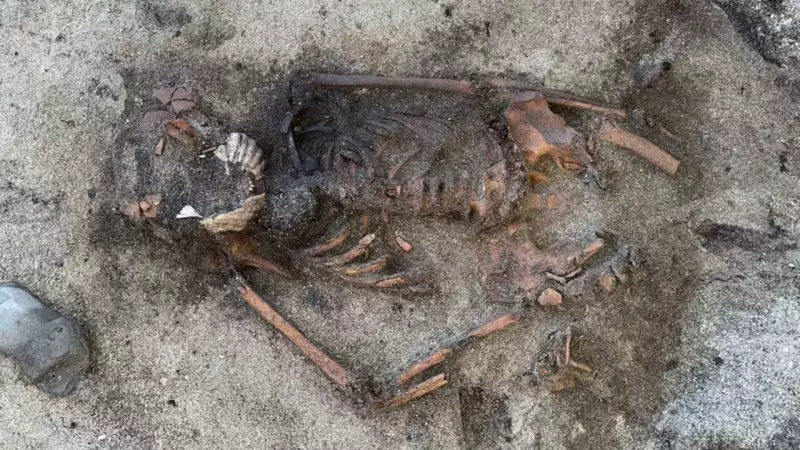
Swedish Archaeologists Unearth 5,000-Year-Old Dog Burial with Bone Dagger
Archaeologists in Sweden have made a remarkable Stone Age discovery: the exceptionally well-preserved remains of a dog buried approximately 5,000 years ago, accompanied by a finely crafted bone dagger. This find offers a rare glimpse into ancient human-animal relationships and ceremonial practices in prehistoric Scandinavia.
The Discovery at Logsjomossen Wetland
The burial was uncovered by archaeologists from Arkeologerna, a unit within Sweden's National Historical Museums, during excavations at Logsjomossen near Jarna. This work was part of the Ostlanken railway project construction. The site was once a lake, and the waterlogged wetland environment played a crucial role in preserving the fragile organic remains for millennia, far better than typical soil conditions would allow.
The dog's skeleton was found in remarkably good condition, especially considering its age. What immediately struck researchers was the deliberate and intentional nature of the burial. It appeared as if someone had carefully placed the dog there, rather than it being discarded as waste, suggesting a meaningful and possibly ceremonial act.

The Significance of the Bone Dagger
Alongside the dog was a polished bone dagger, described as long and finely made. In prehistoric societies, such objects were not casual possessions. A blade tool like this could represent skill, status, or symbolic meaning, depending on the cultural context. Its placement with the dog strongly indicates that the animal held significant value.
The dagger may have served as a grave gift, a sign of honor, or an item meant to accompany the dog in death. This association highlights the dog's importance beyond that of an ordinary animal, possibly reflecting gratitude, respect, or an emotional bond between humans and their canine companions.
Dogs in Stone Age Society
During the Stone Age, dogs were not merely companions. They played vital roles as protectors, hunting partners, trackers, and essential members of daily survival. A strong, reliable dog could have been seen as integral to a group's success, particularly in harsh environments where every advantage mattered.
The careful burial suggests this dog may have held a special role, possibly linked to hunting, guarding, or ritual significance within the community. The fact that it was buried in sediments that once formed the bottom of a shallow lake adds another layer of meaning, as wetlands in ancient Europe were often associated with ritual deposits and ceremonial offerings.
Future Research and Implications
Discoveries like this rarely reveal all their secrets immediately. Researchers plan to conduct further studies, including dating and laboratory analysis, to uncover details about the dog's life, diet, health, and age at death. Over time, this burial could help answer broader questions about how Stone Age people in Scandinavia lived, the roles dogs played in their societies, and how early humans expressed loyalty, care, and respect for animals that shared their world.
This find not only enriches our understanding of prehistoric rituals but also underscores the deep connections between humans and animals that have existed for thousands of years.