The year 2025 has been a period of remarkable energy and optimism for the Indian art world. A spirit of expansion and collaboration defined the calendar, with galleries relocating, festivals reaching new audiences, and a powerful synergy between major events. The art scene successfully broadened its geographical footprint, moving beyond the traditional centres of Delhi and Mumbai to engage communities in Jodhpur, Ahmedabad, and Hyderabad.
Auctions and Milestones: The Moderns Command the Market
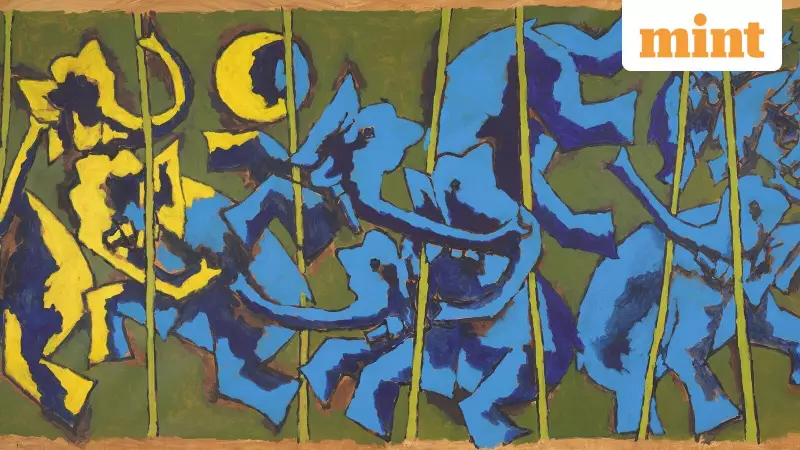
The auction market for Indian Modern masters remained exceptionally strong throughout the year. Tyeb Mehta's painting 'Trussed Bull' (1956) achieved a staggering ₹61.8 crore at Saffronart's 25th-anniversary live auction in April, shattering the artist's previous record. This sale positioned the work as the second-highest value for an Indian artist, alongside Amrita Sher-Gil's 'The Story Teller'.
Similarly, V.S. Gaitonde's 'Untitled' (1970) sold for ₹67.08 crore at a September auction, far exceeding its estimate. The December 'Historic Masterpieces' sale by AstaGuru also set world records for artists Krishen Khanna and Walter Langhammer. The year was significant for centenary celebrations, with major exhibitions honouring Tyeb Mehta and Krishen Khanna. The National Gallery of Modern Art in Mumbai hosted 'Krishen Khanna at 100: The Last Progressive'.

Looking ahead, a major retrospective for Satish Gujral, curated by Kishore Singh, will open at the NGMA Delhi on January 9, 2026, marking his centenary. Galleries like Sakshi Gallery and Art Alive will also celebrate their 40th and 25th anniversaries respectively with special programmes.
Decentralisation and New Artistic Hubs
A key trend of 2025 was the deliberate decentralisation of the art ecosystem. Established festivals like the Serendipity Arts Festival in Goa and the Kochi-Muziris Biennale were joined by new initiatives in tier-2 and tier-3 cities. Hyderabad, Ahmedabad, and Jodhpur emerged as vibrant new hubs.
The India Art Fair hosted its IAF EDI+IONS initiative in Hyderabad, while Ahmedabad Cultural Week in October offered a ten-day celebration of heritage and art. The inaugural Jodhpur Arts Week focused on centring the local community as co-creators. This expansion was mirrored by galleries within the metros; Latitude 28 moved to a new space in Delhi's Defence Colony, and Gallery Espace launched a new project space for emerging practices.
Global Connections and Thematic Depth
The international footprint of Indian art grew substantially, with Qatar emerging as a significant centre. The Lawh Wa Qalam: M.F. Husain Museum opened in Doha in November, providing a permanent home for the artist's work. Reflecting this growing importance, Art Basel announced a new edition to be held in Doha in February 2026, promising to connect Indian artists with an expanded global collector base.
Thematically, programming across festivals gained greater depth. The Kochi-Muziris Biennale and Serendipity Arts Festival focused on friendship economies and collaboration. There was a pronounced artistic response to pressing socio-political issues. Artists like Birender Yadav, Kulpreet Singh, and Gyanwant Yadav created powerful works addressing agrarian distress, ecological fragility, and the plight of migrant labour. Yadav's installation 'Only The Earth Knows their Labour' at the Kochi Biennale poignantly highlighted the unseen workers of Mirzapur's brick kilns.
This focus on the city and community was evident in events like the St+art Kolkata Festival, celebrating the city's 'adda' culture, and DAG's upcoming 'Face to Face: A Portrait of a City' during the Mumbai Gallery Weekend (January 8-11).
Setting the Stage for 2026
The key moments of 2025 are poised to influence the artistic discourse in the coming year. Themes of ecological crisis, displacement, and speculative futures will continue to be a leitmotif. Interdisciplinarity will remain crucial, as seen in the upcoming Architecture & Design Film Festival in Mumbai (January 9-11). The momentum of decentralisation is expected to continue, with new initiatives planned for cities like Pune and Vadodara, ensuring that Indian art remains as dynamic and evolving as the nation itself.