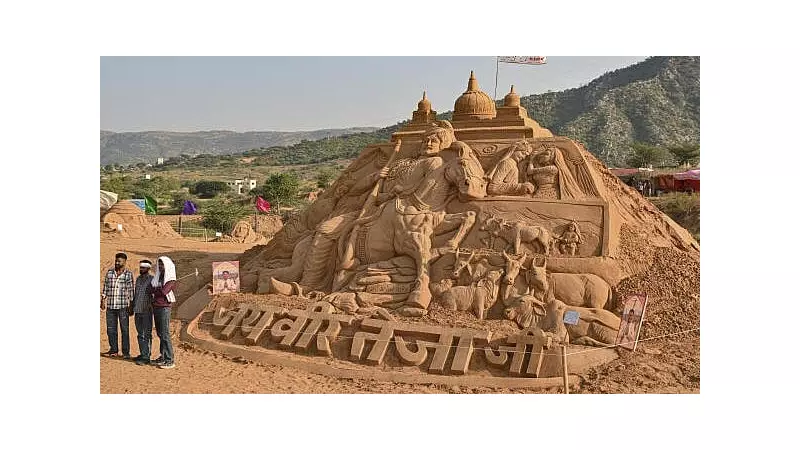
The legendary Pushkar Fair in Rajasthan has once again captured the nation's imagination, but this year, two extraordinary animals have completely stolen the spotlight. A breathtaking Marwari horse with an astonishing price tag of ₹15 crore and a magnificent buffalo valued at a staggering ₹23 crore have emerged as the undisputed stars of this iconic cultural extravaganza.
The ₹15 Crore Marwari Marvel
This isn't just any ordinary horse – it's a prime specimen of the revered Marwari breed, known for its distinctive inward-turning ear tips and royal lineage. The majestic stallion, adorned with traditional Rajasthani ornaments, has become the center of attention among traders, tourists, and photography enthusiasts alike.
The ₹23 Crore Buffalo Sensation
While camels typically dominate the Pushkar narrative, this exceptionally bred buffalo has rewritten the rules. With its impressive physique and superior genetic qualities, the animal commands a price that reflects its exceptional breeding potential and milk-producing capabilities.

More Than Just a Livestock Market
The Pushkar Fair, often called the world's largest camel fair, transforms into a vibrant tapestry of Rajasthani culture during these days. Beyond the high-stakes animal trading, visitors can experience:
- Traditional folk music and dance performances
- Colorful camel decoration competitions
- Authentic Rajasthani cuisine and handicrafts
- Religious ceremonies at the sacred Pushkar Lake
- Turban tying and moustache competitions
A Testament to Rural Prosperity
These extraordinary price tags aren't merely about the animals themselves – they represent the thriving rural economy and the deep cultural significance attached to premium livestock in Rajasthan. For breeders and owners, these high-value animals symbolize prestige, tradition, and substantial economic opportunity.
The fair continues to draw thousands of visitors from across India and the world, proving that even in our modern era, traditional livestock trading and cultural celebrations remain deeply embedded in India's social fabric.