Lab-Grown Hair Follicles: A Potential Cure for Baldness on the Horizon?
For anyone who has watched their hairline recede, the struggle is all too familiar. From thickening shampoos to expensive transplants, the search for a genuine biological cure for baldness has often felt like a distant dream. However, a groundbreaking development in regenerative medicine this week might just change that narrative forever.
A Major Leap Forward in Regenerative Medicine
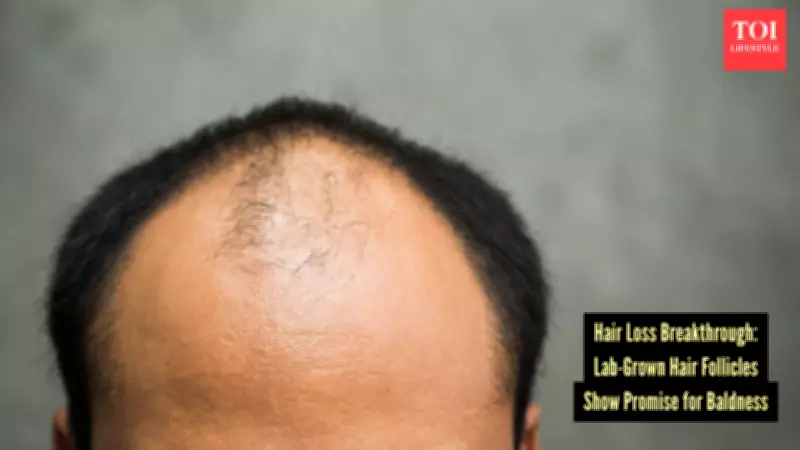
In what researchers are calling a massive leap forward, scientists have successfully grown fully functional hair follicles entirely in a laboratory setting. The most exciting aspect of this breakthrough is that these lab-grown follicles actually cycle through natural growth phases, mimicking the behavior of the hair currently on your head. This achievement represents a significant step toward a potential cure for baldness, moving beyond temporary solutions to address the root cause of hair loss.
The Missing Piece of the Puzzle: Why Previous Attempts Failed
Bioengineering hair is not a new concept, but it has frustrated researchers for decades. Previous laboratory attempts relied on a two-ingredient recipe: epithelial stem cells, which serve as the physical building blocks of the hair shaft, and dermal papilla cells, the biological directors that send out crucial growth signals. The glaring issue with this old method was that while scientists could create the initial "seeds" of follicles in a petri dish, they refused to sprout. To get them to grow and establish connections to underlying tissue, they had to be surgically transplanted into a living host, limiting their practical application.

The 'Scaffold' That Changed Everything: Introducing a Third Cell Type
So, how did a joint team of researchers from the United States and Japan finally crack the code? They realized the developing follicle was missing a critical piece of physical support. The unsung hero of this breakthrough is the accessory mesenchymal cell. Think of this third cell type as a microscopic scaffolding system. When introduced early in the follicle's formation process, these helper cells wrap around the follicle's "bulge" and dermal sheath, providing essential structural support. This addition made all the difference: the follicles not only survived but progressed through normal, continuous growth cycles and hooked up to surrounding tissues right there in the lab, eliminating the need for a living host.
Mice Today, Humans Tomorrow? The Road Ahead for Human Applications
Before you cancel your next wig fitting or throw out your hats, it's important to ground this in reality. The study, recently published in the journal Biochemical and Biophysical Research Communications, was successfully conducted using mouse models. Human biology is notoriously finicky, meaning a commercial, over-the-counter cure for human baldness is still years away. The leap from a successful mouse trial to a safe, FDA-approved human treatment involves navigating a complex labyrinth of humanized models and clinical trials, which will require significant time and resources.
Beyond Just Hair Lines: Broader Implications for Regenerative Medicine
Even without immediate human transplants, the intellectual and practical implications of this discovery are staggering. In the short term, researchers can use these lab-grown strands to test new hair-loss medications and study how hair growth starts and stops, completely bypassing the need for animal testing. But the long game is even more exciting. OrganTech, a regenerative medicine company that helped fund the study, envisions a future where this exact three-cell strategy could be scaled up to bioengineer permanent, lab-grown hair transplants for balding patients.
OrganTech CEO Yoshio Shimo also noted a much bigger picture. This method of perfectly orchestrating different cell types to build stable tissue could eventually serve as a blueprint for regenerating larger, vital human organs. If we can figure out how to successfully grow a complex mini-organ like a hair follicle, we might eventually use the same strategy to regenerate organs such as the liver or heart. While we might not have a permanent cure for baldness today, the scientific foundation has officially been poured, opening doors to revolutionary advancements in medicine.