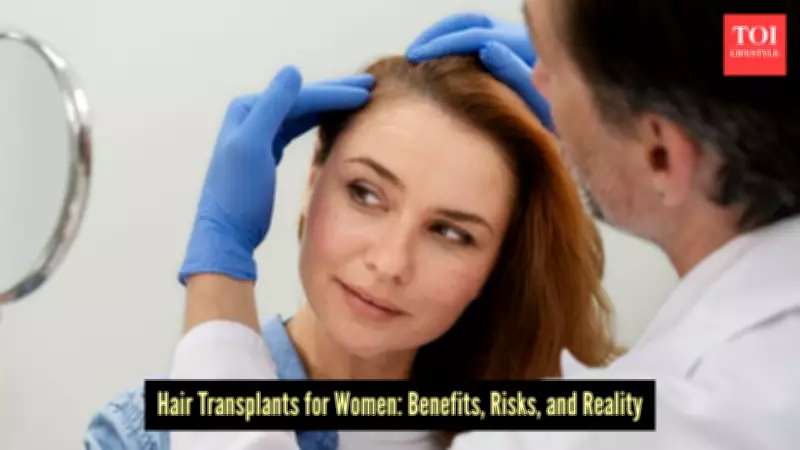
Hair Transplants for Women: Shattering the Male-Dominated Myth
When the term "hair transplant" is mentioned, the common image that springs to mind is often that of middle-aged men. However, it is time to dispel this misconception decisively. Women are increasingly and quietly turning to this medical procedure as a viable solution for hair loss. For women grappling with specific types of hair thinning, a transplant is not merely a distant possibility; it can serve as a highly effective and permanent remedy. Before considering booking a consultation, it is crucial to understand the hard facts and unique considerations involved.
Understanding Candidacy: Who Qualifies for the Procedure?
Not every woman experiencing hair loss is an ideal candidate for surgery. The entire success of the procedure hinges on one critical factor: the "donor area." Typically located at the back of the head, this region must possess thick, healthy hair that is genetically resistant to balding. If you suffer from severe diffuse thinning, where hair is thinning uniformly across the scalp, or if you are dealing with sudden, unexplained hair loss or an active inflamed scalp, a transplant is likely not suitable. The donor hair in such cases would not be robust enough to survive the transplantation process.
Conversely, women who make excellent candidates include those with localized thinning, a receding hairline, or traction alopecia resulting from years of wearing tight hairstyles like ponytails and braids. Additionally, women with stable Female Pattern Hair Loss (Androgenetic Alopecia) who maintain a strong donor area often experience fantastic, life-changing outcomes from the procedure.

The Not-So-Glamorous Side Effects of Hair Transplantation
It is essential to remember that a hair transplant is a surgical procedure, and like any medical intervention, it comes with its share of side effects. Most of these are temporary annoyances during recovery, but preparation is key. One common issue is "shock loss," which can catch many women off guard. The trauma of surgery may cause both existing native hair and newly transplanted grafts to fall out a few weeks post-operation. While this sounds alarming, it is almost always temporary, with hair regrowing over time, though it can be emotionally taxing in the short term.
Other expected side effects include swelling and bruising that may extend to the forehead and around the eyes for a few days. As tiny incisions heal, scabs will form, leading to itching. It is crucial not to scratch these scabs, as doing so can dislodge the expensive new hair grafts. Additional temporary symptoms may include numbness, mild pain, and pinpoint bleeding, painting a realistic picture of the initial recovery weeks.
Rare but Real Risks Associated with Hair Transplants
Beyond the short-term side effects, it is vital to be aware of rarer, long-term complications. Infections can occur if bacteria interfere with the healing process. As new hairs emerge, you might experience folliculitis—inflamed, pimple-like bumps—or cysts from ingrown hairs. Scarring is an inevitable part of every hair transplant; the FUT method leaves a linear scar at the back of the head, while the FUE method results in tiny, pinpoint scars. The visibility of these scars depends on individual healing processes.
There is also a risk of an unnatural appearance if the surgeon lacks experience, leading to mismatched hair growth direction or patchy density. In extremely rare cases, scalp necrosis can occur, where a patch of skin dies due to inadequate blood flow, often linked to heavy smoking or underlying vascular issues.
How Hair Transplant Procedures Differ for Women
The silver lining for women considering hair transplants lies in the specialized approach surgeons employ. Unlike men, women typically do not need to shave their entire heads. Doctors often utilize "no-shave" or "minimal-shave" techniques, allowing patients to conceal the work under existing hair during healing. Moreover, the goal for women is rarely to create a completely new hairline from scratch. Instead, the focus is on strategically adding volume and density to thinning areas, such as a widening part line, to restore a full, natural, and confident appearance.