

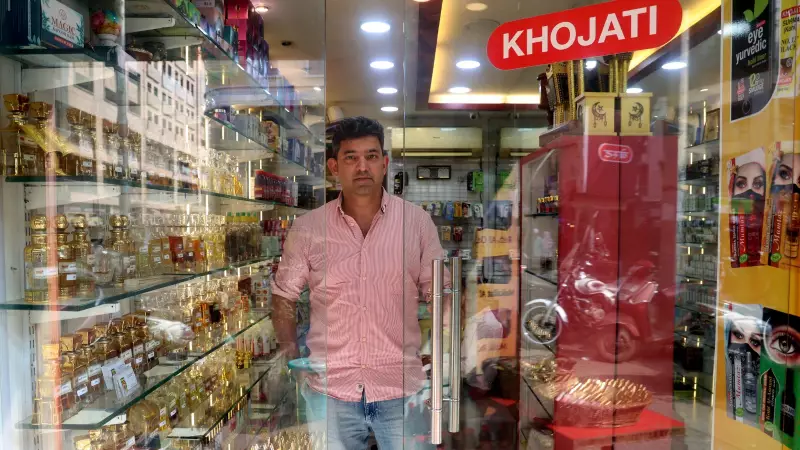
In the bustling, historic lanes of Dongri, far from the glitz of modern Mumbai, a 179-year-old legacy is carefully preserved. While the traditional eye cosmetic, surma, is often linked to cities like Bareilly and Lucknow, Mumbai is home to one of India's oldest surma-making dynasties: Khojati.
From a Prophecy to a Global Brand
The story of Khojati begins not with commerce, but with charity. Established in 1847, the business was originally known as Budhia. Shakir Banatwalla, the sixth-generation custodian, recounts a family lore passed down through generations. His ancestor, Bai Rantanbai, was known for her daily charity. One day, an old man she fed handed her papers with formulations, prophesying they would sustain her family for seven generations.
The prophecy held true. For nearly a century, the family focused solely on surma, selling from home, then a shop, and eventually across Bombay. Its popularity in Kerala led to the nickname 'Ti', which later combined with 'Khoja' (their community) to form the brand name Khojati after a family partition.

Modern Science Meets Ancient Craft
Admitting that surma is a dying art, Banatwalla points to a major challenge: the 1990s reports linking it to lead poisoning. He explains their rigorous, two-week process of soaking the ore in rose water and treating it to remove lead, while adding cooling, therapeutic ingredients. Their range includes premium variants like 'moti surma' with crushed Basra pearls and 'mamira surma' using Himalayan root.
Every batch is lab-tested, and all their surmas and kajals are FDA-approved. Banatwalla addresses other misconceptions, attributing issues like spreading to the product's natural composition and highlighting the importance of hygienic application.
A Global Footprint and a New Challenge
Despite challenges, sales thrive. Since joining in 1995, Banatwalla expanded distribution across India and to 16 countries, including strong markets in Africa, Indonesia, and the Middle East. The company sells a staggering 80-90 lakh units annually, with prices ranging from ₹40 to ₹90. They operate manufacturing units in Wai and Nashik, with plans for facilities in Nigeria and North Africa.
The latest shift is generational. "The younger generation doesn't use surma," Banatwalla notes, observing their preference for chemical-based kajal or eyeliner. Traditionally, kajal was made by burning oil or ghee at home. To stay relevant, Khojati is now rethinking its approach. "Maybe it's time to present surma in a way that excites a new generation," he says, hinting at contemporary packaging and marketing to bridge the gap between ancient tradition and modern beauty trends.
From a 19th-century prophecy to FDA-approved shelves worldwide, the journey of Khojati surma is a testament to resilience, adaptation, and the enduring appeal of a carefully crafted heritage.






