

The Enduring Wisdom of Sleeping Direction in Indian Tradition
In countless Indian households, a familiar scene unfolds: elders instinctively correcting the orientation of a bed before addressing any other matter. "Don't sleep with your head towards the North," they declare, not as a mere suggestion but as an established rule. To some, this might sound like an outdated superstition passed down through generations without question. However, this guidance, deeply rooted in Vastu Shastra and supported by subtle observations of human physiology, continues to endure for compelling reasons. According to traditional wisdom, sleeping direction is not merely about belief—it is fundamentally about alignment with natural forces.
Earth's Magnetic Field and Human Body Polarity
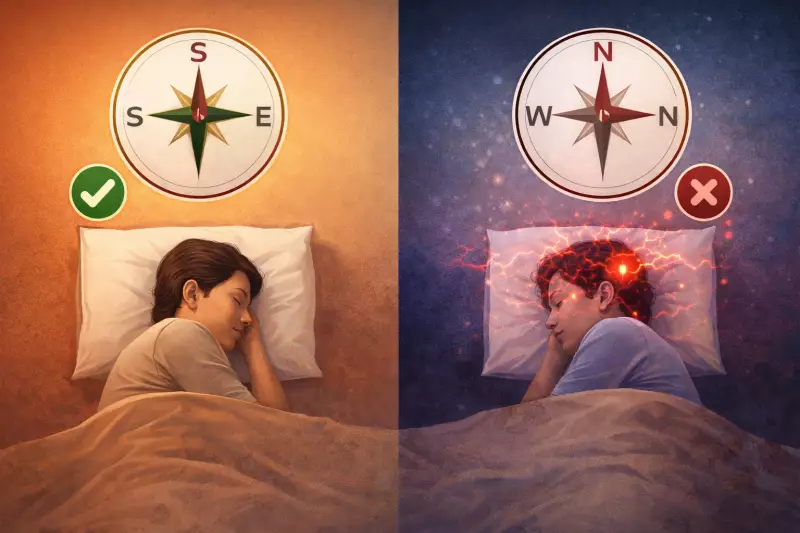
The Earth functions as a colossal magnet, with magnetic fields flowing consistently from the North Pole to the South Pole. Interestingly, the human body also exhibits distinct magnetic properties. Traditional understanding posits that the head represents the positive pole, while the feet correspond to the negative pole. When an individual sleeps with their head oriented towards the North, the body's inherent polarity is believed to clash directly with the Earth's magnetic field. This opposition is thought to disrupt the natural flow of energy, potentially leading to restlessness, diminished sleep quality, and persistent mental fatigue.
Ancient traditions may not have articulated these phenomena in contemporary scientific terminology, but they meticulously observed their effects: individuals waking up feeling exhausted, agitated, or mentally clouded despite obtaining what should have been sufficient sleep. These observations formed the foundation of enduring practices that prioritize harmonious alignment with environmental forces.

Why the Brain is Particularly Vulnerable
The brain stands as the most sensitive organ within the human body. Rich in iron content due to extensive blood circulation, it becomes particularly susceptible to magnetic influences. According to traditional perspectives, sleeping with the head directed Northward creates a subtle pull on blood circulation toward the brain. Over extended periods, this imbalance is believed to contribute to various discomforts including headaches, disturbed dreams, heightened anxiety, and difficulties with concentration.
While modern science continues to investigate these intricate interactions, experiential wisdom has long cautioned against positioning the brain in direct opposition to Earth's magnetic flow. This explains why the guidance is especially emphasized for children, elderly individuals, and those prone to stress or pre-existing sleep disorders, whose systems may be more vulnerable to such disturbances.
Symbolic Significance in Vastu Philosophy
Beyond purely physical explanations, Vastu Shastra imbues directions with profound symbolic meaning. The North is traditionally viewed as the direction of stillness, withdrawal, and conclusion. In many cultural traditions, it is associated with endings, rest, and the symbolic realm of ancestors. Sleeping with the head towards the North is thus seen as aligning the mind with inertia rather than with regenerative energy.
Sleep, according to Vastu principles, should actively restore vitality and rejuvenate the individual. Directions that encourage grounding and renewal, such as South or East, are considered far more supportive of this essential purpose. Consequently, the rule against North-facing sleep is not rooted in fear but in functionality—it is about consciously choosing orientations that encourage the life force to settle and consolidate rather than scatter and dissipate.
Psychological and Emotional Consequences
There exists a significant psychological dimension to this traditional guidance. Individuals who sleep with their head towards the North frequently report experiences of fragmented sleep, unusually vivid dreams, or a subtle, persistent sense of unease. Even when they cannot rationally explain it, their bodies feel less settled and relaxed. Sleep transcends mere physical rest; it is a critical period for emotional processing and mental reset.

When the body struggles to achieve complete relaxation, the mind remains in a state of heightened alertness. Over time, this can manifest as increased irritability, tendencies toward overthinking, or a constant background sense of mental noise. Traditional practices recognized these patterns long before the advent of contemporary sleep science, offering practical solutions based on accumulated observation.
Preferred Sleeping Directions According to Tradition
Vastu Shastra does not merely prohibit without providing alternatives. Sleeping with the head towards the South is widely considered the most stable and grounding position. It aligns the body harmoniously with Earth's magnetic flow and is believed to actively promote deep, restorative sleep. The East is also regarded as highly beneficial, particularly for students and individuals seeking enhanced mental clarity, as it is associated with the rising sun and themes of renewal and new beginnings.
The West is generally viewed as a neutral direction—acceptable but not ideal. The North, however, remains the most strongly discouraged orientation for sleeping. These recommendations are not arbitrary but are derived from a long history of observing human well-being in relation to environmental alignment.
Observation, Not Superstition: A Legacy of Sensitivity
It is crucial to understand that Vastu guidelines were meticulously shaped through careful observation and experiential learning, not through blind belief or superstition. Practitioners noticed consistent patterns—how certain sleeping positions left people feeling refreshed and energized, while others resulted in fatigue and depletion. Over countless generations, these empirical observations solidified into coherent, practical principles.
Even in the modern era, many individuals who adjust their sleeping direction away from the North report noticeable improvements in sleep quality within a matter of days. This occurs not necessarily because they hold a specific belief, but because their bodies respond positively to the realigned environment. The change is often described as subtle yet significant.
A Simple Shift with Profound Impact
In a world where sleep disorders are becoming increasingly prevalent, this ancient advice feels remarkably relevant. Adjusting the direction of your head during sleep requires no financial investment, demands no special tools, and carries absolutely no risk. Sometimes, enhancing personal well-being does not demand herculean effort—it simply asks for thoughtful alignment with natural principles.
Sometimes, the path to better sleep begins not with medication or turning off electronic screens, but with something as elegantly simple as turning your head in the right direction. This small, intentional act connects us to a deep well of traditional wisdom that prioritizes harmony between the individual and the natural world.





