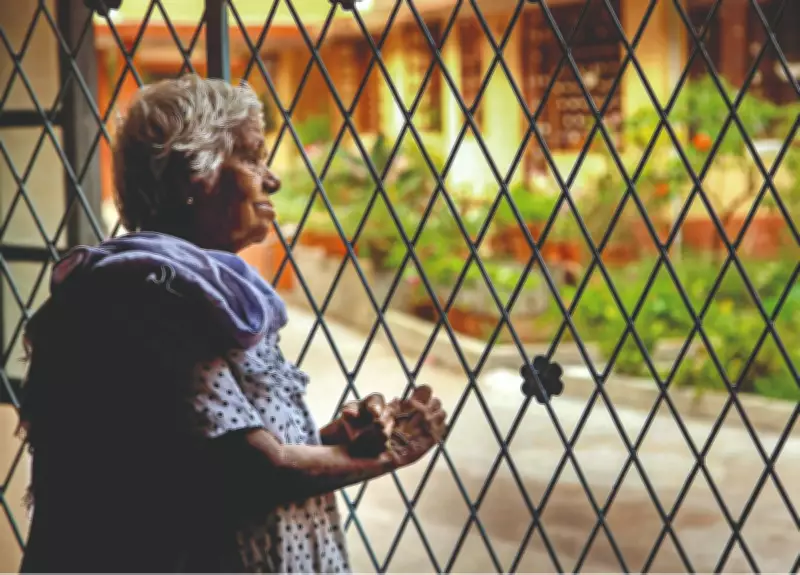
Elderly Care Crisis in Tamil Nadu Spurs Demand for Trained Home Assistants
Living alone has become an increasingly common reality for many senior citizens in Tamil Nadu, whether by personal choice or unavoidable circumstances. In the absence of sufficient affordable senior living facilities tailored for middle-class and less affluent individuals, solo living often emerges as the default option for the elderly.
Demographic Shifts and Growing Isolation
Tamil Nadu's population is projected to reach 78 million by 2030, a significant increase from 72.1 million recorded in 2011. According to state planning commission reports, the current age distribution reveals approximately 10 million people above age 55. This demographic shift, characterized by a growing silver population, has left numerous lonely, elderly, and infirm individuals seeking paid assistance, including trained 24x7 home attendants.
In today's digital-first society, thousands of seniors struggle with the complexity of modern transactions. Many lack experience or essential tools such as smartphones and computers to interact with banks, insurance companies, online stores, pension agencies, and mobility services. The constant fear of cyberfraud further compounds their challenges, making reliable human assistance crucial.

Market Response and Migrant Workforce
This isolated elderly population, including many in their 80s and 90s, constitutes the primary market for service agencies providing stay-at-home assistants. Daily costs for such services range from Rs.500 to Rs.1,200. Young men and women from states like Odisha and Bengal are increasingly migrating to larger southern cities to take up these assignments.
The majority of these migrant candidates are motivated by stories of quick prosperity shared by friends—tales of high wages, immediate placement, and decent working conditions. However, a significant problem persists: most lack specific skills, and many come from rural backgrounds with limited understanding of urban facilities and lifestyle requirements.
Government Initiatives and Training Programs
In 2024-2025, the Union government issued updated guidelines under a scheme specifically designed to address aspects of this growing issue. Titled PM-SPECIAL: Training of Geriatric Caregivers under the Union Ministry of Social Justice, this initiative envisions a comprehensive training system for attendants of senior citizens. These caregivers would perform varied tasks, primarily paramedical, while also providing companionship to enhance overall well-being.
Trainees under this program would fall within basic to intermediate skill levels on the National Skills Qualification Framework. They would undergo coursework preparing them for both clinical geriatric care work and non-clinical, home-based duties.
In Tamil Nadu, the relevant umbrella government agency, TN Skill, maintains a list of institutions advertising training courses in elder care. Many of these are categorized as 'general duty assistant' programs. Training durations extend from 240 hours to 420 hours, conducted by hospitals, NGOs, and trust institutions across Chennai and smaller cities like Coimbatore, Tiruchirapalli, Tirunelveli, and Virudhunagar. Typically, each program offers around 100 vacancies.
Fewer agencies prepare candidates for roles as housekeeper-cum-cook, another category of helpers sought by senior citizens in better health who do not require full-time medical attendants.
Curriculum and Skill Development
A faculty member from an NGO based in Krishnagiri, which trains general duty assistants in both the town and Chennai, explains that youth are taught to assist qualified nurses in clinical settings or attend to the sick requiring home care. Importantly, those who qualify are not full nurses but specialized caregivers.
The training curriculum includes essential skills such as measuring blood pressure and blood glucose for record-keeping, dispensing medications, assisting with activities like walking and gardening, imparting basic computer and mobile device knowledge, aiding in emergency and disaster management, and helping manage chronic conditions including dementia, depression, Parkinson's, and Alzheimer's disease.

This represents the fundamental skill set that any senior citizen requiring an assistant would expect. However, the supply of such trained workers remains woefully inadequate, even as wages continue to rise. Numerous agencies have entered the market, offering training and placement services for fees ranging from Rs.25,000 to Rs.50,000 per month.
What distinguishes the TN Skill program is its full subsidy for trainees, making the training completely free—a significant advantage highlighted by the NGO faculty member.
Regulatory Gaps and Market Challenges
While the Union government's goal is to bridge demand and supply, this task is largely being performed by an unregulated sector of agencies. For instance, a young woman who arrived in a metropolitan city from interior Odisha and interviewed in a south Indian city was found to lack specific skills, could not take basic health readings, and struggled to communicate effectively with senior citizens.
Given the high fees charged by both informal and branded agencies providing home-based care, there is a pressing need for state agencies to create a marketplace of certified agencies with transparent qualifications and adequately trained staff. A standardized procedure for hiring trained help would professionalize the sector across various skill levels—from non-clinical geriatric assistants to home nurses.
Youth Employment Opportunity
A Tamil Nadu population pyramid published by the state planning commission, based on 2017 data, shows a youth population of 3.1 million men and 3.2 million women aged 20-24. This figure doubles when including those aged 25-29, the largest cohort.
With current wages ranging from Rs.15,000 to Rs.36,000 for often untrained help, this sector presents a major service industry opportunity for youth. It could partly offset the disadvantage of in-country arbitrage exploited by agencies that source cheap labor from certain states to secure hefty commissions. Additionally, it would enable reliable, decent work for women caring for elderly women living alone.
While the middle class may afford reasonable wages for such assistance, others might require subsidized plans, especially considering proposed labor code changes favoring minimum wages for all workers. Key factors determining candidate suitability include aptitude, supplemented by rigorous training and standardized protocols. Notably, even without such arrangements, the market continues to absorb underqualified candidates, with positive outcomes primarily for arbitrage agencies.
Training Enrollment and Future Projections
Data published by the National Skill Development Corporation points to low enrollment levels in training, certification, and placement for general duty assistants, geriatric care assistants, and home health aides. This stands in contrast to TN Skill, which lists many more available seats.
Tamil Nadu, along with Kerala and a few other states, is projected to have a significant number of elderly residents by 2036, according to the official Population Projection Report, 2020. TN also exhibits a lower birth rate and higher life expectancy than the national average. This scenario presents an excellent opportunity for the state to leverage its university system, healthcare institutions, charitable organizations, and prosperous industrial and corporate base to become a leader in training workers for the elder care sector.
Such efforts would align with the United Nations' goal of a Healthy Ageing decade (2021-2030) and the World Health Organization's Integrated Care for Older People protocol. The state planning commission's 2022 report on healthcare explicitly mentions the coming challenge of geriatric healthcare. With its higher base of social capital, Tamil Nadu can help evolve a model applicable to all states.
Sunset Years, Sunrise Sector: Current Challenges and Way Forward
Challenge: Training general duty assistants to perform non-clinical duties for the elderly at home and in institutions.
Current Situation: TN Skill coordinates training through its portal for these non-nursing attendants, but demand significantly outstrips supply. Consequently, workers arrive from other states to metropolitan cities and are deployed through private agencies without basic training.
Compensation: Informal agencies and health start-ups charge Rs.900 to Rs.1,500 per day to provide a full-time home attendant. Many attendants are nursing students from other states on short stints or untrained workers. Language barriers further reduce efficiency.
Way Forward: A more regulated approach to training, professional certification, and expansion of institutions can bridge demand and supply. Manpower agencies, vacancies, and charges could be systematically listed on a dedicated portal.