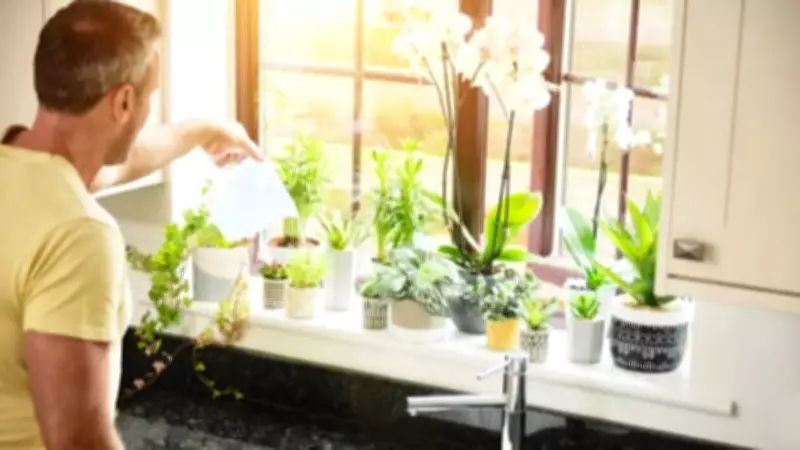
There is a point every new plant owner reaches. You bring a plant home, place it near a window, and then the question starts repeating itself every morning: should I water it today?
Most people begin with a routine. Every day, every alternate day, or once a week. It feels organized. It feels right. And that is usually where things start going wrong.
Plants inside the house do not have a schedule. They react to the environment, and the environment is ever-changing, even within the same house. A money plant in the summer at Bangalore under a bright balcony window will wither away much earlier compared to the plant under a window placed deep into a room. A peace lily kept in an air-conditioned space behaves differently from one in a humid corner. Even something as low-maintenance as a snake plant can struggle if it is watered too frequently just because it has been a week.

The idea that all indoor plants need water on fixed days is one of the biggest reasons they do not last.
It Is Not About the Day; It Is About the Soil
The easiest technique to comprehend watering is to cease glancing at the calendar and begin glancing at the soil. In most indoor plants, the surface of the soil gives it all. When you stick your finger in the soil about an inch deep and it is dry, the plant needs water. When it is still damp, it can be left. This is important since most people overwater their plants, as opposed to underwatering.
Consider snake plants or ZZ plants. They are constructed to endure neglect. They retain water in their leaves and roots, so watering them after a few days is not beneficial but rather harmful. These plants can thrive well in most houses after being watered every two or three weeks. Plants such as peace lilies or ferns, on the other hand, do not do so. An example is a peace lily, which literally tells you to water it by drooping in front of your eyes. Yet even then, after being watered, it springs back soon. These shrubs like soil that does not entirely dry up. So the distinction is not subtle; it is structural.
Where You Place the Plant Changes Everything
Indoor does not mean uniform. A rubber plant placed close to a large window receiving indirect light will require more water than one placed in a dark corner. The pothos (money plant) in a hanging pot outside a balcony is more likely to dry faster due to the increased circulation of air around it. Ceiling fans are no exception. A plant under a fan will lose moisture quicker than a plant in an unstirred area of a room.
And the pot itself matters. Smaller pots dry soon. Bigger ones retain moisture. Terracotta pots absorb water, while plastic pots preserve water. When one says, I water all my plants every Sunday, it appears to be in line but it does not take all the factors into consideration that influence the plant.
Changes in Seasons Are Not Obvious in Houses
Although the plant may remain at the same location, the surrounding does not. In summer, particularly in urban areas that experience intense sunlight, the soils dry out more rapidly. Plants such as areca palm or calatheas might require more frequent watering because the air is sucking moisture out faster. The reverse occurs in winter. Growth slows, evaporation decreases, and the same quantity of water can be left in the soil longer than it ought to.
What Plants Usually Tell You (If You Notice Early)
Most indoor plants do not fail suddenly. They give signs. Yellowing leaves, especially at the bottom, often point to overwatering. The soil may feel damp even days after watering. In some cases, there is a slight smell from the soil, which indicates root stress. Underwatering looks different. Leaves can dry on the edges, become a little curled, or the plant can even begin to appear dull instead of bright. When a peace lily wilts a little, a pothos loses some stiffness, or a fern turns brittle, all are signals but not necessarily all the same. That is where observation matters more than routine.

So, How Often Is Right?
For most indoor plants, watering somewhere between once in five days to once in ten days works as a loose range. But that only works if it is adjusted. A snake plant might sit comfortably without water for two weeks. A fern might need attention in three to four days. A money plant usually falls somewhere in between, depending on light and airflow. The better approach is not to fix a number, but to get used to checking. Over time, it becomes easier to tell. The soil, the leaves, even the weight of the pot when you lift it slightly, all of it starts making sense. And once that happens, watering stops feeling like a rule you are trying to follow and becomes something you understand.
About the Author: The TOI Lifestyle Desk is a dynamic team of dedicated journalists who, with unwavering passion and commitment, sift through the pulse of the nation to curate a vibrant tapestry of lifestyle news for The Times of India readers. At the TOI Lifestyle Desk, we go beyond the obvious, delving into the extraordinary. Consider us your lifestyle companion, providing a daily dose of inspiration and information. Whether you are seeking the latest fashion trends, travel escapades, culinary delights, or wellness tips, the TOI Lifestyle Desk is your one-stop destination for an enriching lifestyle experience.