Mirror, Mirror on the Wall: The Rare Animals That See Themselves
For humans, recognizing our own reflection is a natural and everyday occurrence, but in the vast and diverse animal kingdom, this ability is exceptionally rare and deeply fascinating. Known as mirror self-recognition (MSR), this trait is widely regarded as a significant indicator of advanced thinking, self-awareness, and emotional intelligence among animals. It opens a window into the complex minds of creatures across different species, offering valuable clues about how intelligence evolves in the wild.
The Mirror Test: A Scientific Gauge of Self-Awareness
Scientists commonly employ the mirror test to assess this unique ability in animals. In this test, a visible mark is placed on an animal's body in a location that can only be seen with the aid of a mirror. If the animal touches or examines the mark on its own body rather than reacting to the reflection as if it were another individual, it demonstrates clear self-recognition. Only a select few species have convincingly passed this test, each providing profound insights into the development of intelligence across various evolutionary paths.
Great Apes: Pioneers of Self-Recognition
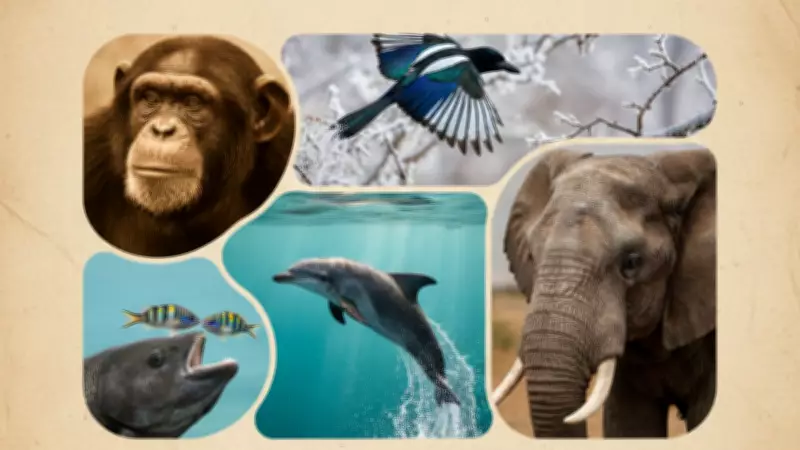
Among the most well-documented animals to exhibit mirror self-recognition are the great apes, including chimpanzees, bonobos, orangutans, and gorillas. Initially, these primates may display social reactions such as gestures or facial expressions when confronted with a mirror. However, they often progress to using the mirror to inspect parts of their own bodies, indicating a sophisticated understanding that the reflection is indeed their own. This behavior underscores their advanced cognitive capabilities and self-directed awareness.

Dolphins: Intelligent Denizens of the Deep
Bottlenose dolphins are widely celebrated as some of the most intelligent non-human animals on the planet. When exposed to mirrors, dolphins have been observed turning and twisting their bodies to examine marks placed on them. This behavior suggests a keen awareness of self, as they do not mistake the reflection for another dolphin. Their ability to engage with their own image highlights the remarkable cognitive processing present in marine mammals.
Elephants: Gentle Giants with Sharp Minds
Asian elephants have demonstrated mirror self-recognition in controlled scientific studies. Using their versatile trunks, these majestic creatures inspect marks on their heads after viewing their reflections. This behavior points to self-directed awareness and complex cognitive processing, revealing that intelligence in the animal kingdom is not limited to primates or marine life but extends to large land mammals as well.
Magpies: Avian Wonders of Self-Awareness
In the avian world, magpies stand out as exceptional examples of self-recognition. Studies have shown that these birds attempt to remove marks from their bodies after seeing themselves in mirrors, making them one of the few non-mammalian species to pass the mirror test. This finding challenges traditional notions about intelligence and self-awareness, suggesting that such traits can evolve independently across different animal classes.
Cleaner Wrasse Fish: A Surprising Contender
Perhaps the most surprising entry on this list is the cleaner wrasse, a small reef fish. Research indicates that these fish respond to marks on their bodies in ways that suggest self-recognition, thereby challenging long-held assumptions about the limits of animal intelligence. This discovery opens new avenues for understanding cognitive abilities in even the smallest and seemingly simplest of creatures.
Why Mirror Recognition Matters in the Wild
Mirror self-recognition is far more than just a party trick of intelligence; it is intricately linked to empathy, problem-solving skills, and social complexity. Animals that recognize themselves often inhabit intricate social groups and demonstrate advanced communication abilities. However, scientists caution that failing the mirror test does not necessarily imply a lack of intelligence. Different species may perceive and interpret reflections in ways that humans have yet to fully comprehend, highlighting the diversity of cognitive experiences in the animal kingdom.