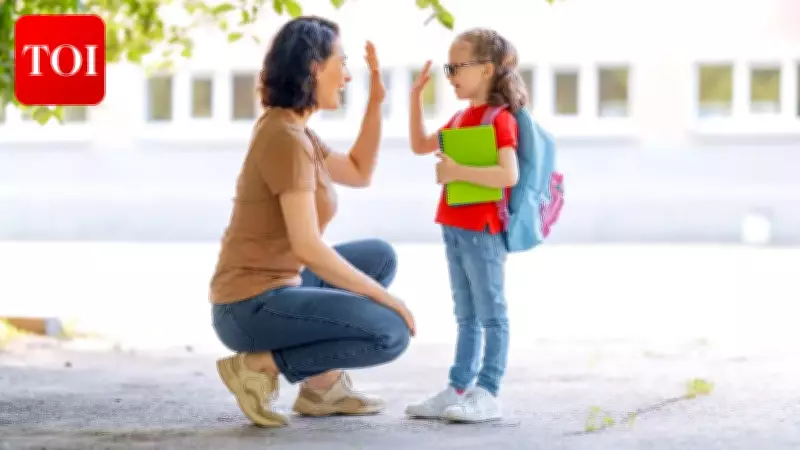
The Transformation of Modern Childhood: From Play to Performance
Childhood in the contemporary era presents a dramatically different landscape compared to just twenty years ago. The spontaneous laughter and unstructured play that once defined early years have increasingly been replaced by meticulously scheduled classes and activities. School backpacks appear heavier than ever before, daily calendars overflow with commitments, and societal expectations continue to escalate at an alarming rate.
The Rise of Performance-Driven Childhoods
From remarkably young ages, children today are introduced to rigorous academic drills, constant performance metrics, and achievement benchmarks. While parental aspirations for their offspring have understandably grown, we must collectively pause and confront a crucial question: What is the actual cost of this relentless pressure?
Through decades of professional engagement with children, educators, and parents, I have observed a steady and concerning transformation from joyful exploration to performance-driven childhoods. Early academic pressure, continuous digital stimulation, and pervasive comparison culture have fundamentally reshaped these formative years. Traditional playtime has significantly diminished, while unstructured downtime is increasingly viewed as unproductive. The consequence is a generation that appears intellectually stimulated yet frequently experiences overwhelming stress and anxiety.

Neuroscience Reveals the Foundation of Early Development
Scientific research provides unequivocal clarity: early childhood represents not a race toward academic excellence but rather a critical foundation-building phase. During these precious years, the human brain undergoes its most rapid development. Research from the Harvard Center on the Developing Child demonstrates that approximately ninety percent of brain development occurs before age five, with neural connections forming at an extraordinary pace.
These vital neural connections are not activated through passive memorization but through active, sensory-rich experiences. When a child grips scissors, molds clay, or uses crayons to visually express their thoughts, they are engaged in rigorous cognitive work rather than merely creating decorative art. These tactile, maker-style activities actively shape neural pathways, transforming abstract thoughts into physical reality.
The Cognitive Power of Hands-On Creation
Open-ended making represents foundational cognition rather than an extracurricular luxury. Creativity essentially makes thinking visible. These hands-on activities build executive function, enhance focus, and develop problem-solving capabilities. They require planning, sequencing, experimentation, and revision—the identical mental processes that underpin mathematical reasoning and design-based thinking in later life stages.
When children utilize tools to create—whether building with blocks, constructing from recycled materials, or drawing to understand mathematical concepts—they are not stepping away from learning but rather deepening it substantially. Drawing serves not merely as a hobby but as a profound method for processing the world. Using tools to create represents a form of "neural engineering" that builds coordination and problem-solving skills essential for complex future learning.
The Essential Elements Often Overlooked
Emotional security, social interaction, imaginative play, and creative expression are frequently mischaracterized as distractions from learning when they actually constitute learning itself. When we systematically replace play with worksheets, we might observe short-term academic gains but risk significant long-term consequences. Anxiety, reduced resilience, difficulty with emotional regulation, and declining intrinsic motivation are becoming increasingly visible among children across various demographics.
Emotional well-being does not exist separately from learning—it serves as its essential foundation. The core issue is not that children are learning too much, but rather that we have begun confusing early performance with meaningful learning. Completing worksheets, achieving milestones faster, or appearing "ahead" might offer adults temporary reassurance, but these metrics do not necessarily reflect how deeply a child understands, retains, or applies acquired knowledge.

Redefining What Constitutes Real Learning
Authentic learning during childhood is neither linear nor immediately measurable. It develops through exploration, mistakes, imagination, and play—precisely the processes we are increasingly compressing or eliminating in the name of achievement. Creativity, often misunderstood or treated as an optional skill, actually occupies a central position in healthy development.
When children build with blocks, engage in pretend play, create original stories, paint freely, or solve open-ended problems, they strengthen empathy, communication, adaptability, and critical thinking. These represent lifelong skills that no amount of rote memorization can possibly replicate.
Implementing a Balanced Approach to Learning
A play-based, balanced approach to learning does not signify the absence of structure or academic rigor. Instead, it means respecting developmental readiness and integrating literacy and numeracy through hands-on experiences rather than abstract drills. It involves valuing curiosity over conformity and prioritizing questions over quick answers.
For instance, a child learning mathematical concepts through cooking activities or building structures internalizes these principles far more deeply than through repetitive worksheets. A storytelling circle enhances language development while simultaneously building listening skills and confidence. Outdoor play strengthens not only physical health but also problem-solving abilities and social negotiation skills.
A Collective Responsibility for Change
Reimagining childhood represents not merely the responsibility of educational institutions but requires a shared commitment from parents, educators, policymakers, and societal institutions. Parents must consciously resist comparison pressures, recognizing that each child develops at a unique pace. Instead of asking "Is my child ahead?" we should inquire "Is my child happy, confident, and curious?" Creating screen-free time, encouraging open emotional conversations, and protecting time for free play constitute powerful acts of advocacy for our children's wellbeing.
Educators must be empowered and properly trained to move beyond rote-based systems. Teacher education should emphasize child psychology, social-emotional learning, and developmentally appropriate practices. Classrooms that celebrate mistakes as learning opportunities build resilience and cultivate growth mindsets.
Institutions and policymakers must acknowledge that pushing academics earlier does not create better learners—it creates stressed learners. Policies supporting smaller class sizes, integrated curricula, and comprehensive mental health frameworks are essential for nurturing whole children rather than merely academic performers.
Childhood as Life Itself, Not Preparation
Childhood does not represent preparation for life—it is life itself. When we protect imagination and prioritize wellbeing alongside learning, we are not lowering standards but rather raising capable, adaptable human beings. The future will belong not to those who memorize fastest but to those who can think critically, collaborate meaningfully, and innovate with confidence.
Reimagining childhood is not about returning to some idealized past. It involves moving forward with wisdom, ensuring that in our pursuit of achievement, we do not lose the wonder, curiosity, and joy that fundamentally define what it means to be a child.