A Mother's Heartbreaking Question: "How Do I Tell My Girls?"
"How do I tell my girls?" This was the immediate, overwhelming thought that consumed Priyanka Pandya-Bhatt when her doctor delivered the devastating news: she had breast cancer. The doctor's brusque follow-up question—"Why, were you not expecting this?"—only added to the shock. This life-altering moment occurred right after the 2022 Easter holidays, marking the beginning of an unexpected journey.
A Diagnosis That Defied Expectations
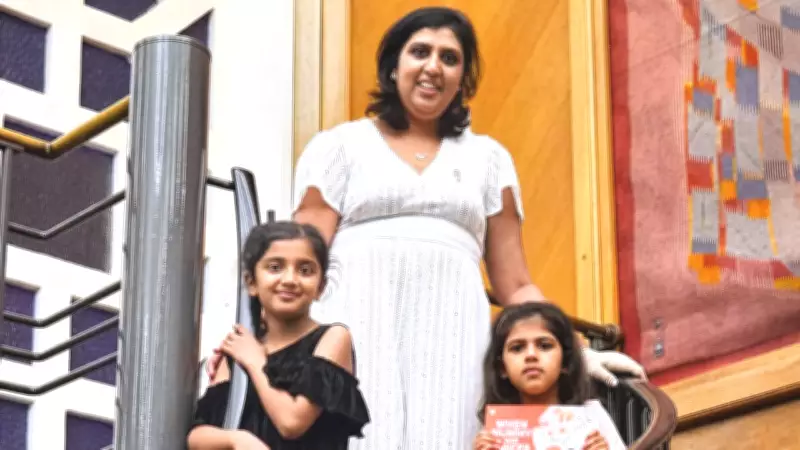
Bhatt was just 36 years old, a third-generation UK resident living in Buckinghamshire, England. With no family history of cancer and her younger daughter still breastfeeding—contradicting the common myth that breastfeeding reduces cancer risk—the diagnosis felt particularly cruel. At the clinic, she broke down completely, crying until a compassionate nurse escorted her to another room for comfort and guidance.
As a children's life coach with a decade of experience teaching kindergarten students, Bhatt's first concern naturally turned to her own daughters: Keya, aged 4, and Shriyana, just 2. "Most people brush aside the children in a situation like this. If at all they are told, they are always the last to know and never really get the real picture," Bhatt explains. She struggled with how to convey a diagnosis she herself could barely comprehend.

The Initial Family Response
Her instinct was to call her parents for support. Her two brothers, who lived nearby, were asked to bring their children over, hoping the cousins playing together would distract her daughters. "We were all crying in the front room. I thought my kids wouldn't notice as they were so happy to see their cousins. But they did. They still remember and ask, 'Mummy, why were you crying, why was everybody crying?' I tell them that it was the time we found out I had cancer and we were all sad about it," she recalls.
Breaking the News Through Stories
To explain the situation, Bhatt and her husband used a book provided by the hospital, turning what the children thought would be a regular bedtime story into a crucial conversation. While Shriyana remained unaware, Keya grew unusually silent as the story detailed what happens to the body during cancer. "Keya usually had a question about anything and everything. But that day, after reading the book, when we asked her if she wanted to know anything more, she said no. That really shocked us," Priyanka remembers.
The questions emerged later at lunchtime, ranging from "What is cancer?" to "Will I get cancer?" and concerns about hair loss. Keya's vivid imagination led her to create her own analogy: "They'll use scissors to cut you, and with a spoon they'll scoop out the cancer, and then they'll glue you back up again."
Keeping Children Informed Throughout Treatment
The couple committed to keeping their daughters updated at every stage of treatment—chemotherapy, surgery, and radiotherapy. They encouraged Keya to ask any question, promising to find answers. "She came up with questions we couldn't even answer. So I took them back to the breast-care nurses," Bhatt says. Despite COVID-19 protocols, doctors made an exception, allowing Keya to observe a chemotherapy session, which helped alleviate some of her fears.
However, the cumulative stress was immense for the four-year-old. "We had just shifted home a few months back. Before that, she would spend the week with my parents. So, having to deal with a new home, a new nursery setting, my cancer and how my body changed because of that, all this was a lot more than the little four-year-old could handle," Bhatt explains. The situation worsened when Keya's kindergarten teacher failed to provide adequate support.
Navigating Treatment and Recovery
After six rounds of chemotherapy, Bhatt underwent a mastectomy and reconstructive surgery—a grueling 10-hour procedure. "The surgery left me completely drained. My kids couldn't give me the big cuddles they were used to as I was doubled up in pain. For the reconstruction, they took fat and tissue from my abdomen so I couldn't even bend for a while. It was hard for them to see mummy like that," she shares. The family tried to create normalcy during Christmas, but the experience was indelibly etched in the children's minds.

Post-surgery, Bhatt endured 15 rounds of radiotherapy and oral chemotherapy. Her daughters would wait at the cancer center, eating biscuits and playing with Lego during her sessions. Eventually, they found a support center offering equine therapy, which has become a calming exercise for the girls.
Transforming Trauma Into Healing
Today, Bhatt's daughters confidently discuss her cancer diagnosis with others, often starting conversations with "my mummy had cancer." "Talking about our experience is their way of healing. It makes them feel seen, heard, their feelings validated," she observes.
Changing the Narrative Around Cancer
Bhatt emphasizes that children should be included in cancer discourse and decision-making. "We need to change the narrative set by previous generations, who remained silent and dealt with problems alone," she asserts. She documented her experiences in the book 'When Mummy had Cancer' to help other parents initiate these difficult conversations.
"As the saying goes, a problem shared is a problem halved. I cried in front of Keya because I knew how hard she found it to be. We both cried, allowing us to be vulnerable together," Bhatt reflects. She concludes that talking to children about cancer isn't about frightening them but equipping them with understanding and coping tools. "Every child at some point is going to come across a parent, a grandparent, a friend, a sibling having the disease. So, why are we hiding?"