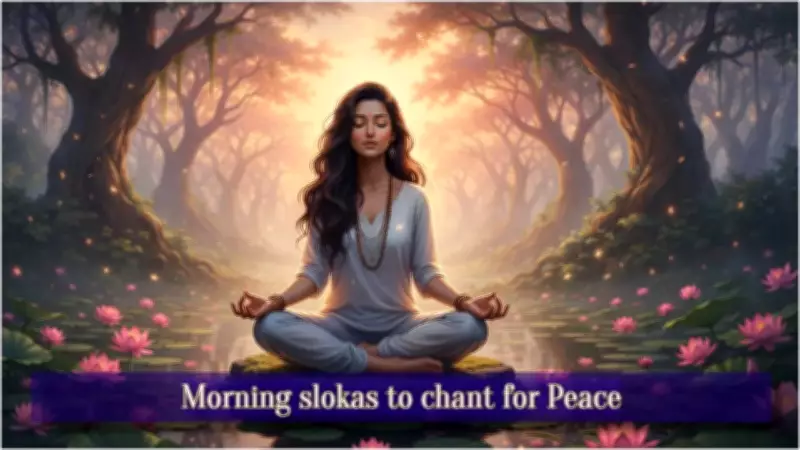
Ancient Sanskrit Slokas Become Modern Morning Ritual for Stress Relief
In an era dominated by digital overload and relentless deadlines, a growing number of people are turning to an ancient practice to start their days: reciting Sanskrit slokas. This trend sees individuals embracing morning chants rooted in Indian spiritual traditions as a powerful tool to relax, maintain health, and cultivate inner peace. The movement reflects a broader search for balance amid modern life's pressures.
The Rise of Morning Chanting Practices
Spiritual and health professionals consistently highlight the transformative potential of dawn recitations. According to experts, engaging with these sacred verses at sunrise can significantly enhance one's outlook for the day ahead. Practitioners frequently report that morning slokas help calm nerves, sharpen focus, and foster greater kindness toward both themselves and the wider world. This practice is not merely a habit but a deliberate ritual to anchor the mind before it becomes inundated with daily noise, notifications, and tasks.
Among the most revered chants, the Gayatri Mantra stands out for its potency, while Om Shanti is celebrated for its accessibility. Yoga and mindfulness advocates emphasize that mantra recitation can improve breathing patterns, soothe mental agitation, and reduce anxiety levels, making it a holistic wellness practice.

Best Morning Slokas for Peace and Well-being
Several key slokas have gained prominence for their calming effects:
- Shanti Shanti Shanti: This powerful invocation calls for threefold peace: internal mental peace, peace in the surrounding environment, and universal peace.
- Om Sarvesham Svastir Bhavatu: A heartfelt prayer wishing for everyone's health, freedom from pain, and overall tranquility.
- Asato Ma Sadgamaya: A profound philosophical verse that seeks guidance in transitioning from mortality to immortality, darkness to light, and ignorance to truth.
- Bhagavate Vasudevaya: A chant dedicated to Vishnu, believed to offer protection, peace, and mental calmness.
- Lokah Samastah Sukhino Bhavantu: A compassionate prayer expressing a sincere desire for the happiness and liberation of all beings.
- The Gayatri Mantra (Om Bhur Bhuva Swaha): One of the most significant Vedic mantras, associated with mental clarity, wisdom, and emotional stability.
How to Incorporate Morning Slokas into Daily Life
To maximize benefits, practitioners adhere to specific guidelines:
- Timing: Traditionally, chanting is performed during Brahma Muhurta, the auspicious period between 4 and 6 a.m., considered ideal for spiritual activities.
- Method: Using a mala (prayer beads) to recite each mantra 108 times helps maintain focus and discipline during the practice.
- Intention: Understanding the meaning behind each mantra amplifies its effectiveness. Chanting with mindfulness, gratitude, and the clear intention to release stress and cultivate stability is recommended for deeper impact.
This resurgence of ancient slokas in contemporary routines underscores a timeless quest for serenity, proving that age-old wisdom can offer profound solutions to modern-day challenges.