Jamini Sen: The Forgotten Indian Doctor Who Became Glasgow's First Female Fellow
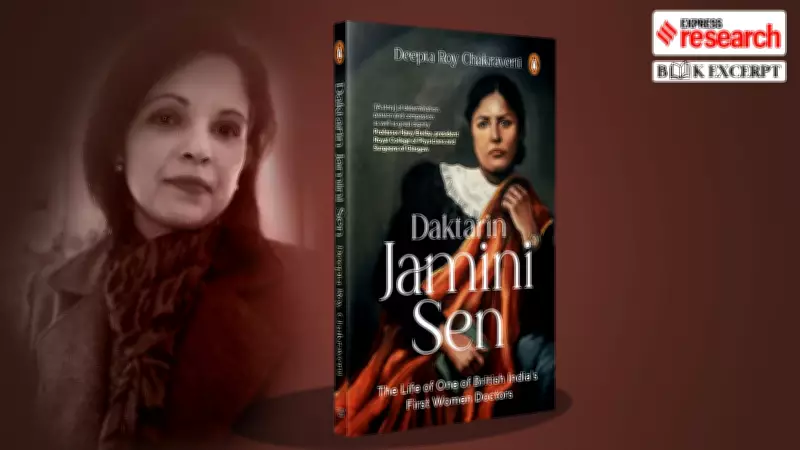
Deepta Roy Chakraverti's recent work, Daktarin Jamini Sen (Penguin Random House India), brings to light the remarkable journey of Jamini Sen, a trailblazing figure in medical history. Born in 1871 in Basanda village, Bengal, Sen emerged as one of British India's first female doctors, graduating from Calcutta Medical College in 1896. Her story, long overshadowed, is now revived through this personal and historical exploration.
Early Life and Medical Breakthroughs
In 1883, Calcutta Medical College took a bold step by admitting women, though female doctors remained a rarity. Jamini Sen was among the pioneers, graduating in 1896. Just three years later, her career took a significant turn when she was appointed house physician to the royal family of Nepal, following in the footsteps of other early female doctors like Kadambini Ganguly and Anandibai Joshi. In Nepal, Sen advocated for an inclusive approach to tackling epidemics, promoting modern sanitation while respecting native beliefs, showcasing her innovative and culturally sensitive medical practices.
A Personal Quest for Justice
Author Deepta Roy Chakraverti reveals the deep personal connection to this project, as Sen was her great-grand aunt. Through family lore passed down by her grandmother and mother, Chakraverti grew up admiring Sen as a figure of daring adventure. However, this admiration soon turned to disquiet over the injustice of Sen's forgotten legacy. Chakraverti writes, "Why had a woman like Jamini been forgotten? Was it because, at one time, her life story would have been 'inconvenient' to some quarters?" This anger fueled her resolve to ensure Sen's story is remembered, leading to the creation of this book.

The Battle for Women in Medicine
The book situates Sen's achievements within the broader narrative of women's struggle to enter the medical profession, particularly in Britain. The nineteenth century was a turning point, with the Medical Act of 1858 establishing formal standards for practitioners. However, women faced significant barriers, as most universities and medical bodies did not admit them. The Enabling Act of 1876 allowed women to obtain qualifications, but prejudice persisted. Medical historian Kristin Hay notes that organizations like the Faculty of Physicians and Surgeons of Glasgow were initially hostile, fearing that admitting women would diminish their stature.
Path to Fellowship in Glasgow
In response to standardization efforts, the Faculty of Physicians and Surgeons of Glasgow, along with other Scottish bodies, developed the Triple Qualification exam. This created an unintended pathway for women, who could not study at universities, to obtain medical licenses. Despite legal changes, attitudes remained resistant. In 1886, the Faculty amended its rules to allow women as licentiates, but fellowship was seen as too radical. It wasn't until 1910 that a motion was passed opening fellowship to women equally with men.
Sen's Historic Achievement
In 1912, Jamini Sen sat the fellowship examination, passed, and was admitted as a Fellow qua Surgeon of the Royal Faculty of Physicians and Surgeons of Glasgow. In doing so, she became the Faculty's first female fellow, a historic milestone that highlighted her perseverance and skill. This achievement came after years of advocacy and legal battles, reflecting the broader fight for gender equality in medicine.
Legacy and Relevance
Chakraverti's work not only chronicles Sen's life but also underscores the importance of remembering such pioneers. Sen's story serves as an inspiration, reminding us of the barriers women have overcome in professional fields. Her legacy, once reduced to a footnote, is now restored, offering valuable insights into colonial history, gender dynamics, and medical advancements. This book is a testament to the power of personal and historical research in uncovering hidden narratives.