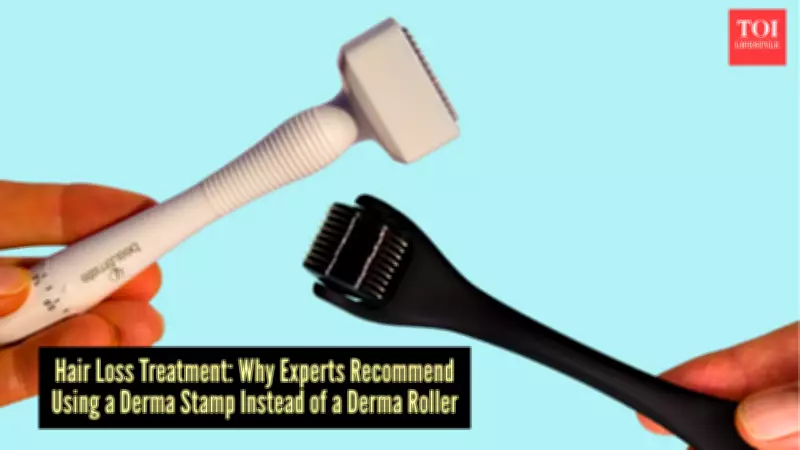
Dealing with thinning hair can be incredibly frustrating. You spend hours researching, eventually falling down a rabbit hole of hair growth hacks. Chances are, you have stumbled across scalp microneedling. It is everywhere on social media right now. And if you have already bought a derma roller to fix your receding hairline, you might want to pause. While the science behind microneedling is incredibly solid, dermatologists and trichologists are currently urging a massive shift in how we do it. The verdict is that the traditional derma roller is out, and the derma stamp is in. Here is exactly why making this simple switch could save your hair.
The Magic Behind the Needles
Before we pit these two tools against each other, let us talk about why poking tiny holes in your head actually works. Microneedling relies on a process called collagen induction therapy. By creating controlled, microscopic injuries on your scalp, you practically force your body to send help to the area. This healing response wakes up dermal papilla cells, which are the bosses of hair regeneration, and triggers vital growth factors. Additionally, these tiny channels act like a VIP express lane for topical treatments such as minoxidil or rosemary oil, allowing them to bypass the skin barrier and dive straight into the roots. However, how you make those holes matters a great deal.
Why Your Roller Might Be Sabotaging Your Hair
Derma rollers are wildly popular. They are cheap, easy to find, and allow you to cover a lot of ground quickly. But when it comes to the scalp, they have a dark side. Consider how a roller works. As the drum moves across your skin, the needles go in at an angle and pop out at an angle. Instead of a clean puncture, this action creates tiny, V-shaped tears, which is unnecessary trauma. On top of that, maintaining even pressure on a curved surface like your skull is nearly impossible, resulting in patchy results. The biggest dealbreaker, however, is the hair trap. The rolling mechanism has a nasty habit of grabbing onto your existing hair. One wrong move, and you are literally ripping out the healthy strands you are trying so hard to keep.

The Derma Stamp Difference
Enter the derma stamp. It looks exactly like it sounds—a flat cluster of needles that you press directly down and pull straight back up. Because of this simple vertical motion, the needles enter and exit at a perfect 90-degree angle. You get clean, I-shaped micro-channels without dragging or tearing the surrounding skin. Zero sweeping motions mean zero risk of your hair getting tangled and pulled out by the root. It easily navigates through longer hair, making it vastly safer for your remaining follicles. A stamp also gives you targeted control. Let us be honest, you usually do not need to microneedle your entire head. Thinning typically affects specific zones, such as a widening part, the crown, or the hairline. The stamp allows you to spot-treat these exact areas without irritating the healthy skin nearby.
Doing It Right
If you want to see actual results, science shows that using your microneedling tool alongside a 5% minoxidil solution is the ultimate sweet spot. This combination produces significantly more regrowth than using minoxidil alone. Just keep a few basic rules in mind. If your goal is strictly to help serums absorb better, a needle length of 0.25 mm to 0.5 mm used up to three times a week is sufficient. If you want to trigger the hair follicles directly, you will need 1.0 mm to 1.5 mm needles. However, beware—only do this once every week or two to allow your scalp to heal. Finally, keep it clean. Scalp infections will completely wreck your hair cycle, so soak that stamp in isopropyl alcohol before and after every single use. The bottom line is this: do not risk scarring your scalp or pulling out healthy hair with an outdated roller. Grab a derma stamp instead. It takes a little more patience to use, but your hairline will absolutely thank you for it.