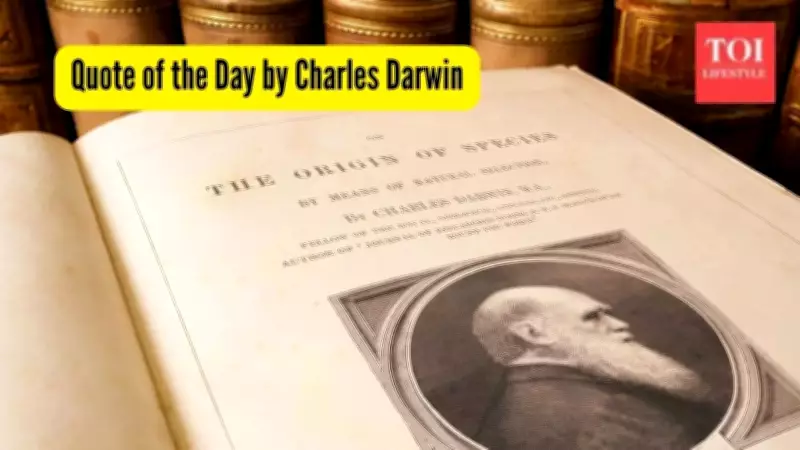
The Quiet Revolutionary: Charles Darwin's Evidence-Based Journey
Charles Darwin stands as one of history's most transformative thinkers, not through bold proclamations but through patient observation and unwavering respect for evidence. His approach fundamentally altered humanity's understanding of life itself, establishing a scientific framework that continues to shape modern biology.
Early Life and Educational Journey
Born on February 12, 1809, in Shrewsbury, England, Darwin grew up in a family that valued education, though his academic path remained uncertain. He initially pursued medicine at the University of Edinburgh but found himself repelled by surgery, leading him to abandon this field. Subsequently, he enrolled at Christ's College, Cambridge, where he planned to become a clergyman—a respectable profession during that era. It was here that his fascination with the natural world truly blossomed, nurtured by mentors who recognized his exceptional talent for meticulous observation.
The Transformative Voyage of HMS Beagle
Darwin's life took a definitive turn in 1831 when he accepted the position of naturalist aboard the British naval ship HMS Beagle. Originally scheduled as a two-year expedition, the journey extended to nearly five years, taking Darwin across South America, the Galápagos Islands, Australia, and various African regions. Throughout this voyage, he meticulously collected specimens and documented detailed notes on geology, flora, fauna, and fossils.

What particularly captivated Darwin were the subtle yet significant variations among species inhabiting different geographical locations. He observed that similar animals exhibited distinct adaptations based on their specific environments and lifestyles. These findings suggested that nature was not static but remarkably responsive to changing conditions.
Decades of Reflection and Theory Development
Upon returning to England in 1836, Darwin dedicated over twenty years to analyzing his observations. He immersed himself in extensive reading, studied animal breeding practices, examined fossil records, and corresponded with fellow scientists. From this prolonged period of contemplation emerged his groundbreaking concept: species evolve over time through a mechanism he later termed natural selection.
In essence, Darwin proposed that individuals possessing traits better suited to their environment had increased chances of survival and reproduction, thereby passing those advantageous characteristics to subsequent generations. Over immense timescales, this process resulted in gradual but profound transformations within species.
The Publication of On the Origin of Species
Darwin's seminal work, On the Origin of Species, published in 1859, revolutionized scientific thought. The book presented compelling arguments that all life shares common ancestry and that biological diversity arises through adaptation to evolving environments. Despite facing significant opposition from religious circles and those upholding humanity's special, fixed place in nature, Darwin maintained a non-confrontational approach. His writing demonstrated careful reasoning, acknowledgment of uncertainties, and steadfast reliance on empirical evidence rather than belief systems.
Darwin's intellectual honesty and methodological rigor have ensured the enduring relevance of his contributions. He continued writing throughout his life, expanding upon evolutionary theory, human descent, emotional expressions, and plant biology. Following his death in 1882, Darwin received the rare honor of burial in Westminster Abbey, symbolizing the monumental significance of his work for human knowledge.
The Legacy of Evolutionary Theory
Modern biology rests firmly upon the foundation of evolutionary theory, substantiated by genetics, fossil records, and molecular science. A frequently cited quotation often attributed to Darwin states: "It is not the strongest of the species that survives, nor the most intelligent that survives. It is the one that is most adaptable to change." While these exact words do not appear in his published works—they emerged later as a paraphrasing of his ideas—they effectively capture the essence of Darwinian thought.

Darwin never conceptualized survival as a contest of strength or intelligence. Instead, his writings emphasized organisms' responses to their environments. In On the Origin of Species, he extensively discussed how minor variations could influence which individuals survived to reproduce. His focus remained on adaptation—the quiet, persistent force shaping life on Earth through environmental, climatic, and ecological changes.
The adaptability principle extends beyond biology, offering insights into human societies, careers, and cultures. In dynamic systems, flexibility, awareness, and responsiveness often prove more crucial for long-term success than mere power or intellect. Darwin's legacy thus transcends scientific boundaries, providing a framework for understanding change across multiple domains of existence.